
Introduction
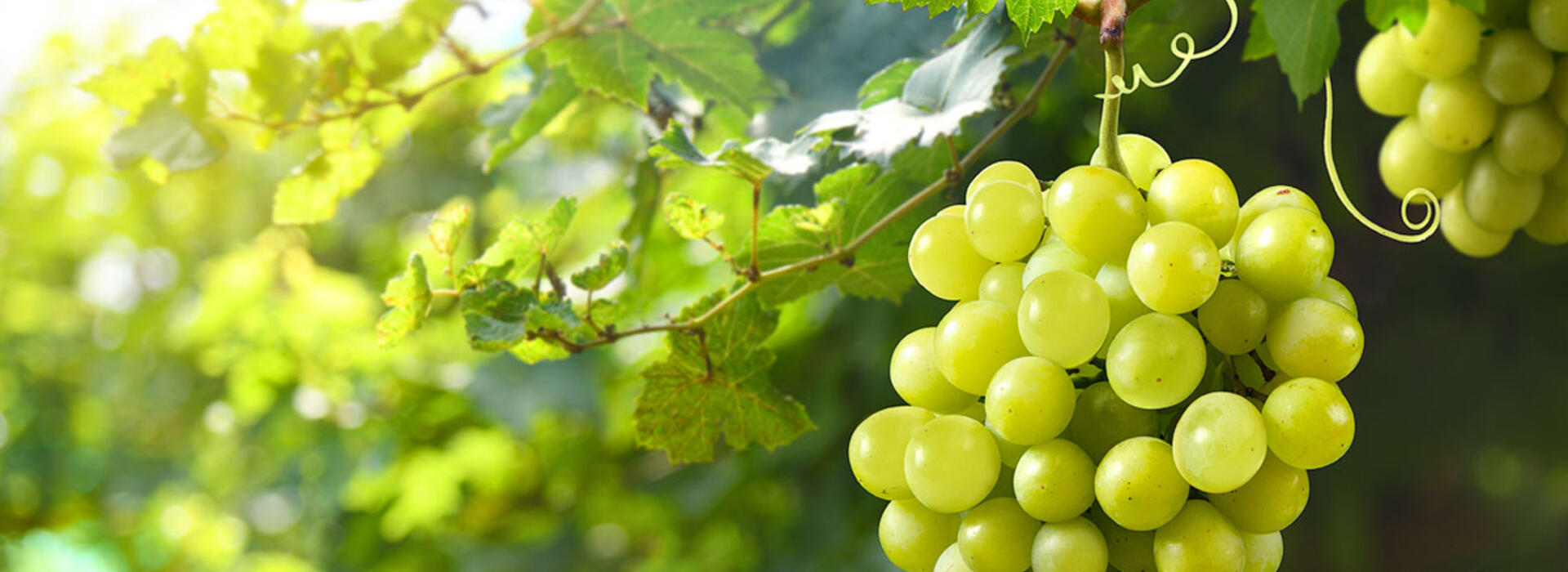
In the Pacific Northwest, billions of dollars hinge on knowing when a grapevine will bloom. A research team from Oregon State University and Washington State University, funded by a National Science Foundation grant through the AgAID AI Institute, is bringing reinforcement learning and hybrid modeling to that forecasting problem.
The foundation is WOFOSTGym, a crop management simulator built atop the decades-old WOFOST (WOrld FOod STudies), an open-source, mechanistic crop growth simulation model. Published at the 2025 Reinforcement Learning Conference, where it won a best paper award for reinforcement learning applications, WOFOSTGym lets AI researchers train agents on realistic crop management problems without agricultural expertise.
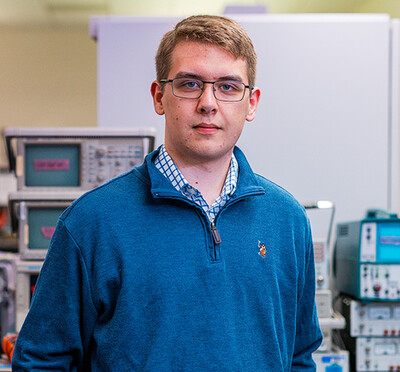
“None of the benchmarks or datasets we have represent the types of problems we see in agriculture,” said Will Solow, the OSU doctoral student in artificial intelligence who built the simulator and is funded through the AgAID grant. “Our big focus was making this benchmark as familiar to the AI community as possible.”
assistant professor of computer science
Blue Primary, Yellow Secondary
Threading the needle between physics and data
The follow-up work, led by Solow alongside his advisor Sandhya Saisubramanian, Alan Fern, and WSU collaborators, tackles grape phenology — predicting bud break, bloom, and veraison.
Existing models average 12 to 14 days of error across stages. “As an AI person, you immediately look at that and say, ‘We should be able to do better,’” Solow said.
But pure deep learning created its own problem: forecasts that jumped between stages illogically. “If you’re a farmer looking at that forecast, you say, ‘Does bloom happen the first time it jumps up or the second time?’” Solow asked. “That uncertainty makes them unusable.”
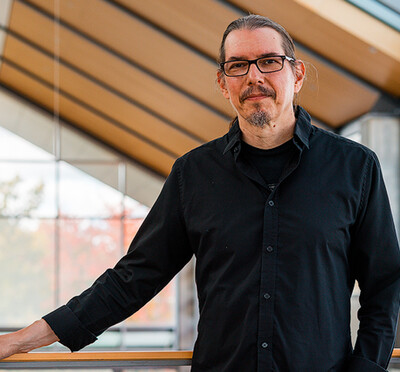
Their solution, DMC-MTL (Dynamic Model Calibration via Multi-Task Learning), uses a neural network to continuously recalibrate the biophysical model rather than replace it. “The role of deep learning is not to replace the predictions made by the biophysical model,” Saisubramanian explained. “It is only going to calibrate the biophysical model specific to the region where we are operating.”
artificial intelligence doctoral student
Blue Primary, Yellow Secondary
The result: 60% higher phenology accuracy and 40% higher cold-hardiness accuracy than deployed models, while remaining biologically realistic and generalizing across weather regimes. Critically, the model also generalized across weather regimes — where pure deep learning models collapsed when tested in Vermont or California after training in Washington State, DMC-MTL showed only marginal degradation.
Multi-task learning lets the model share patterns across 32 grape cultivars rather than training each one separately — critical given how little data exists for each cultivar. Saisubramanian also emphasized interpretability: “This is still something that agricultural experts like to trust because it was based on a system that they designed. Growers are willing to trust these models, as opposed to saying, ‘This is just an AI prediction.’”
26,000 growers and counting
DMC-MTL went live on AgWeatherNet in February 2026, reaching more than 26,000 registered Pacific Northwest growers, with specialists actively monitoring outputs. “We’re excited to see what sort of predictions our model makes this season and to track that downstream to see what sort of impact there is in the field,” Solow said. Full validation will take time — the grape harvest runs into September, and quality assessments lag by a year or two.
“We have specialists who are constantly monitoring this,” Saisubramanian said. “If they think any of the predictions made by our model are just inconsistent or worth flagging, they flag it and immediately put a note to all the growers. There are active experts involved in making sure we are not misleading anyone.”
Solow sees grapes as a proof of concept, not an endpoint. “There’s no reason this couldn’t be applied to cherries, blueberries, apples — we just don’t have the data publicly available yet,” he said. The grape industry’s resources made it the natural first target: technicians walk vineyards daily, logging phenological stages, generating the dense datasets the model needs.
What’s next
Saisubramanian and team are now extending the approach to grape cold-hardiness transfer learning — predicting frost resistance in regions with little historical data by borrowing patterns from places like Washington and British Columbia that have more. The stakes are high: a 2024 frost event forced growers in British Columbia’s Okanagan Valley to rip out vines entirely.
“We’ve been able to have some preliminary results that show this is a pretty effective way of transferring predictions,” she said. “And that could incentivize small vineyards to collect a small amount of data and still have a model that makes reasonable predictions for their site.”
For Solow, the throughline between the two papers is a broader argument about AI’s role in agriculture. “The agricultural domain is interesting and important from an AI perspective,” he said. “We should be caring about problems and models that apply directly to helping farmers make better decisions.”