
Introduction
A cohort of students connected to Oregon State University’s College of Engineering has been awarded Graduate Research Fellowships from the National Science Foundation, one of the nation’s most competitive honors for early-career researchers. Their work reflects the breadth of engineering at Oregon State — from coastal robotics and water systems to advanced manufacturing and biomedical innovation — and highlights the university’s role in preparing students to tackle complex global challenges.
Liv Dawes, Ph.D. in Robotics, Oregon State University

Liv Dawes is advancing the design of amphibious robots capable of operating seamlessly between land and water—an emerging need in coastal and nearshore environments. “I’m researching new ways to build robots that can both drive on land and swim in the water,” they said, noting their potential in areas too shallow for underwater vehicles but too muddy for terrestrial machines.
Their work, performed in the lab of their mentor, Brian Do, assistant professor of robotics, is strengthened by collaboration with oceanographers, a key reason they chose OSU.
Dawes aims to continue pushing the boundaries of marine robotics after earning their degree. “I’m hoping to lead a research team on marine robotics at a leading center like Woods Hole Oceanographic Institution,” they said.
Loni Halsted-Ruelas, Ph.D. in Robotics, Oregon State University
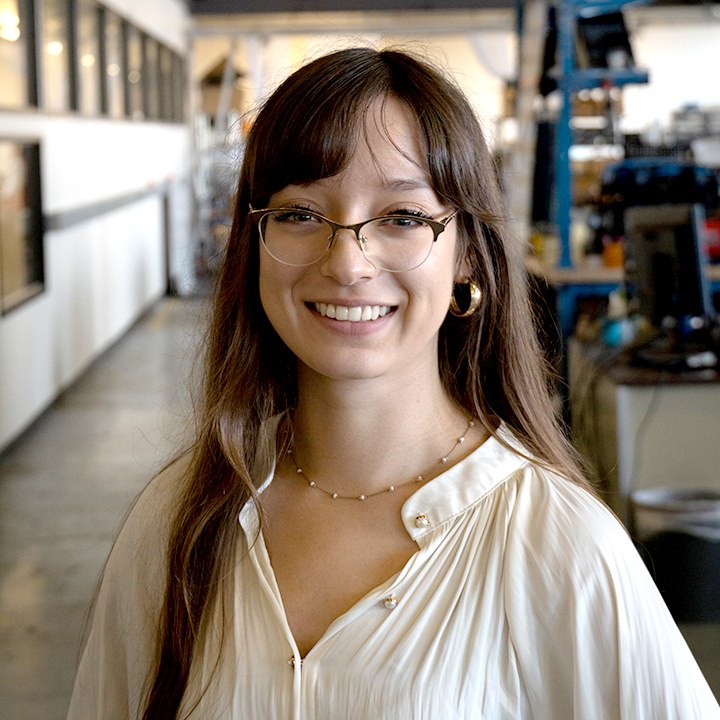
Loni Halsted-Ruelas is developing assistive robotic systems that can better understand and interact with people, particularly older adults. “My research focuses on how robots can understand and interact with people in real-world settings,” she said, including work with language models to guide memory recall and interpret emotional and cognitive states.
Her research, undertaken in the lab of Naomi Fitter, associate professor of robotics, will integrate emerging tools such as vision-language-action models and reinforcement learning with human feedback, enabling robots to plan and act in ways that align with human needs. “This means designing systems that balance user preferences with task goals, so robots are safe, reliable, and genuinely useful,” she said.
Halsted-Ruelas intends to take her work beyond academia. “I plan to pursue industry and entrepreneurial opportunities to build robotics technologies that improve healthcare access,” she said, especially for underserved populations.
Jasmine Summers-Evans, M.S. in Water Resources Engineering, Oregon State University
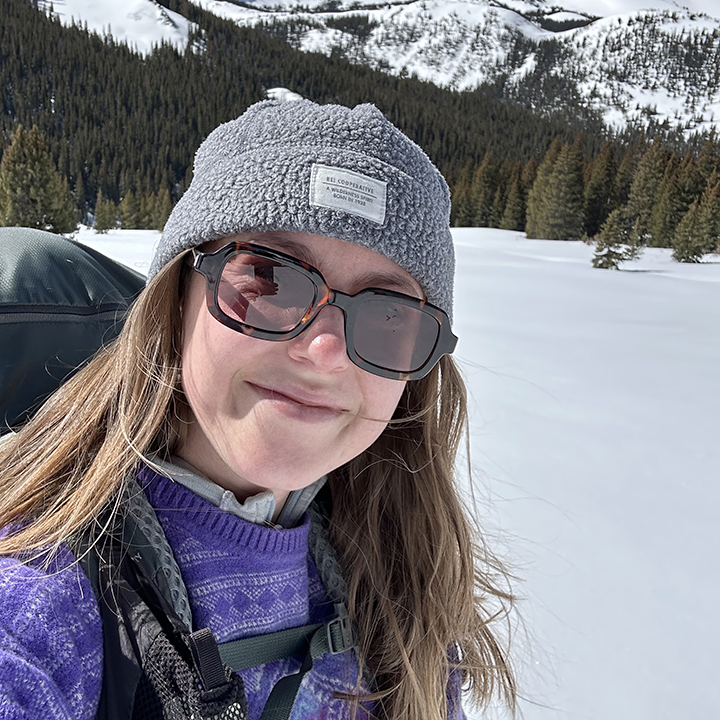
Jasmine Summers-Evans studies how river flows influence aquatic ecosystems, focusing on the Klamath River following dam removal. “My research examines the relationship between winter and spring peak flows and summer aquatic plant dynamics,” she explained. By linking hydraulic modeling with field observations, she aims to identify flow thresholds that control plant growth.
Her work, conducted under the supervision of Desirée Tullos, professor of water resources engineering, has clear implications for environmental management. “My research helps answer a practical question: how much flow is needed to keep aquatic plant levels in check?” she said, highlighting its relevance to habitat health and water quality.
Summers-Evans chose OSU for its specialized program and collaborative environment. She hopes to build a career in river restoration, working as a hydrologist or water resources engineer focused on public lands.
Emma Anderson, Ph.D. in Bioengineering, University of Oregon
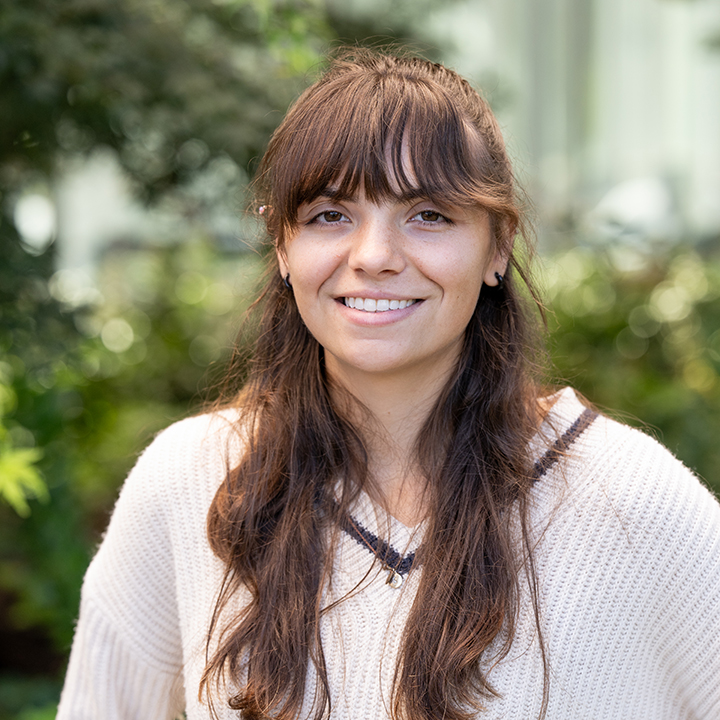
Emma Anderson, B.S. bioengineering ’25, is focused on improving how therapeutics are delivered in the body, particularly for difficult-to-heal injuries. “My graduate research is focused on biodistribution analysis of polymeric nanoparticles,” she said, studying how these particles can be optimized to target injured tendons more effectively.
The work, performed in collaboration with mentor Danielle S.W. Benoit, has both scientific and clinical implications. “Tendon injuries tend to heal poorly and be fibrotic,” Anderson noted. By improving drug delivery and localization, her research aims to promote more complete and functional healing.
Anderson plans to work in industry, focusing on improving drug delivery and reducing off-target side effects of treatments.
Sam Luft, Ph.D. in Civil and Environmental Engineering, University of California, Davis
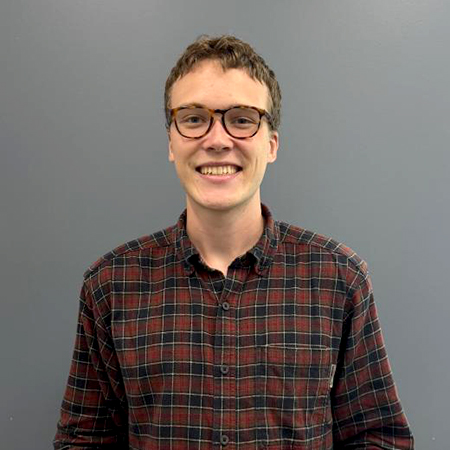
Sam Luft, B.S. civil engineering ’25, is pursuing a doctorate focused on geotechnical engineering and infrastructure safety. His research, under Professors Jason DeJong and Michael Gardner, addresses one of the most pressing risks in civil engineering: dam failure. “My research group focuses on improving how we predict and prevent dam failures, particularly from overtopping and internal erosion,” he said.
By combining laboratory experiments with modeling, Luft aims to better understand how such failures begin and evolve, ultimately improving risk assessment. He credits OSU for setting him on this path. “I chose Oregon State for its excellent engineering program and strong undergraduate research opportunities,” he said, pointing to faculty mentorship under Professors Matt Evans and Ben Leshchinsky as a formative influence.
Luft plans to continue working on infrastructure resilience. “I want to keep working on geotechnical engineering problems that improve safety and reliability,” he said.
Tiana Tonge, Ph.D. in Mechanical Engineering, Washington State University
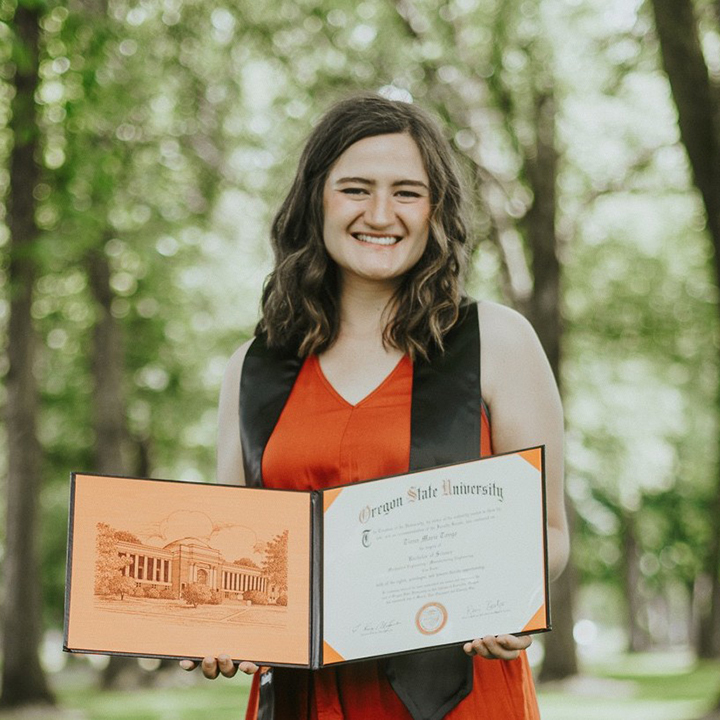
Under faculty advisor Satyajit Mojumder, Tiana Tonge, B.S. mechanical engineering ’25, is tackling inefficiencies in metal additive manufacturing, where defects can drive significant costs. “My research develops intelligent metal 3D printing systems that predict and prevent defects,” she said. By using machine learning with low-cost sensor data, her approach enables real-time adjustments during the printing process.
The impact could be substantial. “My goal is to use low-cost, in-situ sensing and machine learning to decrease the amount of material waste,” she said, addressing the more than $50 billion lost annually in defective parts.
Looking ahead, Tonge hopes to continue advancing manufacturing innovation at a national lab or in academia.
Osto Barron, Ph.D. in Computer Security and Privacy, Carnegie Mellon University
Otso Barron, B.S. computer science ’25, will work with mentor Riccardo Paccagnella on microarchitectural security research to discover how hardware behaviors can subvert software-defined security boundaries and induce unexpected software capabilities.
During his time at OSU, Barron was part of the OSU Security group, OSUSEC, and he conducted research with Liang Huang in the Algorithms for Computational Linguistics Group.