
Introduction
Managing waste on Earth is difficult enough, but deep-space exploration raises the stakes dramatically. For astronauts on long-duration lunar missions, trash cannot simply be thrown away; every ounce of refuse represents lost mass, trapped energy, and a physical storage hazard.
To tackle this challenge, NASA launched the LunaRecycle Challenge, a multi-phase competition designed to incentivize low-mass, energy-efficient technologies that can recycle solid waste into usable products.
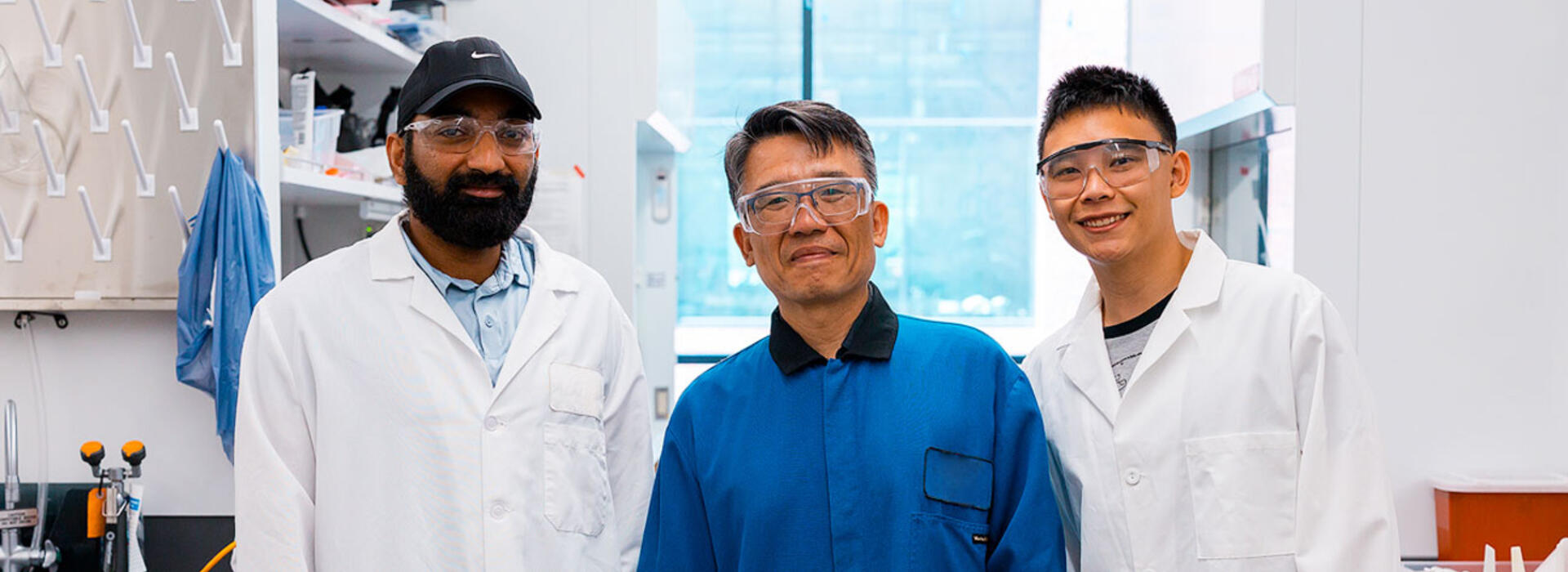
In March 2026, NASA announced that Nanomand, a Corvallis-based startup spun out of Oregon State University, was selected as one of 16 Phase 2 milestone winners. Founded by Chih‑hung Chang, professor of chemical engineering, Nanomand is built around a proprietary manufacturing technique developed in Chang’s campus laboratory.
Alongside co-founders Alvin Chang, a materials science doctoral student, and Venkata Vinay Doddapaneni, a postdoctoral researcher, the team is advancing a mission to translate complex vapor-phase chemistry into commercial additive manufacturing solutions.
The core technology: microreactor-assisted deposition
At the heart of the company's innovation is Microreactor-Assisted Nanomaterial Deposition (MAND). This technique utilizes localized chemical microreactors to break down molecular precursors and precisely deposit functional oxide films and nanomaterials onto diverse substrates.
While traditional manufacturing often requires massive equipment and energy-intensive environments, Nanomand’s decentralized microreactor approach offers highly scalable, precise deposition with minimal energy and equipment overhead — making it uniquely suited for the harsh resource constraints of space.
For the LunaRecycle Challenge, NASA provided competitors with a comprehensive inventory of standard mission waste, featuring a mix of polymer plastics and hardware components like aluminum tubes. Rather than simply recycling these materials into basic raw feedstock, Nanomand set its sights on creating a functional final product.
“For our final demonstration, we plan to make a solar thermal receiver,” Chang said.
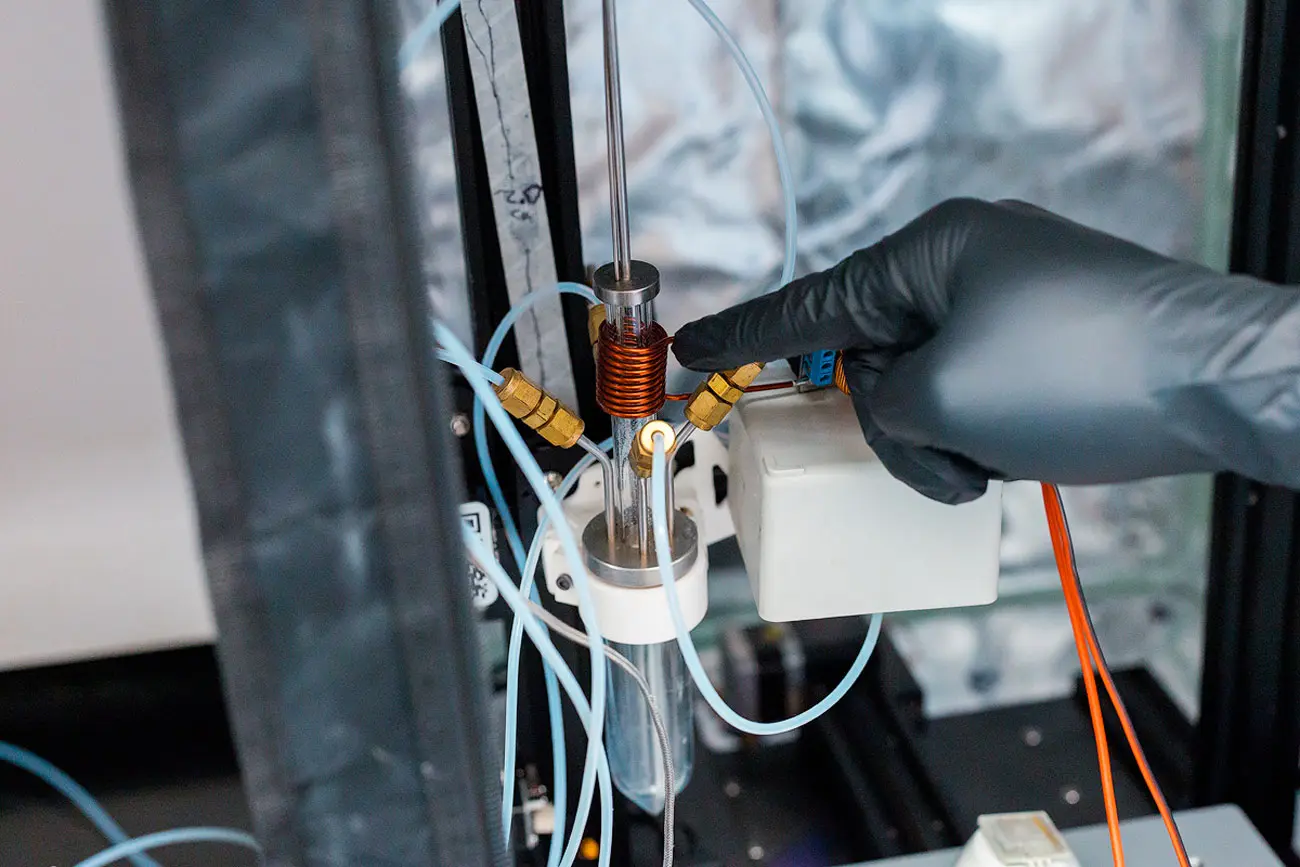
The process involves feeding plastic waste into the microchemical reactor, converting it into basic carbon building blocks, and sending those particles to deposit directly onto the surface of an aluminum tube waste component. The resulting deposition transforms the discarded tube into a highly absorbing thermal device.
“The idea is to turn this into a solar thermal battery,” Chang said. “Astronauts can use this solar thermal battery for a variety of things, including to power greenhouses to grow plants for food.”
From campus research to commercialization pipeline
Nanomand’s spacebound efforts are mirrored by a robust terrestrial pipeline. The company originally launched with vital support from the National Science Foundation’s Partnerships for Innovation (PFI) program, which funded the early development of the MAND technology for 3D printing applications. By injecting nanoparticle building blocks directly into liquid metal streams, they engineer advanced metal-matrix nanocomposites capable of withstanding high-stress environments in nuclear reactors and aerospace systems.
To help bridge the gap between academic innovation and the commercial market, Nanomand joined Oregon State’s Advantage Accelerator program. This initiative provided the team with crucial funding and structure to undergo customer discovery, refine their business pitch, and actively pursue a sustainable product-market fit. Beyond NSF and NASA pipelines, Chang is also leveraging this technology through a large, collaborative U.S. Air Force grant at OSU, working alongside a broader university 3D printing group to engineer specialized structural materials for military and defense applications.
Applying lessons from past entrepreneurial success
This is not Chang’s first time navigating the grueling path from a university lab to a commercial enterprise. He previously successfully spun out Pellucere Technologies (formerly CSD Nano), a revenue-generating company also starting its journey built on MAND technology that utilizes solution chemistry to develop advanced anti-reflective and anti-soiling coatings used to improve the performance of solar panels, as well as other optical and industrial surfaces.
professor of chemical engineering
Blue Primary, Yellow Secondary
With Pellucere, Chang successfully navigated the entire funding lifecycle — moving from a standard NSF grant through Phase I, II, and III Small Business Innovation Research (SBIR) grants, before ultimately securing angel investment and venture capital backing. Today, Pellucere continues to develop innovative nanoscale products and expand its market presence, operating independently with its own venture funding, while Chang remains actively involved as a member of its board of directors.
Now, Chang is systematically applying the lessons learned from Pellucere's growth to accelerate Nanomand’s trajectory. While Nanomand primarily focuses on vapor-phase technology rather than solution chemistry, the roadmap for commercialization remains remarkably similar. The team is currently utilizing its accelerator experience to secure federal SBIR money to bridge the gap toward commercial manufacturing.
“We’ve done this before — taking a university technology and bringing it to market,” Chang said. “So, we’re thinking from the beginning about how this becomes something scalable and useful.”
Students, research, and the next frontier
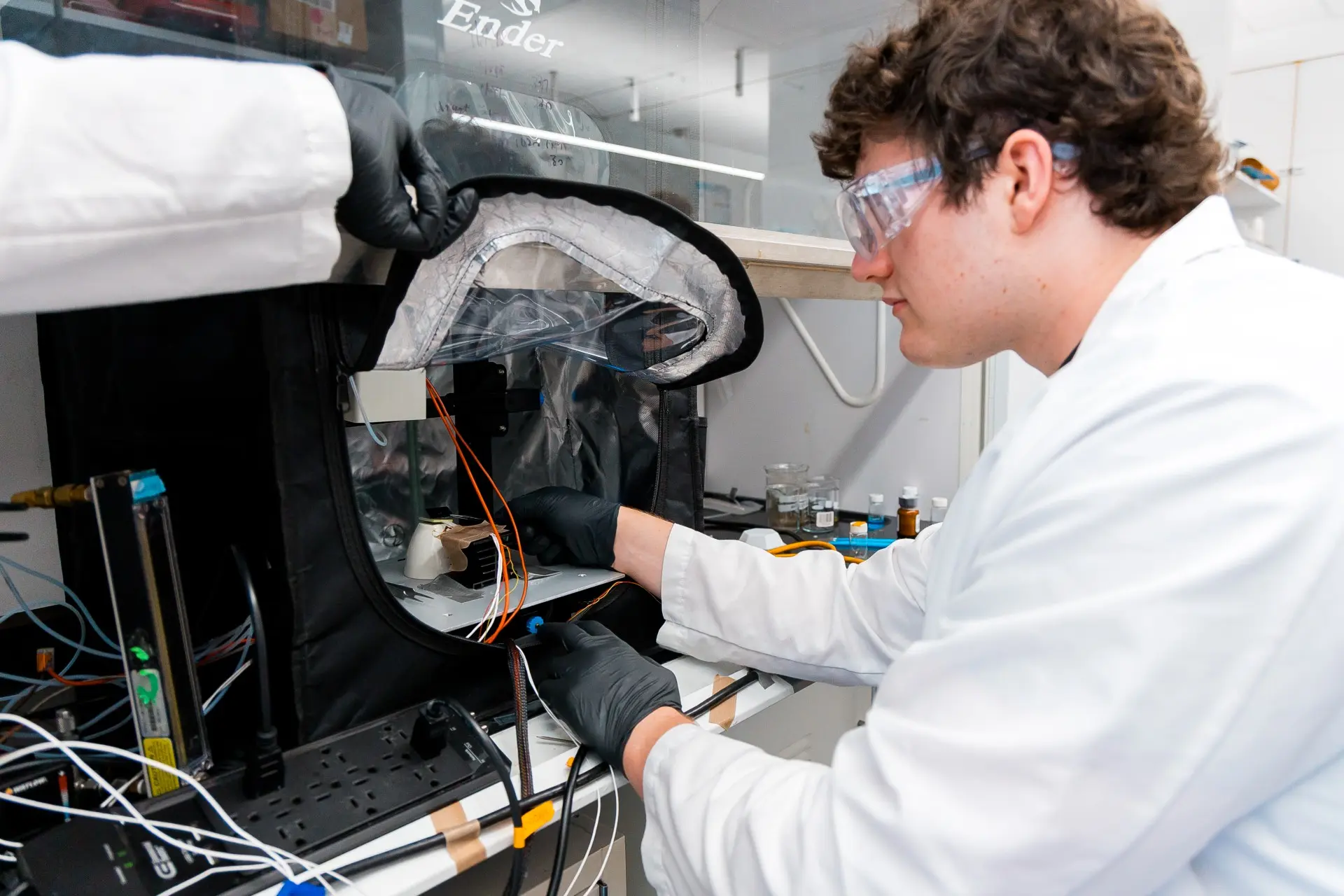
Like many Oregon State startups, Nanomand is deeply tied to the student experience. Undergraduate and graduate students contribute to research and development, gaining hands-on experience with cutting-edge technologies and real-world applications.
“We have many undergraduate students involved,” Chang said. “They’re gaining hands-on experience while contributing to real NASA-related work.”
The team is now preparing for the LunaRecycle Challenge’s final demonstration event, where selected teams will test their systems in person this August in Tuscaloosa, Alabama.
“If the solution is good, we can commercialize it or work with NASA to make it part of future missions,” Chang said. “Ultimately, we want to turn this into something with real impact.”