
Introduction
At Oregon State University’s AI Week in mid-April, a panel of academic and industry experts, moderated by Alan Fern, professor of computer science, artificial intelligence, and robotics, confronted a question increasingly central to computing, education, and industry: If artificial intelligence writes most of the code, what role remains for human software engineers?
The conversation blended historical reflection, a realistic outlook on the trajectory of technology, and a candid discussion about jobs, changes to university curricula, and public anxiety surrounding AI’s rapid advance.
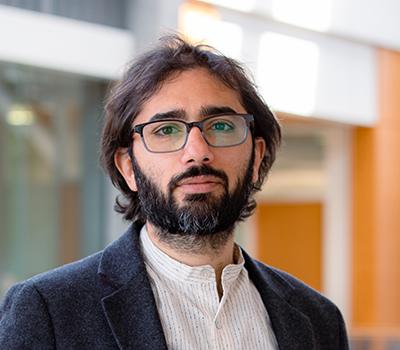
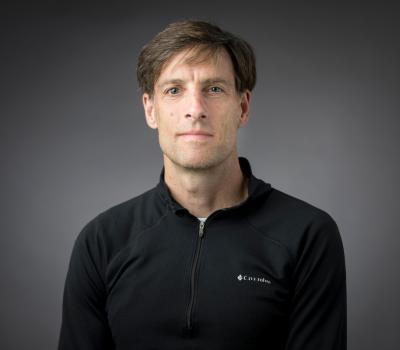
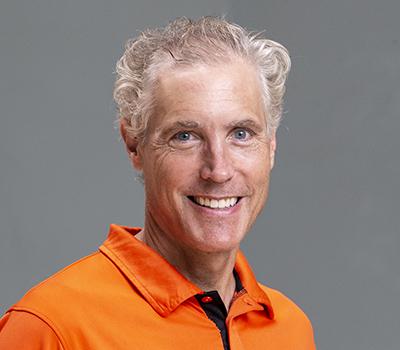
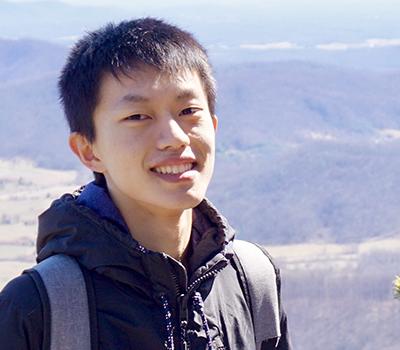
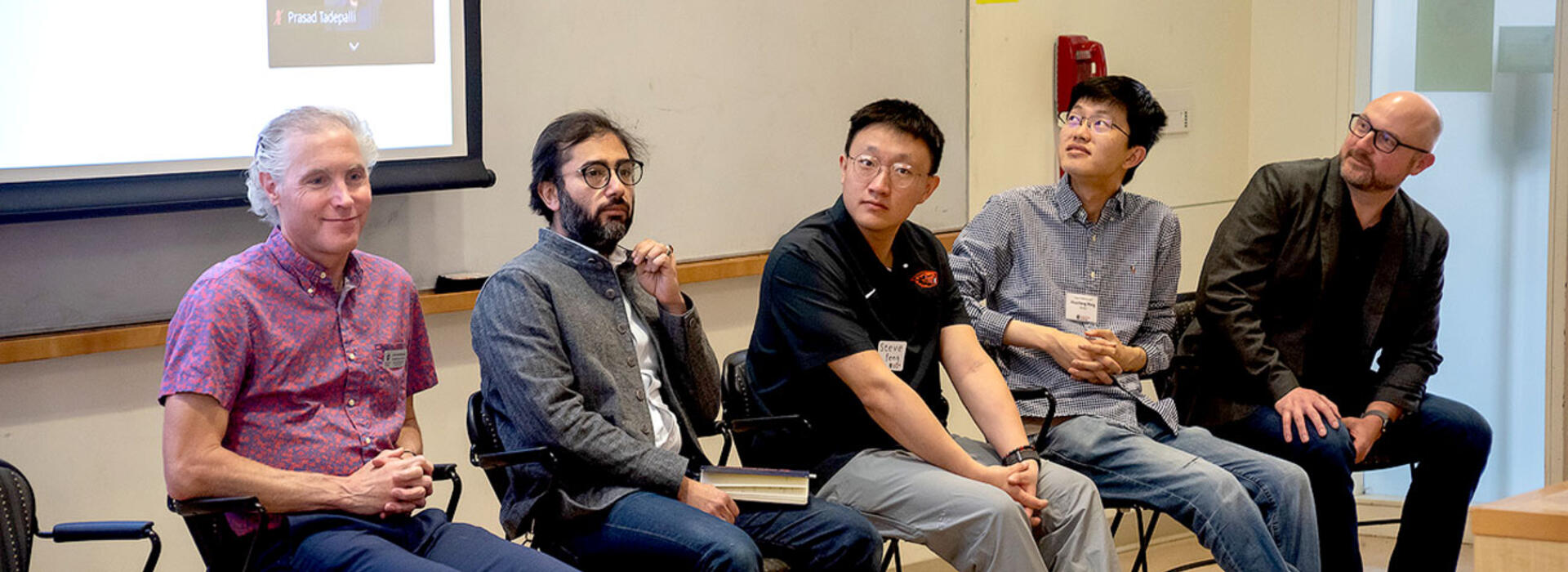
The ‘Future of Software’ panel, featuring College of Engineering faculty Houssam Abbas, Chris Hundhausen, Huazheng Wang, Ph.D. student Zixuan Feng, and NVIDIA’s Director of Deep Learning Systems Software David Zier began by placing today’s moment in historical context.
Software development, the group noted, has always evolved through abstractions — from wiring machines by hand, to assembly language, to higher-level programming languages that promised “automatic programming.” Each shift sparked fears about the future of the profession. “We’ve been here before,” Hundhausen observed. “Every new abstraction makes people worry that programming is no longer a human skill.”
This time, however, the abstraction is far more powerful, and the panelists were unified in their assessment.
AI will write almost all code
Asked whether they agreed with the premise that nearly all computer code will soon be written by AI systems, the panel responded without hesitation. “Wholeheartedly,” one said. Another followed with, “One hundred percent.”
That agreement reframed the discussion. If writing code is no longer a scarce skill, what replaces it?
professor of computer science
Blue Primary, Yellow Secondary
Panelists acknowledged the fear this creates, especially after years of messaging that encouraged students to “learn to code” as a guaranteed path to prosperity. “We spent all this time telling people, ‘Learn to code — this is your golden ticket,’” Fern said. “Now people are hearing that AI is going to do the coding. That scares students, parents, and even faculty.”
But they cautioned against equating “coding” with “software engineering.” Writing code, they argued, has never been the full job — and it is becoming steadily less central.
From line cooks to executive chefs
Hundhausen introduced one of the panel’s most resonant metaphors: software engineering as running a professional kitchen.
“In the past, developers were like line cooks,” he said, referring to individual contributors carefully crafting every ingredient. “What we need now are executive chefs, engineers who can orchestrate complex systems, manage many contributors, including AI agents, and deliver reliable, production-quality software at scale.”
AI, the panel agreed, excels at generating modular components quickly. What it lacks is an understanding of intent and context. “AI is very good at modular development,” Fern said, “but it’s bad at specifying what matters. Humans are the arbiters of intent.”
That distinction — between producing code and defining purpose — emerged as central. Humans must decide what a system should do, why it should do it, and how success is measured. AI can propose implementations, but those proposals require human direction and judgment.
The metaphor extended further. “We’re not cooking dinner for a few friends,” Hundhausen said. “We’re serving thousands of people — and they can’t get food poisoning.” In software terms, that means systems must be reliable, secure, and consistently high quality, even as development accelerates.
Intent, integration, and judgment
Abbas emphasized that verification and evaluation remain fundamentally human responsibilities. Even when AI systems generate and evaluate software against formal specifications using formal tools, someone must still ask whether the system is fit for purpose. Real-world applications operate in messy domains filled with constraints that cannot always be fully encoded in the specification or fully handled by formal tools.
The panel also discussed the point that some things are taught (and learned) for the sake of the general skills they foster, such as linking abstractions together or theoretical modeling, and not just for the sake of learning the literal thing being taught.
“You still have to evaluate what happens when this software is deployed in context,” Abbas said. “Does it actually work the way it needs to?”
Zier reinforced this point from an industry perspective. Professional software engineering, he noted, has long focused less on how code is written and more on how systems behave over time, including how they scale, how they fail, and how they earn trust. AI may generate more software faster, but it also raises the stakes for oversight and architectural thinking.
Learn more about David Zier, B.S. electrical and computer engineering ’02, M.S. ’04, Ph.D. ’09 and his journey from OSU to NVIDIA.
professor of computer science
Blue Primary, Yellow Secondary
Under development at OSU: a generative AI-assisted software engineering degree
The implications for education sparked lively discussion. Panelists questioned whether traditional curricula, which often emphasize hand-coding as the defining skill, should be rebalanced. While foundational understanding remains important, they argued, students increasingly need training in system design, abstraction, critical evaluation, and human-AI collaboration.
Those ideas are already beginning to shape how the College of Engineering thinks about software education. Panelists pointed to work underway at the university to develop a generative AI-assisted software engineering degree, designed around the premise that AI will be a collaborator in nearly every stage of future software development. Rather than treating generative tools as add-ons or shortcuts, the program, which would be one of the first of its kind in the nation, aims to integrate them directly into how students learn to design, evaluate, and reason about complex systems.
The proposed degree would reflect many of the themes raised during the discussion: an emphasis on intent over syntax, system-level thinking over isolated coding tasks, and human judgment over raw output. Students would be expected not only to use AI to generate software, but also to critique the results, verify their correctness, and understand their limitations. As the panel made clear, the goal is not to train students to compete with AI at writing code, but to prepare them to lead, supervise, and responsibly deploy AI-assisted systems in real-world settings.
The panel also explored risks. AI-generated code could overwhelm open-source communities and concentrate power among those who control AI platforms. But the tone remained cautiously optimistic.
Programming, they concluded, is not disappearing. It is moving up the abstraction ladder once again. Humans are not being removed from software development. Rather, they are being repositioned at higher levels of responsibility, judgment, and accountability.
As Hundhausen put it, “The question isn’t whether humans still have a role. It’s whether we’re ready to recognize — and teach — the right one.”