

Introduction
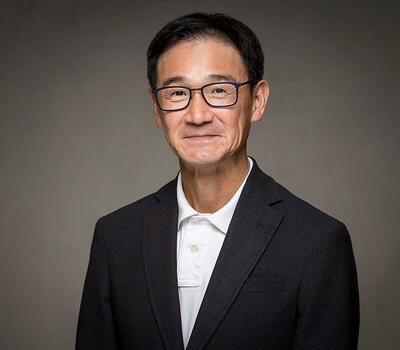
David Zier, B.S. electrical and computer engineering ’02, M.S. ’04, Ph.D. ’09, believes the hardest problems in software engineering are no longer solved primarily by writing code. As Director of Deep Learning Systems Software at NVIDIA, he spends far less time programming than he once did, but far more time deciding what should be built, why, and how complex systems should behave at scale.
“AI is already better than humans at generating and reviewing massive amounts of code,” Zier said. “Where it struggles is determining intent — understanding what problem we actually want to solve.”
That distinction, he argues, is reshaping the future of software engineering, with major implications for how universities educate engineers.
A career at the center of NVIDIA’s AI transformation
Zier’s career has unfolded alongside NVIDIA’s evolution from a graphics company into a defining force in artificial intelligence.
Director of Deep Learning Systems Software at NVIDIA
Blue Primary, Yellow Secondary
While a graduate student at Oregon State, Zier built a full CPU simulator from the ground up, exploring parallelism and architectural trade‑offs that would later reflect modern accelerated computing. When he joined NVIDIA, he was struck by how closely that work aligned with what engineers were tackling in industry. “The problems I was studying academically turned out to be the same ones NVIDIA was solving at scale,” he said. “OSU gave me a foundation for tackling really complex challenges. And it prepared me for a career where learning never stops.”
After completing his Ph.D. in computer architecture at Oregon State in 2009, he joined NVIDIA just as the company began developing its first in‑house CPU. Helping design and release that CPU stands out as an early career milestone. “That was a huge highlight,” he said, crediting strong mentors at OSU, including Ben Lee, and the chance to write production‑level system software early in his career.
Over time, Zier moved from individual contributor to technical lead and manager, eventually pivoting fully into AI as NVIDIA’s focus shifted toward large‑scale accelerated computing. Today, his organization develops inference server software tools that make it easier to deploy complex AI systems efficiently across CPUs, GPUs, and heterogeneous hardware platforms.
“We’re in the middle of redefining how the world works,” Zier said. “Our job is to make it simple to deploy massive AI solutions and extract as much performance as possible from the hardware, regardless of what kind of hardware it is.”
Becoming a director, he adds, was “the icing on the cake,” but the work itself continues to evolve rapidly.
A transformational moment for Oregon State
Zier sees that same momentum reflected at his alma mater, where a next‑generation NVIDIA supercomputer will be installed in early 2027 at the Jen‑Hsun Huang and Lori Mills Huang Collaborative Innovation Complex.
The system, designed to excel at AI-centered and GPU-accelerated workflows, will be among the most powerful academic supercomputers in the country. What matters most, Zier says, is not just its raw performance but when OSU will receive it.
“Being early really matters,” he said. With many institutions waiting in line for similar systems, OSU’s early access creates a unique opportunity. “It puts the university at a cutting edge ahead of other academic supercomputers.”
Zier is particularly interested in how the system will be used to deepen student involvement. “This isn’t just about faculty research,” he said. “It’s about how you use those resources to train students, to let them experiment with real AI infrastructure, and to ask bigger questions.”
Rethinking how engineers are educated
Those questions feed directly into what Zier sees as a necessary shift in software engineering education. He argues that traditional programs train students much like “line cooks” — engineers who execute tasks — when the future demands system‑level thinkers from day one.
“What we really need are engineers who can act like executive chefs right out of school,” he said. “People who can manage large systems, reason about complexity, and guide AI rather than compete with it.”
Generative AI, he believes, will soon outpace even elite developers in speed and volume of code production. Human engineers’ value will lie in skills that must be taught explicitly, such as architecture, intent, and decision‑making.
That perspective has shaped his involvement in conversations about AI‑assisted, systems‑focused undergraduate software engineering programs, including efforts at Oregon State aimed at preparing students for what Zier calls “agentic engineering,” working alongside AI systems that actively participate in design and development.
“You have to train a different class of engineer,” said Zier at ‘The Future of Software’ panel hosted during OSU’s AI Week in April. “Someone who knows how to think about problems at scale.”