
Introduction
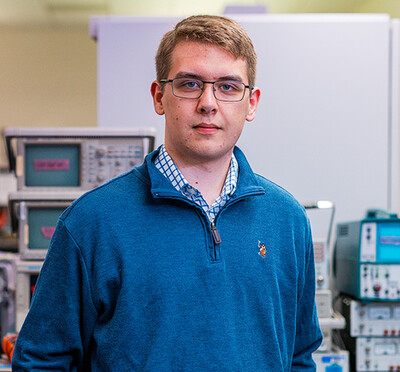
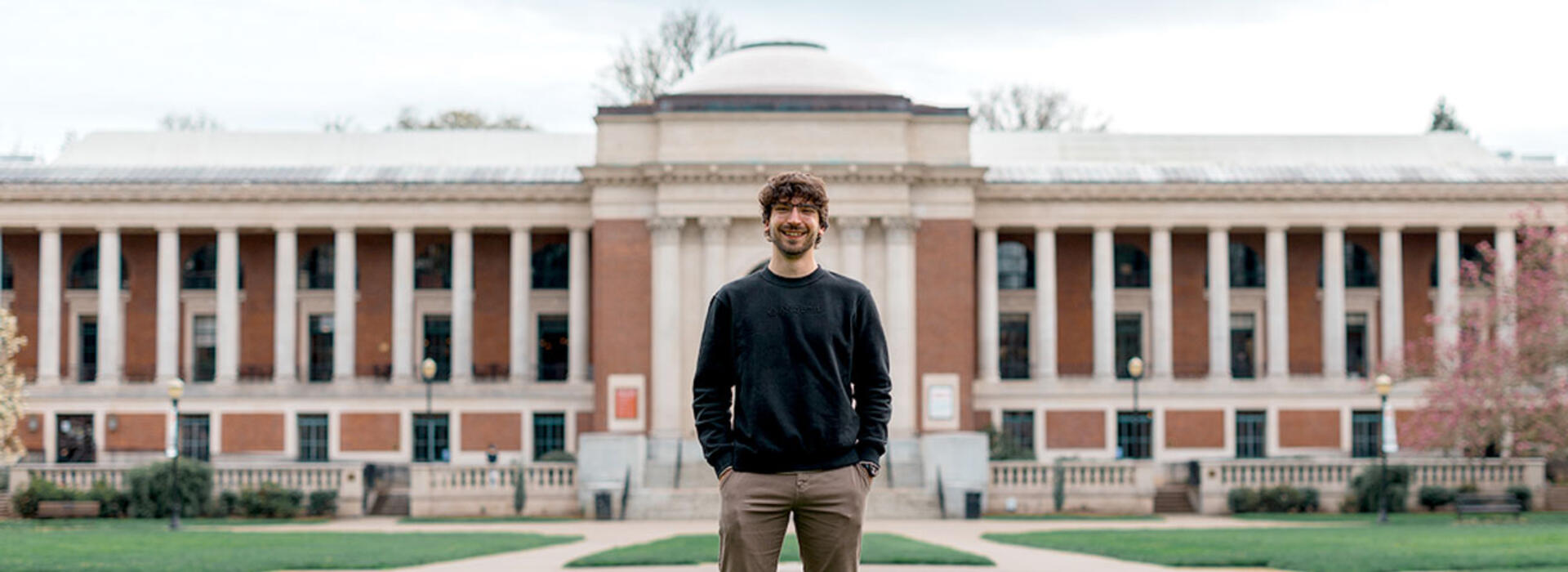
Noah Pragin traces his love of coding to a pop-up ad. It was third grade, and he was working through online Spanish lessons when an advertisement for Codecademy caught his eye. He clicked on it, tried Java, and never looked back.
“I loved that you could write something, hit run, and the computer would talk back to you right away,” he said. “That instant feedback was addictive.”
A rough start — and a forced reset
By the time he graduated high school, Pragin knew he wanted to pursue computer science — but he also wanted to leave California and test his independence.
Oregon State University offered exactly that. “I wanted somewhere new,” he said. “My family had spent time in Oregon, and I loved how different it felt — lush, green, and outdoorsy. When I compared programs, OSU also had a very strong engineering pedigree. It felt like the right place to grow.”
Pragin arrived at OSU in 2020, at the height of the pandemic, and like many students, struggled to find his footing. Drawn into Greek life and social activities, he lost focus academically. “I failed more classes than I didn’t,” he said.
After four terms his GPA had dropped to 0.54 and OSU placed him on academic suspension. He moved back to the Bay Area, earned transferable credits at community college, and landed a developer role at ClearScale, an Amazon Web Services consulting firm, where he built a cloud-infrastructure management portal for 16 months. “This experience showed me that I had a passion for working on software grounded in meaningful hardware,” he said.
When the tech downturn hit, he was laid off — just months before he would have been eligible to return to OSU. The timing felt almost fateful.
computer science student
Blue Primary, Yellow Secondary
All in on campus
When he returned to OSU, everything changed. He sat in the front row, asked questions, built relationships with faculty, and brought his grades up significantly. That engagement led him into student leadership roles, including with Global Formula Racing where he now leads SLAM (simultaneous localization and mapping) development for the team’s autonomous racecar.
He also helped revive the dormant AI Club as project manager, redesigning it around student-owned projects. He helped design a 10-week curriculum, by the end of which roughly 20 students had built portfolio-ready applications, including playlist mood analyzers and loan approval calculators. “The sense of pride I felt helping others get their project off the ground surprised me,” he said.
His classroom engagement also earned him research roles in two labs: one building apple-picking robots with Professor Cindy Grimm, professor of robotics, and another developing machine‑learning approaches for robotics, including perception and decision‑making in real‑world environments with Stefan Lee, Brent and Elaine Leback Professor in Engineering.
“I realized how much opportunity there is here if you actually show up,” he said. “OSU rewards students who are curious and willing to put in the work.”
Into the field
That hands-on culture also helped launch Pragin into industry. In summer 2024, he interned at SiFly Aviation, contributing software across the stack to a world‑record, 3+‑hour electric drone flight. “It was intense,” he said. “We were moving fast, building real systems under real constraints. It felt like everything I’d learned finally had a purpose.”
He followed that experience with a software engineering internship at defense tech startup Anduril Industries, where he worked on autonomy software for UAV systems. “At Anduril, I was building safety‑critical behavior trees and embedded systems,” Pragin said. “That’s not something you can fake. OSU prepared me to think rigorously, debug carefully, and work across hardware and software.”
Following graduation, Pragin will work full-time for Anduril, which recently received a $20 billion contract from the U.S. Army.
Prepared for industry — and what comes next
Beyond internships, Pragin credits OSU with teaching him how to learn. “The biggest thing OSU gave me wasn’t just technical skills,” he said. “It was the ability to adapt to new tools, new domains, and new teams. That’s what industry really demands.”
As he prepares to graduate, Pragin sees his journey — missteps included — as essential. “Failing early forced me to take ownership of my education,” he said. “Coming back stronger made all the difference.”