Introduction
For decades, supercomputers have belonged to an elite few: physicists running climate models across thousands of nodes, national labs simulating nuclear reactions, biologists mapping an organism's entire proteome. At Oregon State University, a fast-growing group of computer scientists is working to change that before the university's most powerful computing resource yet — a new Nvidia supercomputer housed in the Jen-Hsun Huang and Lori Mills Huang Collaborative Innovation Complex — even comes online.
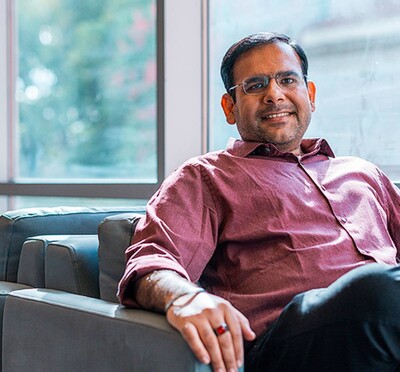
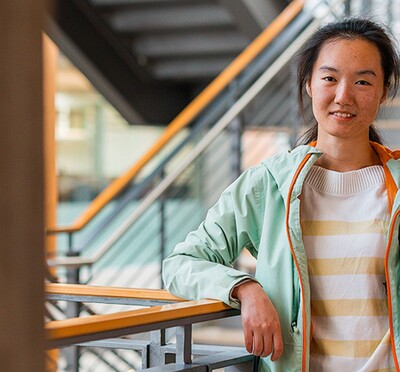
The group, known informally as HiPCastor, includes more than 20 students and five faculty members — Wenqian Dong, Renato Figueiredo, Kyle Hale, Xin Liang, and Manish Motwani — who all arrived at OSU between 2023 and 2026, drawn in part by the university's growing investment in high-performance computing (HPC). Individually, they study everything from AI-accelerated physics simulations to scientific data compression to hidden software bugs. Collectively, their mission converges on a single idea: democratizing supercomputing power by making it usable for researchers at Oregon State and beyond who may never have brought their data to an HPC cluster.
A meta-lab, not a monolith
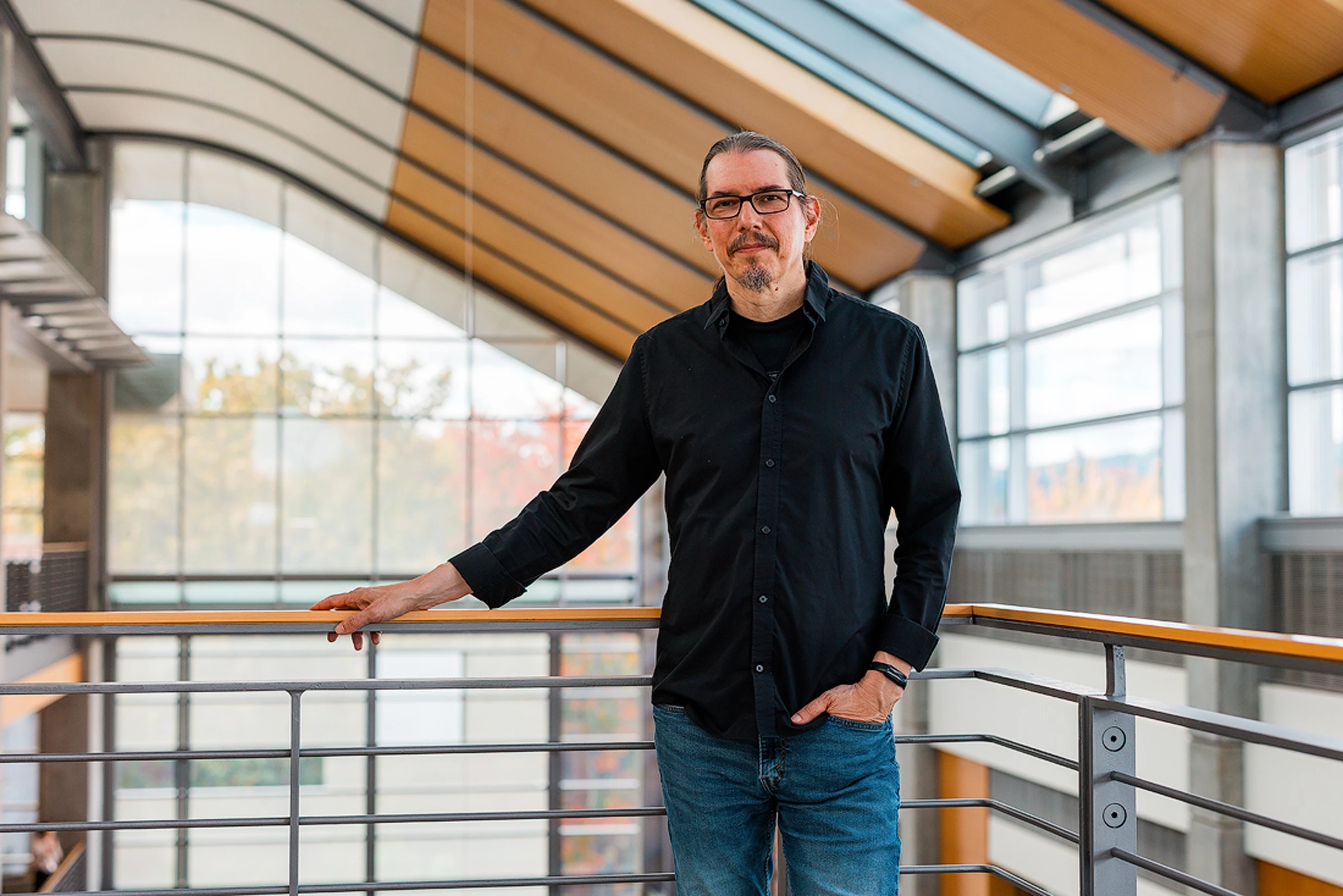
Renato Figueiredo, a professor of electrical engineering and computer science who spent more than two decades at the University of Florida before joining OSU in 2023, describes HiPCastor less as a formal research center and more as a "meta-lab" — a loose federation of labs united by shared interests rather than shared funding or a chain of command.
"It's really a community," Figueiredo said. "Faculty have their own labs and projects, but we share interests and create opportunities for students and researchers to connect across those boundaries."
Figueiredo argues that this structure is exactly what OSU needs as it prepares to open its doors to a much broader set of researchers than a traditional supercomputing system typically serves.
"The idea is to make sophisticated computing infrastructure available to people who need it without requiring them to become experts in the infrastructure itself," he said. "Researchers should be able to focus on solving problems in their disciplines."
Learn more about Figueiredo’s work in distributed computing, virtualization, and grid computing, and how he partners extensively with scientists in ecology, agriculture, and forestry to turn complex data into answers.
Letting AI do the heavy lifting
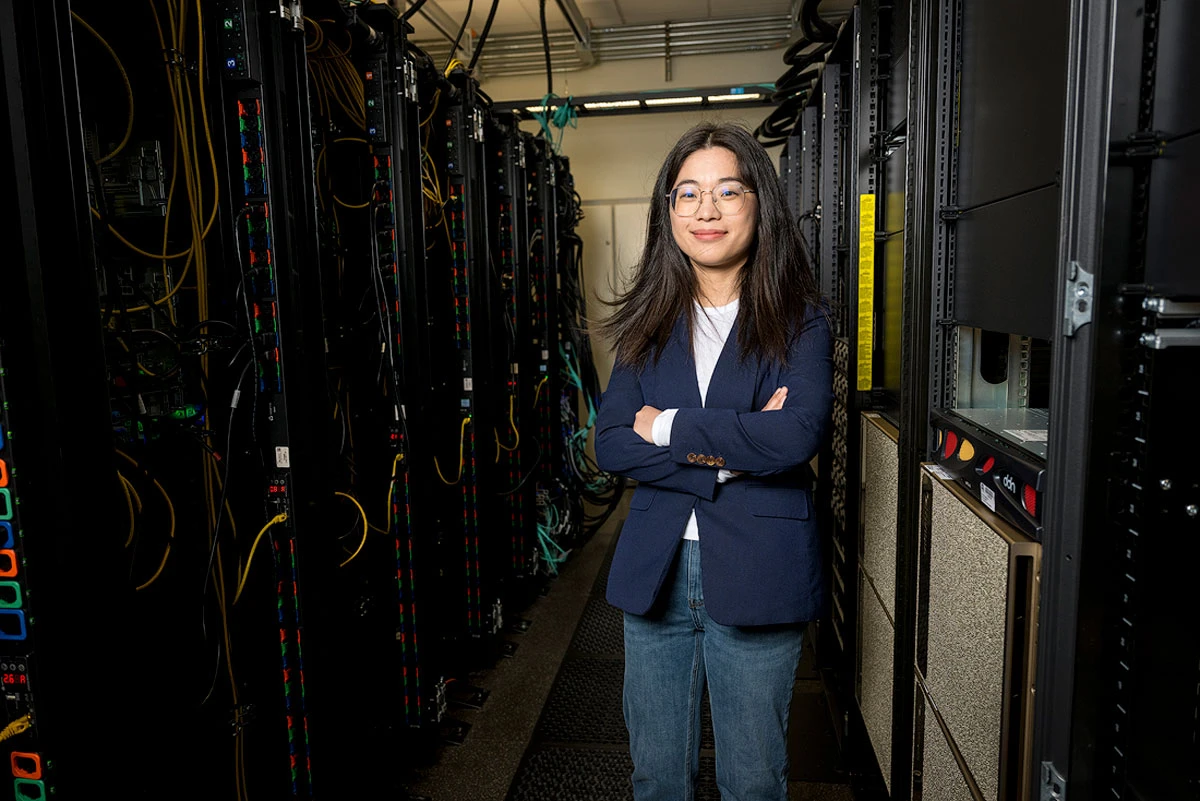
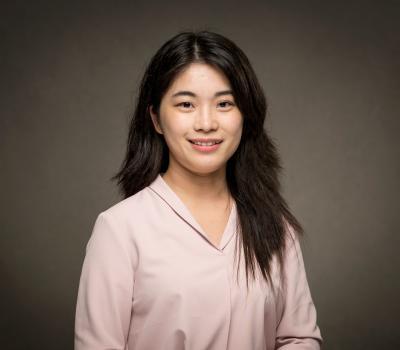
Wenqian Dong, assistant professor of computer science, tackles the HPC democratization challenge from the algorithm side. Her research trains machine-learning "surrogate" models to approximate the most computationally brutal parts of physics-based simulations — from power-grid stability calculations to fluid dynamics — cutting runtimes from weeks to hours.
assistant professor of computer science
Blue Primary, Yellow Secondary
"Large-scale scientific simulations drive discovery across so many domains," Dong said. "But they're incredibly expensive to run, and they don't always scale well on modern hardware."
Her group's tools are designed explicitly for scientists who aren't machine-learning experts. "The goal is to democratize this technology," said Dong, who was named a co-PI on a DOE Genesis grant led by NCSU’s Michela Becchi in July. "Scientists shouldn't need to be machine-learning experts to benefit from it."
Learn more about Dong’s machine-learning surrogate models.
Making the machine disappear
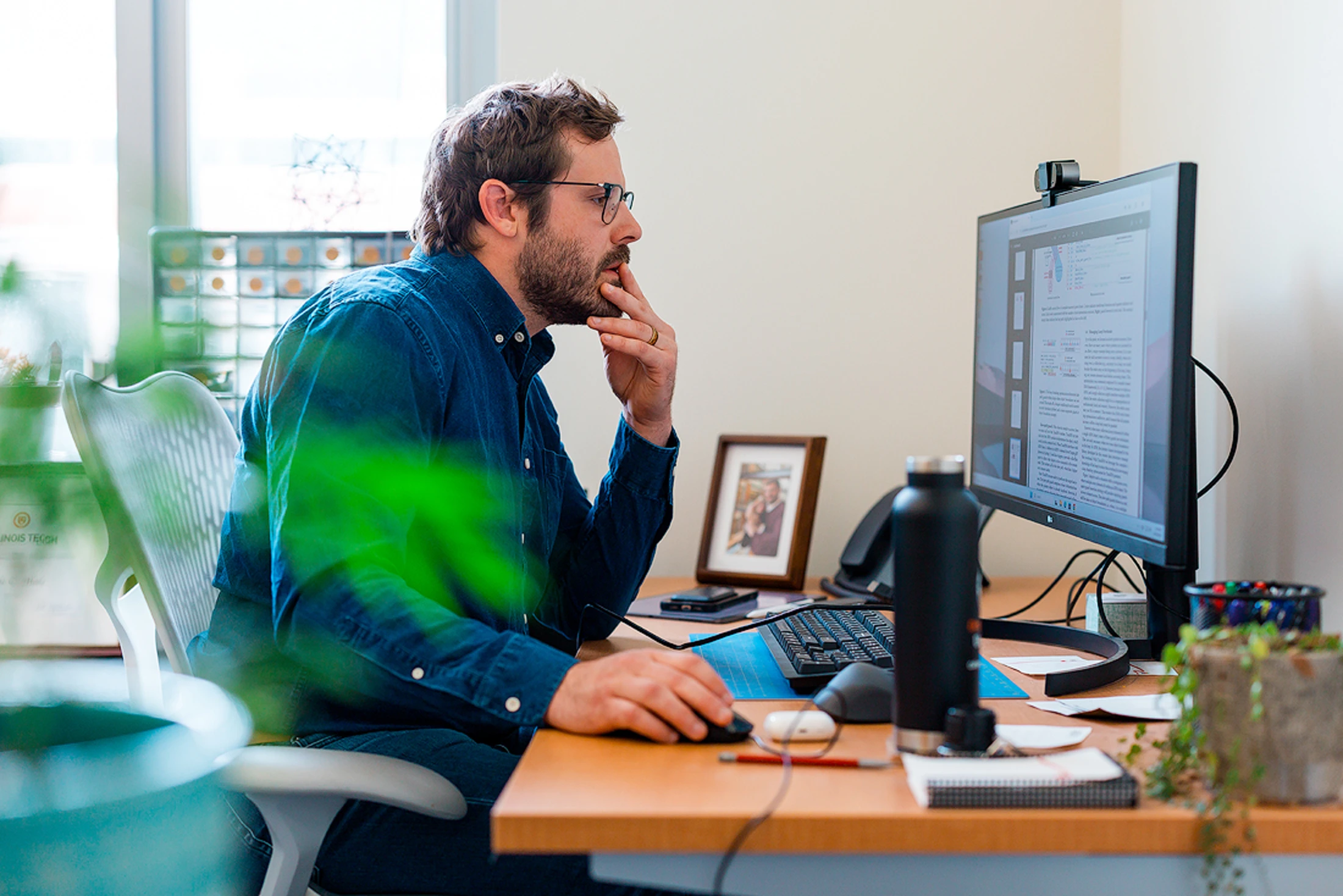
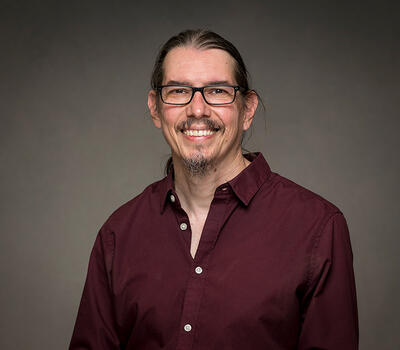
Kyle Hale, associate professor of computer science, specializes in the systems software that underpins high-performance computing. One example is Colony, software developed with support of Hale’s NSF CAREER award that provides strong cybersecurity protections without sacrificing performance by isolating individual computing functions using a new concept called a virtualized subroutine.
Hale, who joined OSU in 2024, is also creating new approaches to "disaggregated memory" that let programs borrow unused memory from other machines across a network. The goal is to enable researchers to leverage dynamically changing resources in a supercomputer without having to rewrite their code. The benefit is preventing compute from going to waste while paying to power, cool, and operate the machines.
He's already applying his expertise to a collaboration with University of Oregon physicist Kayla Nguyen and Intel, helping port sophisticated semiconductor chip image-reconstruction algorithms onto OSU's HPC infrastructure.
"We're very interested in democratizing access to the machine," Hale said, describing a broader HiPCastor vision of enabling smaller, opportunistic jobs run using idle "slack" time on the supercomputer rather than requiring researchers to compete for full-system hero runs.
Learn more about Hale’s collaboration with Intel and the University of Oregon.
Solving the data bottleneck
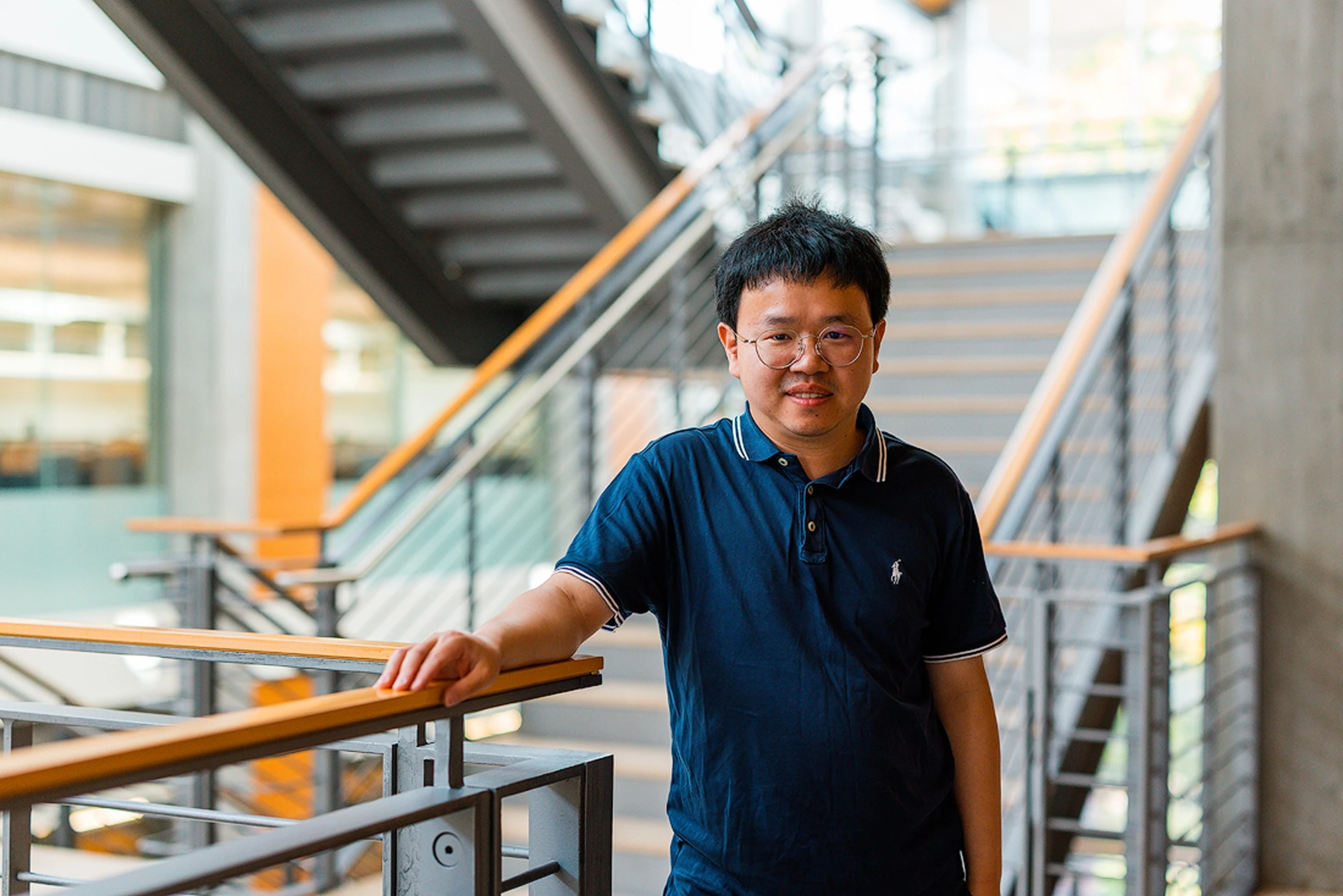
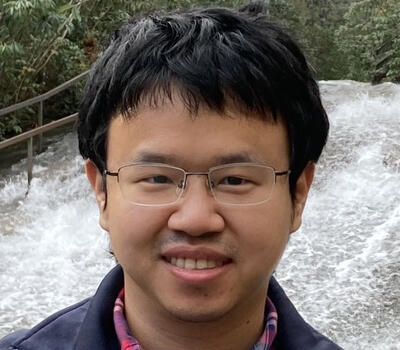
Xin Liang, an associate professor of computer science who moved to OSU last year from the University of Kentucky, is tackling a different challenge: the sheer volume of data modern instruments and simulations produce. His NSF CAREER Award project tackles "data polymorphism" and works something like a JPEG for scientific data — delivering only as much resolution as a given analysis actually needs.
associate professor of computer science
Blue Primary, Yellow Secondary
"We're entering an era where generating data is becoming easier and easier," Liang said. "The question is how we store it, move it, share it, and use it effectively." His team builds the retrieval systems automatically, he said, so "we only move necessary data for their analysis" — sparing researchers from having to become data-management specialists themselves.
Learn more about Liang’s data polymorphism work.
Trust as a prerequisite
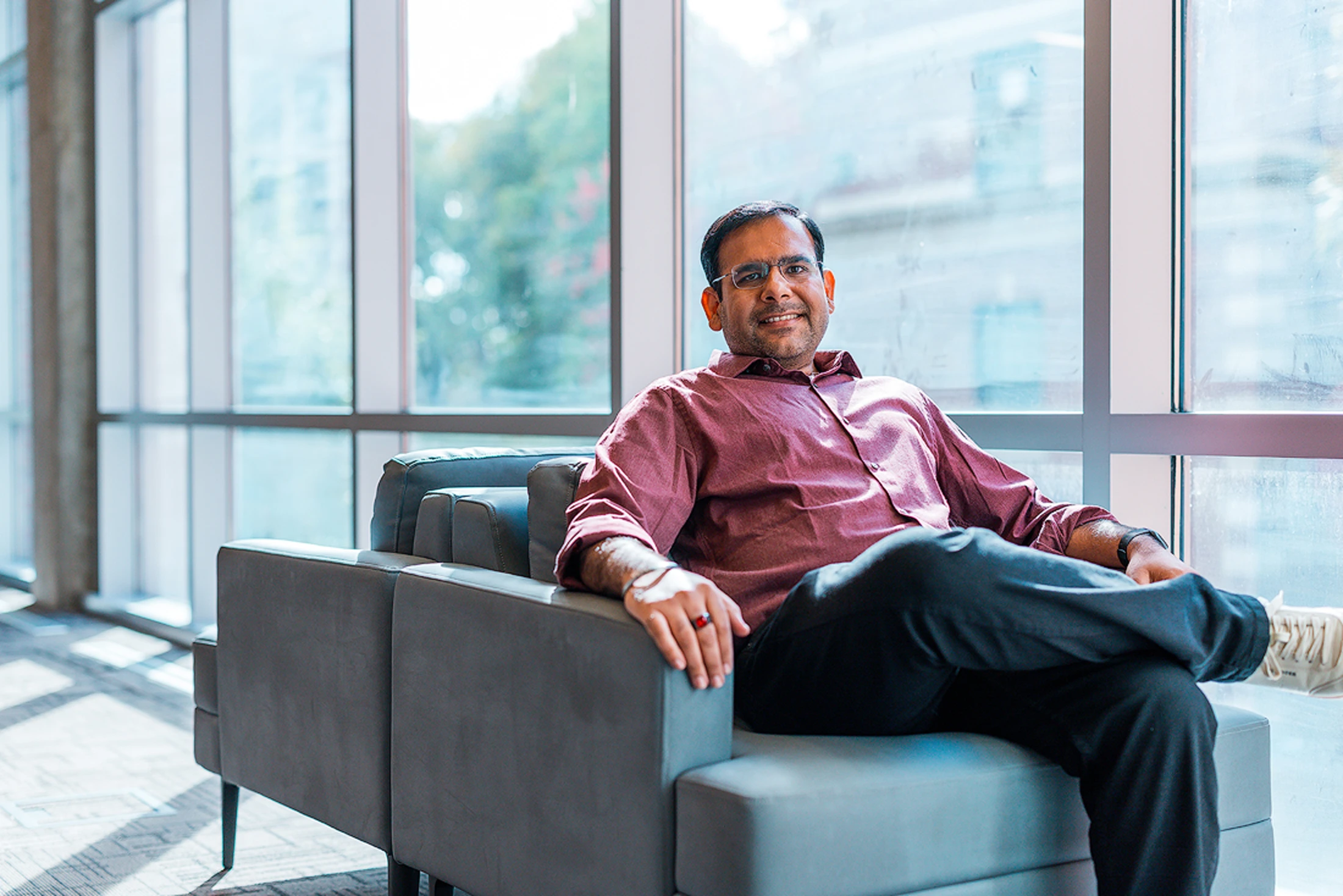
Enhanced access to HPC systems won’t matter, though, if the results can't be trusted, which is where Manish Motwani, assistant professor of computer science, comes in. His research uncovers hidden bugs in widely used HPC software, work that is crucial for the researchers HiPCastor hopes to bring on board: domain scientists writing simulation code without formal software-testing training.
Two other projects from Motwani’s lab address emerging challenges at the intersection of artificial intelligence and high-performance computing. In one, his team showed that AI tools that translate legacy scientific software for modern GPU-based systems can introduce subtle errors that traditional software tests often miss, and more rigorous evaluation revealed far lower correctness rates than previously reported.
"AI is smart. It can do the translation," Motwani said. "But that doesn't mean the translation is doing the same thing as the original program."
In another project, Motwani’s group developed an energy-aware software testing approach for supercomputers that dramatically reduces the computational and power costs of regression testing, in one case by up to 97%, offering a potential path toward more sustainable HPC research.
Learn more about Motwani’s work on hidden software bugs and sustainable supercomputer code.
A national contender
The HiPCastor group's ambitions are backed by results. By one widely cited measure of HPC research output — publications at the field's three top conferences over the past decade — OSU ranks 13th nationally. HiPCastor students have led a strong record of publications in 2026, including three IPDPS papers, one ICS paper (Best Paper Award nominee), one HPDC paper, two SC papers, and two eScience papers.
With the Huang Complex supercomputer expected to come online in 2027, HiPCastor's five faculty and their graduate students, including Xuan Wu, who was recently awarded the prestigious ACM/IEEE CS George Michael Memorial High-Performance Computing Fellowship, are betting that the real measure of the machine's success won't only be how fast it runs for a handful of elite users — but also how many new users it brings into the fold to enable new scientific discoveries.