Introduction
More than 80,000 tons of used nuclear fuel sit in temporary storage across the United States, waiting on a long-term plan. Researchers at Oregon State University have developed a chemical process that could make that fuel easier to recycle and less politically fraught to handle.
Most current approaches for recycling used nuclear fuel rely on complex solvent-extraction systems that use specialized chemicals to separate uranium, plutonium, and other materials. Those methods can be effective, but they can also generate significant secondary waste streams and require chemicals that degrade in highly radioactive environments.
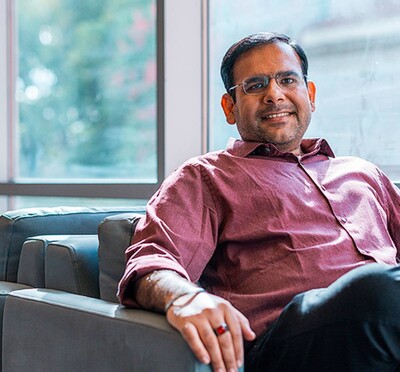
In a study published in Communications Chemistry, a team led by Alexander “Sasha” Chemey, assistant professor of nuclear science and engineering, demonstrated a different approach.
Instead of relying on complex extraction chemicals, the process, which draws on methods used to recover valuable elements from e-wastes and mine tailings, exploits differences in solubility. After converting the fuel into fluoride compounds, researchers use carefully chosen solvent conditions that allow uranium-bearing materials to dissolve while many unwanted and hazardous fission products remain behind. A second step then causes the desired materials to crystallize back out of solution for recovery. The technique removed an estimated 91% of fission product radioactivity from simulated used fuel in a single pass.
assistant professor of nuclear science and engineering
Blue Primary, Yellow Secondary
“When nuclear fuel comes out of the reactor, it’s got a little bit of everything in it,” said lead author Taryn Gibbs, Ph.D. nuclear engineering ’26, who now works in the nuclear waste management industry. “In fission, uranium nuclei split unevenly, and the resulting fission products cover a huge swath of the periodic table. Separating the remaining uranium from that mixture is like trying to pick out all the peanuts from the world’s most complicated trail mix.”
The work arrives at a time when governments, utilities and researchers are increasingly looking for ways to expand carbon-free energy production while reducing waste and making better use of existing resources.
Closing the nuclear fuel cycle
Chemey prefers the term “used” to “spent” because the latter label is misleading. “Roughly 95% of the useful energy is still in the nuclear fuel when we pull it out,” he said.
Recovering that uranium and plutonium for reuse would also shrink the waste problem. The two elements are what force repositories to be designed for hundreds of millions of years, while the fission products left behind are far more intense but much shorter lived. Separating them could make storage sites easier to engineer technically, tectonically, and politically.
Countries such as France and Japan have long pursued “closed fuel cycles,” in which used fuel is reprocessed and recycled rather than treated solely as waste. Chemey believes technologies that simplify recycling could help make similar strategies more practical and economically attractive in the United States.
“If we can scale this appropriately and make it defensible against proliferation, we could dramatically reduce the amount of very long-lived nuclear waste that we have to store,” Chemey said.
Recycling fuel could also lessen the need for future uranium mining.
“Closing the nuclear fuel cycle is essential for the long-term sustainability of nuclear power,” Gibbs said. “While we have enough uranium available to power our current fleet of reactors for many decades, it’ll eventually become scarce and more expensive to mine. That’s when producers will really turn their attention to nuclear reprocessing; we’re just trying to get ahead of the curve.”
Built at Oregon State, with students at the center
The project was made possible by capabilities unique to Oregon State, including the Oregon State TRIGA Reactor, the university's Radiation Center, and the health physics staff. Those facilities provided the specialized radioactive materials, laboratory infrastructure, and safety expertise needed to conduct the work.
Chemey also emphasized the contributions of students and early-career researchers. Co-authors include Liam Walker, M.S. radiation health physics ’26; Devin McGlamery, postdoctoral researcher; Jacob Jaffe, B.S. nuclear engineering ’24, now a PhD student at the University of Tennessee; Victoria Augustine, Ph.D. nuclear engineering ’25, Meng ’22, B.S. ’21, now a staff scientist at Pacific Northwest National Laboratory.
The next step for Chemey and his team is determining whether the process can work at much larger scales and under the more complex conditions found in real-world fuel recycling operations. Those efforts will likely require partnerships with national laboratories and industry.