

Probabilistic and Causal Inference
AI Faculty Research Area
Probabilistic and causal inference using graphical models is a research field focused on understanding uncertainty and cause-and-effect relationships in systems of all kinds, from biological and social to engineered and computational. It uses graphs, networks of nodes and edges, to represent variables and their dependencies, making assumptions explicit and reasoning transparent. By combining these visual representations with probability theory, researchers can analyze observational and experimental data, distinguish correlation from causation, and predict the effects of interventions. This framework provides a unifying language across disciplines and supports learning and decision-making in settings where data are noisy, experiments are limited, and underlying mechanisms are only partially understood.
Graphical models enable researchers to ask and answer four fundamental types of questions that arise naturally in science and everyday reasoning.
- Probabilistic inference asks what is likely to happen given available information, e.g., forecasting patient outcomes based on medical history or predicting system failures from sensor data.
- Causal inference goes further and asks what would happen under an intervention, such as whether introducing a new treatment or policy would change outcomes rather than merely being associated with them.
- Causal discovery complements this by learning the underlying causal structure from data, identifying how variables causally influence one another, and clarifying the assumptions under which, and to what extent, that structure can be reliably inferred.
- Counterfactual reasoning is the most subtle level and asks what might have happened under different circumstances, such as whether a patient would have recovered without the treatment they received or how an economic outcome would differ had a policy not been implemented. These capabilities help us make better decisions even when data are incomplete, assumptions such as independent and identical distribution of random variables don’t hold, as in structured and network data settings, or conditions change across settings. They enable insights to transfer across domains and help AI systems generalize from simulations to the real world, remain robust to shifting data, and provide more transparent, explainable decisions.
Faculty

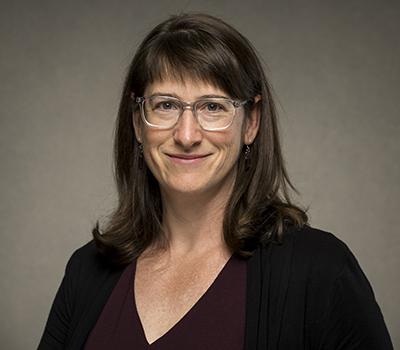
Rebecca Hutchinson
Associate Professor | Kearney Faculty Scholar
rebecca.hutchinson@oregonstate.edu
Research Groups
Data Science and Engineering
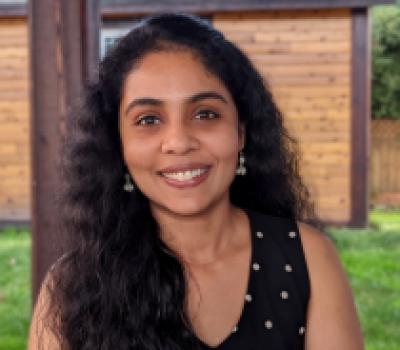
Karthika Mohan
Assistant Professor
karthika.mohan@oregonstate.edu
Research Groups
Data Science and Engineering | Artificial Intelligence and Robotics
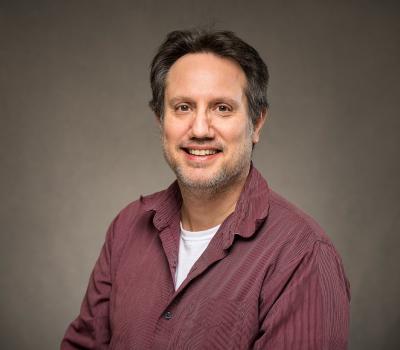
Raviv Raich
Professor
Research Groups
Data Science and Engineering | Artificial Intelligence and Robotics | Communications and Signal Processing | Health Engineering
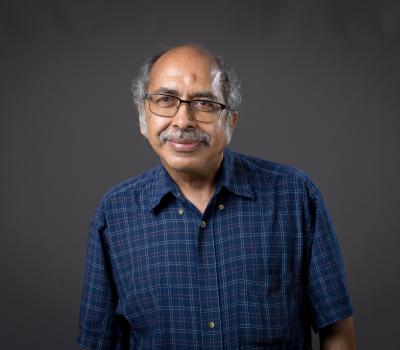
Prasad Tadepalli
Professor
Additional Positions
AI Graduate Program Director
Research Groups
Artificial Intelligence and Robotics | Data Science and Engineering | Computer Science Education
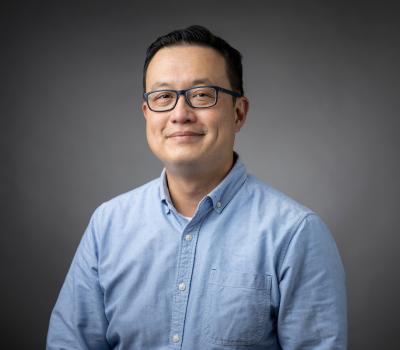
Weng-Keen Wong
Professor
Additional Positions
OSU Site Director, Pervasive Personalized Intelligence Center
Research Groups
Data Science and Engineering | Artificial Intelligence and Robotics