Introduction
Megan Bartram, a second-year mechanical engineering student at Oregon State, shares how a summer semiconductor training camp opened her eyes to new possibilities in engineering.
When I arrived at Analog Devices' Beaverton campus this summer, I knew very little about the world of microelectronics. As a mechanical engineering student, I assumed semiconductors were primarily the domain of electrical engineers. I wasn't sure how I fit into that picture. A classmate encouraged me to apply, and that decision opened my eyes to an industry I had never considered before.
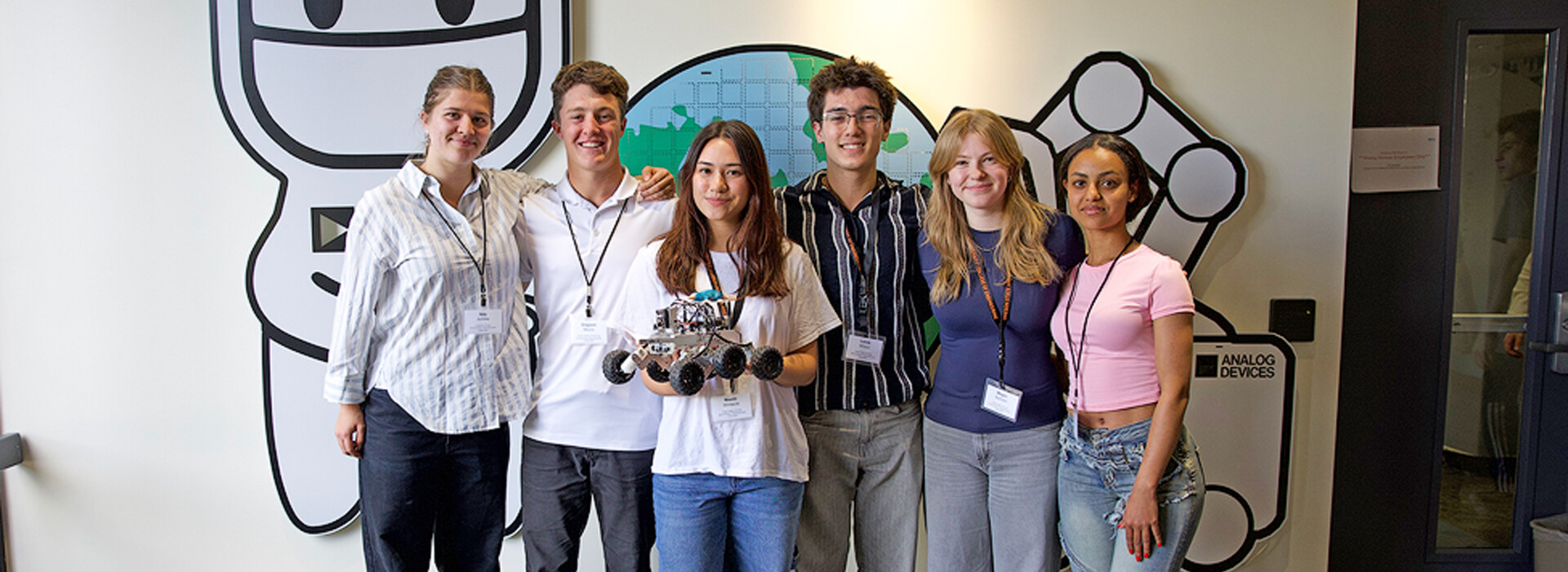
The Semiconductor Training Camp is a two-week intensive summer program focused on introducing robotics and semiconductor manufacturing to first-year undergraduate students. Co-sponsored by Intel and Analog Devices, the camp brought together about 30 students from universities across Oregon. From the start, we were challenged to think differently and work together.
mechanical engineering student
Blue Primary, Yellow Secondary
Our biggest assignment was to build a rover from a box of parts in just four days. There was one catch: only one person on each team could see the instructions, and they weren't allowed to touch any of the hardware. Success depended entirely on communication, collaboration, and trust.
My background in metalworking helped when it came to assembling the aluminum frame, but past that, I was in uncharted territory. My teammates and I learned to solder circuits, write C++ code, troubleshoot problems, and design 3D-printed components. By the end of the week, our hard work paid off. Our team had the best performance overall, leading in obstacle course time and aesthetics.
The second week we got an inside look into another of the semiconductor industry's leaders: Intel. Touring the Foundry and Jones Farm facilities, we got to see the scale and precision of modern semiconductor development firsthand and met engineers working in the field.
One of the highlights was connecting with Oregon State alumnus José García and other professionals who shared their experiences and career paths. Hearing from engineers who had once been students like me made the entire engineering field feel more approachable and helped me see the many opportunities available within it.
I arrived at camp expecting to learn a few technical skills. I left with new confidence, new friendships, and a better understanding of the many ways engineers can contribute to semiconductor technology. Most importantly, I came away with a clearer vision of my future and a sense that there is a place for me as an engineer.