

Introduction
When Oregon State University’s NVIDIA-powered supercomputer comes online in the Jen-Hsun Huang and Lori Mills Huang Collaborative Innovation Complex, one of its first major challenges will come from a project that millions of people already rely on, often without realizing it.
The PRISM Group — Chris Daly, Dylan Keon, and Kellie Vache — has been selected by OSU’s Research Computing Office as one of the first groups to prepare a “hero run” on the new system, through the Huang Complex Supercomputing Seed Fund. Their goal is ambitious: transform decades of weather and environmental mapping software so it can take full advantage of the supercomputer’s graphics processing units, or GPUs, potentially reducing computations that once took weeks to just hours.
“That could be a game changer,” Keon said. “If you run it and something doesn’t look quite right, you can make a change and run it again the same day.”
For Daly, founder of the PRISM program, the opportunity represents the chance to tackle ideas that have lingered on his wish list for decades.
“Now it looks like we may actually get there,” Daly said.
PRISM generates detailed maps of temperature, precipitation, humidity, solar radiation, and other environmental conditions across the contiguous United States. Every day, the system processes enormous amounts of information, producing datasets used by federal agencies, researchers, natural resource managers, agricultural producers, and private industry. Downloads from the public PRISM website have grown to more than 3 million per month.
Yet the scale of the work has exposed the limits of traditional high-performance computing.
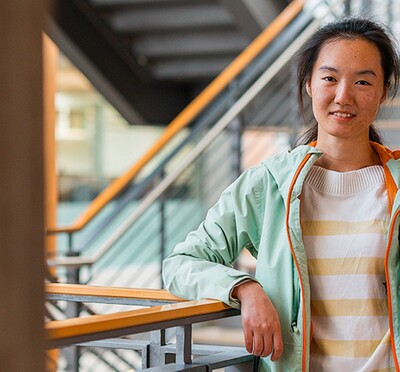
professor (senior research) and director of the PRISM Group
Blue Primary, Yellow Secondary
“We run daily maps for the entire country, and there are about 20 million grid cells in each map,” Daly said. “To rerun the entire historical record with our current resources can take weeks or months.”
The new supercomputer could dramatically change that equation.
Reengineering a research workhorse
Before the team can benefit from the new hardware, they must first modernize software that has evolved over many years.
Much of the PRISM code base was written in Fortran and designed around conventional processors. GPUs operate differently, requiring the researchers to rethink how calculations are organized and executed.
That effort is being led by Vache.
“We’ve been taking time to refactor the code so that it works on GPUs,” Vache said. “We’ve made good progress, but we’re in the thick of it right now. It’s a really interesting problem to figure out how to get code that works well in one place to work even better in another.”
To prepare for the transition, the team has been testing code on NVIDIA hardware that resembles what is expected in the Huang Collaborative Innovation Complex. The work also involves collaboration with the Research Computing Office and consultations with GPU experts, including retired NVIDIA engineer Brent Leback, who helped develop CUDA Fortran tools used throughout scientific computing.
A hundredfold increase in detail
The hero run will also help determine whether PRISM can produce maps at 80-meter resolution across the entire United States. Today, many of its products are generated at approximately 800-meter resolution. Moving to 80 meters would increase the number of grid cells by a factor of 100 (going from 20 million to 2 billion), creating datasets that are vastly more detailed — and vastly more computationally demanding.
The finer scale could allow researchers to better represent valleys, slopes, vegetation patterns, and agricultural fields.
“Right now, we can’t resolve some of those river valleys because they’re simply too small,” Daly said. “People want to know what’s happening at the local level, and higher resolution gets us closer to that.”
The team also hopes faster processing will allow them to incorporate additional information sources, including satellite observations, land-cover data, and advanced forecasting models. Those additions could improve accuracy in places where direct observations are limited.
Shaping the future of computing at Oregon State
As one of six seed-funded projects preparing for the supercomputer, the PRISM team is also helping Oregon State understand what researchers will need from the new facility.
Producing future datasets may require extraordinary amounts of memory and storage, potentially generating petabytes of information. The lessons learned through the hero run could help guide decisions about how the system is configured and used.
The project has already sparked new conversations among researchers working on very different problems but facing similar challenges in adapting software for GPU-based computing.
“Having closer contact with people who are doing similar work is a real benefit of being part of this first cohort,” Vache said.
For Daly, the broader significance extends beyond a single project. Advanced computing resources helped attract him to the College of Engineering years ago, and he believes the new system will create opportunities for researchers across campus.
“You need the resources to realize the grand schemes you have in your head,” he said. “If you don’t have them, you can’t do it.”
If the PRISM hero run succeeds, it will demonstrate how the Huang Collaborative Innovation Complex’s supercomputer can help researchers tackle problems that were previously out of reach — not by making existing work a little faster, but by enabling entirely new possibilities.