Introduction
For Akshaya Agrawal and Karina Puente, developing new technology was familiar territory. Figuring out whether someone would actually buy it was another matter.
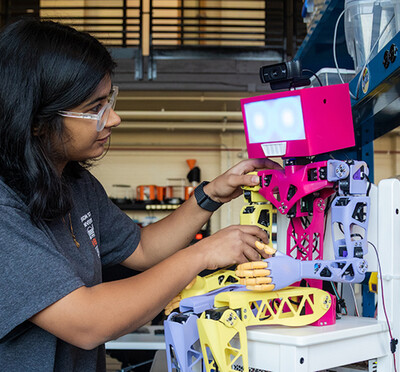
The Oregon State University robotics doctoral students have been exploring that question through the National Science Foundation’s I-Corps program, an experience that has pushed them beyond the laboratory to talk with the people who might ultimately use technology being developed by Agrawal and her adviser, Geoff Hollinger, professor of robotics. Their work focuses on robotic systems for subsea intervention, including technology that can attach to a robotic gripper and help perform manipulation tasks underwater. Agrawal and Hollinger have filed a provisional patent for the technology with help from OSU.
The larger goal is to make underwater work more autonomous and less dependent on divers and expensive, operator-intensive remotely operated vehicles.
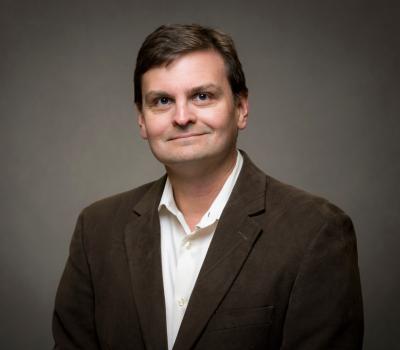
“Underwater autonomy is essential for bringing down the levelized cost of energy in the marine sector,” Hollinger said. “Decreasing ship time and operator hours translates to millions of dollars in savings over the lifetime of a marine energy device.”
Asking customers what they need
The I-Corps experience gave Agrawal and Puente, who served as co-entrepreneurial leads, a new way of thinking about research: Start with the customer’s problem rather than the researcher’s solution.
Over seven intensive weeks, the team spoke with more than 100 people across marine energy, underwater robotics, subsea connectors, and related industries. They traveled to conferences including the OCEANS Conference and Marine Technology Society TechSurge, and talked with companies in the United States and abroad, asking what challenges industry faces and where autonomous technology could provide the most value.
The process helped the team focus on marine energy while learning what would be required to turn promising research into technology that customers could actually use.
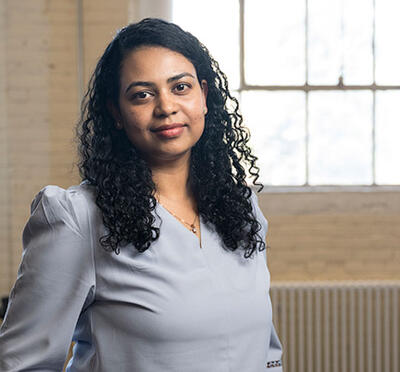
“The most valuable learning occurred through the customer discovery process,” said Brenda Langley, strategic operations manager at the Pacific Marine Energy Center, who served as the team’s industry mentor. “Getting out and talking with 120 marine professionals helped them narrow their focus, find their customers, and determine product fit. It was exciting to see their investment in the process pay off.”
Langley also helped the students understand the marine-energy ecosystem and connected them with prospective customers and other industry experts. Agrawal called having her on the team “amazing,” saying her guidance helped them understand the industry and “weed out some of the other directions that we were thinking about.”
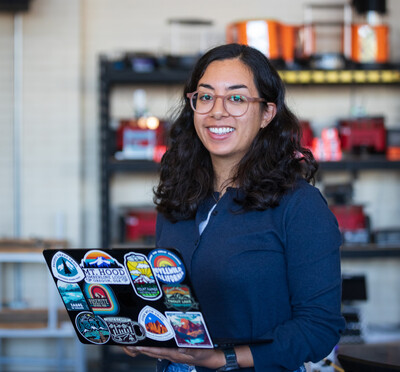
robotics graduate student
Blue Primary, Yellow Secondary
Oregon State University’s entrepreneurial support system
The path to I-Corps began at OSU, where Karl Mundorff, director of the OSU Advantage Accelerator, helped Agrawal and Puente navigate commercialization resources, including early-stage funding and OSU’s IP office, and introduced them to I-Corps. After completing a regional program, where they conducted 20 interviews, the team advanced to the national program.
According to Mundorff, the students understood the potential safety and cost advantages of underwater robotics. What they did not yet know was which industries had the greatest near-term need for their technology and were prepared to pay for a solution.
Through regional and national I-Corps, he said, the team learned customer discovery and began shaping “a business model that supports creating a prototype that is much closer to meeting what the customer wants the first time,” rather than repeatedly building and revising something based primarily on assumptions.
For Puente, the experience also opened a door she had never envisioned.
“I never thought about starting a startup,” she said. “I love the experience of putting a different hat on.”
Puente’s advice to her fellow graduate students: “Just because you think you don’t have any background in it doesn’t mean you can’t do it,” she said. “It’s going to be a lot of hard work, but OSU is there to help.”
Agrawal came away with a similar realization. Reaching out to strangers, conducting interviews, and moving beyond her comfort zone turned out to be energizing.
“I realized that this really excites me,” she said. “I’m enjoying that journey.”
The I-Corps work has already brought a $50,000 grant, on top of an earlier $15,000 award. Next comes de-risking the technology with pool and open-water tests and pursuing federal funding. Within a few years, Agrawal, who plans to pursue entrepreneurship full time upon graduation, hopes their customer discovery will have translated into a prototype addressing a real industry problem and pilot projects with key partners.
For Hollinger, that progression from research to real-world opportunity is exactly what I-Corps and OSU’s entrepreneurial ecosystem have enabled.
“Before the program, none of us knew how to evaluate value propositions for new technology or identify potential customers,” he said. “The process has been eye-opening.”