Introduction
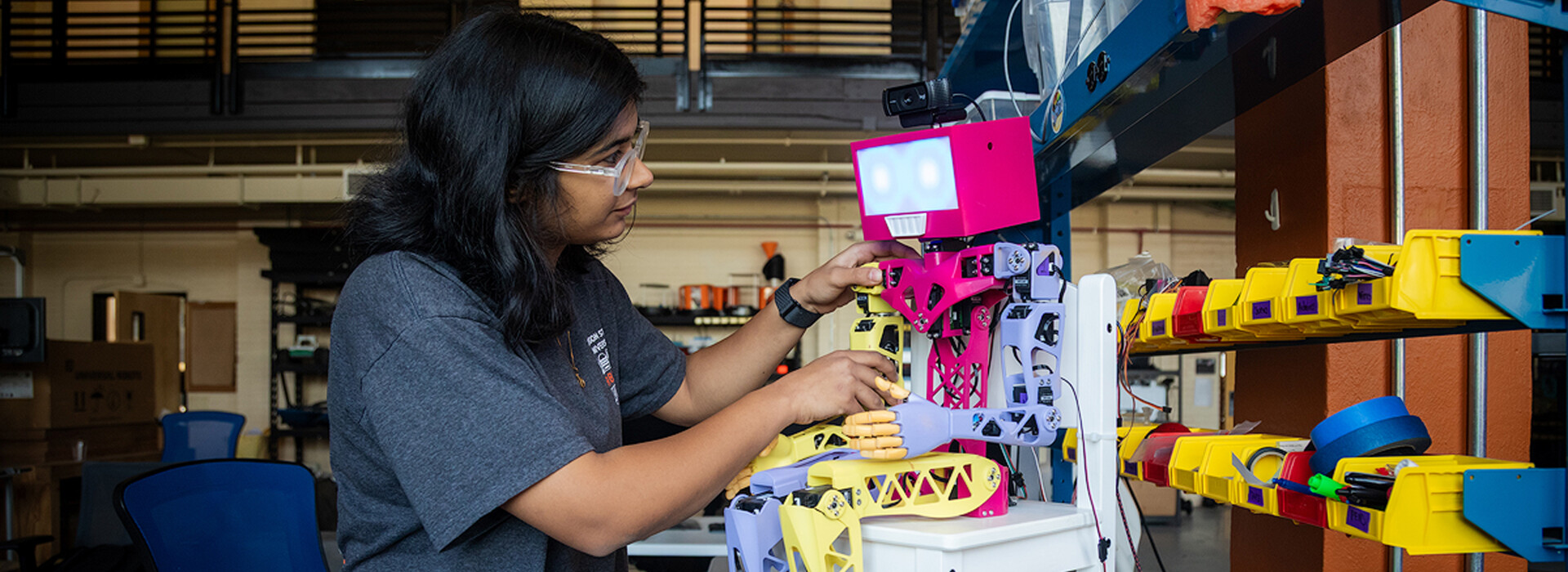
A resident wheels over to SAMI, a humanoid robot at the Oregon Veterans’ Home, to hear a joke. Soon, SAMI leads a series of seated exercises to improve core strength, and others join the activity. What begins as entertainment becomes something more: connection and community.
SAMI is one facet of AI-CARING, an institute where Oregon State University researchers join colleagues at partner universities, with support from the National Science Foundation, to build AI that helps older adults maintain their quality of life. The work spans robotics, healthcare, ethics, and data science — all aimed toward helping people age in place safely while staying connected to their communities.
For robotics graduate student Jorge Ruballos, the project has personal roots.
Before arriving at Oregon State, Ruballos helped his mother care for his grandmother — an experience that gave him insight into the challenges of helping loved ones as they age.
“The responsibility to care for a family member usually falls on one single person rather than couples or large families,” Ruballos said. “If you can maintain independence for people longer in their own homes, that makes things simpler for institutions and loved ones.”
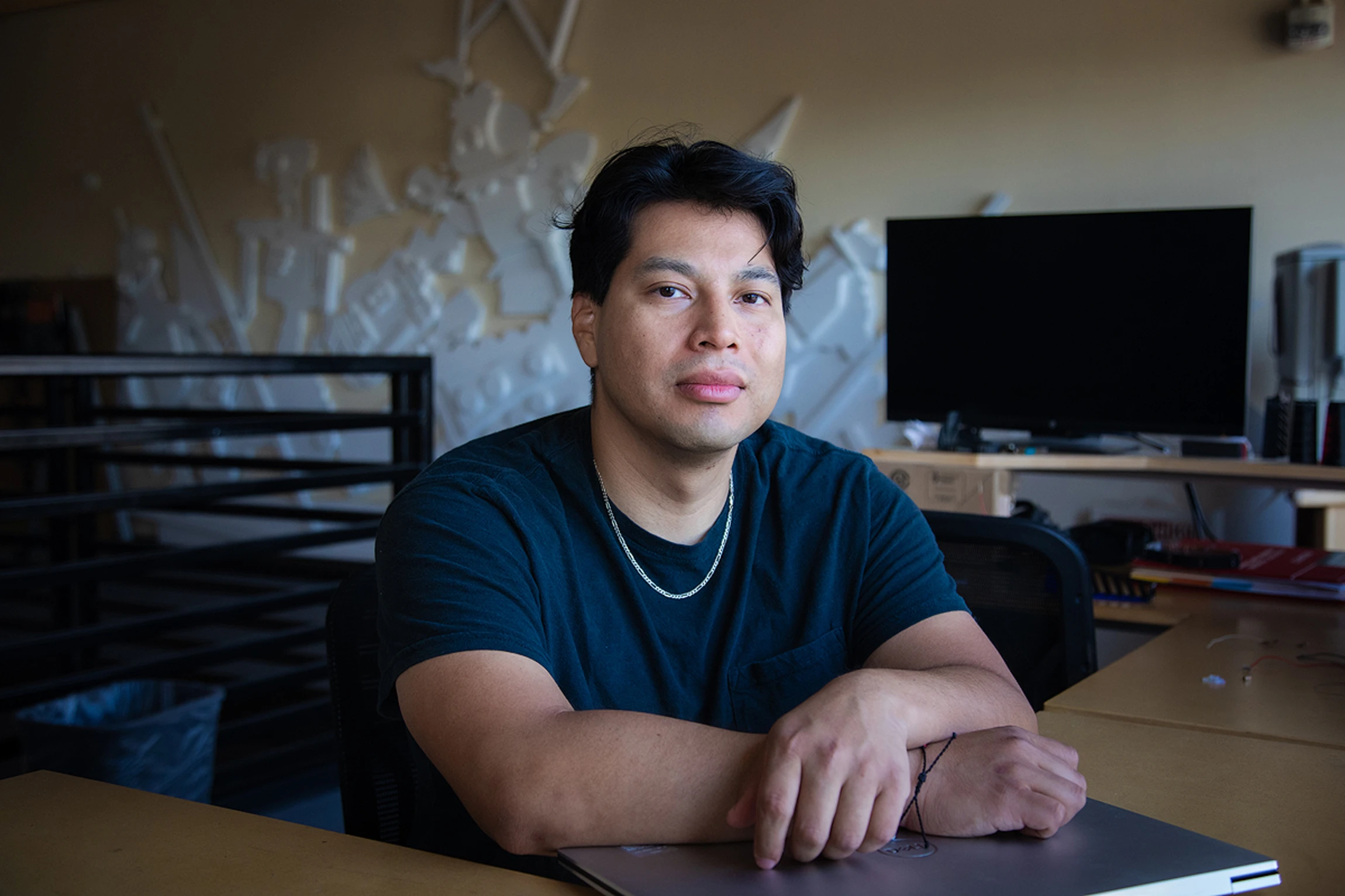
Drawn to AI-CARING by his firsthand knowledge, Ruballos works with Naomi Fitter, associate professor of robotics and director of OSU’s SHARE Lab. Fitter leads research on socially assistive robots and human-centered technologies for older adults. Kagan Tumer, professor of robotics and director of the Collaborative Robotics and Intelligent Systems Institute, helped lead OSU’s effort to join AI-CARING.
A robot named SAMI
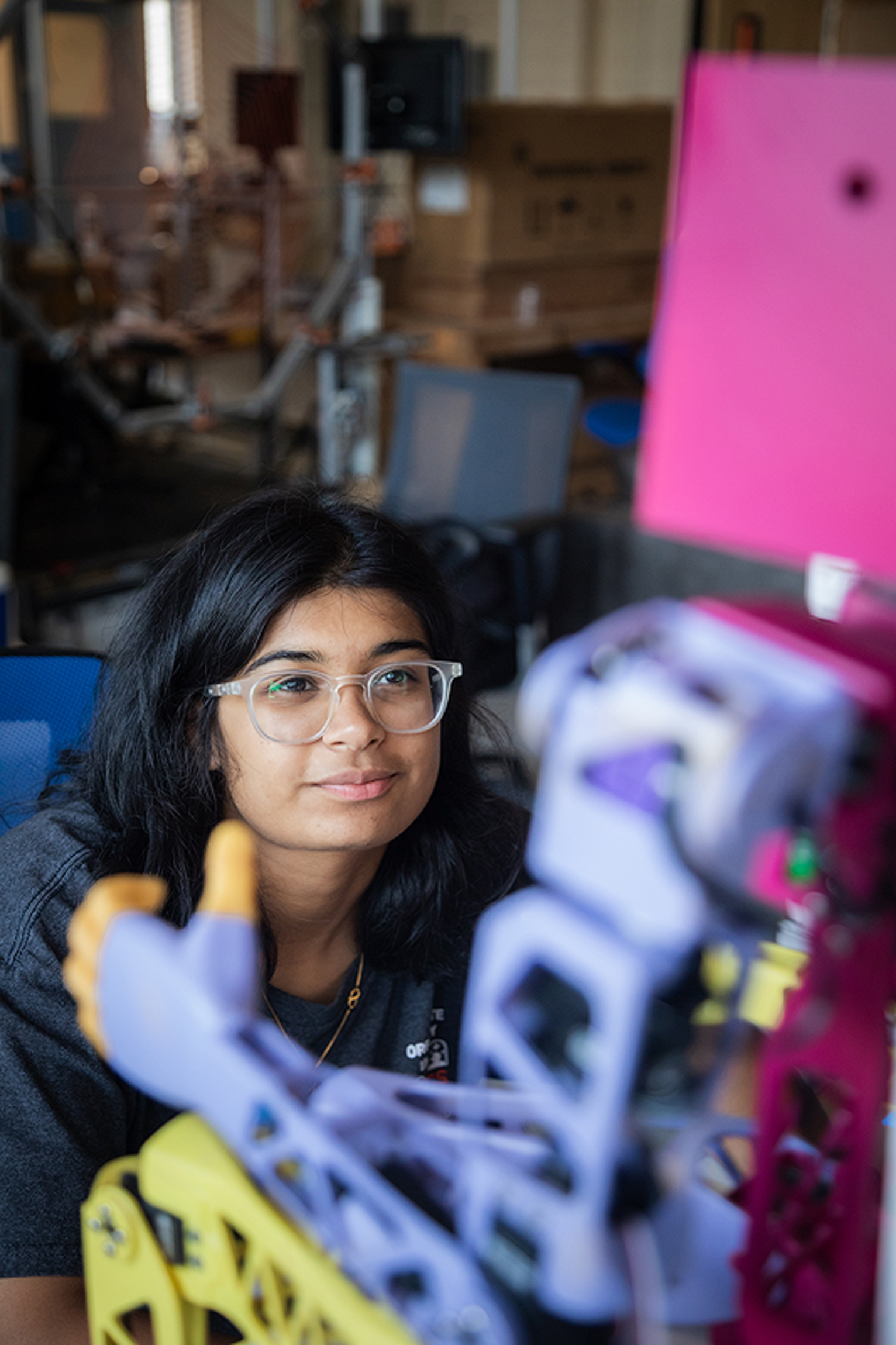
The project at the Oregon Veterans’ Home is one of the most visible aspects of AI-CARING at OSU. Researchers in Fitter’s SHARE Lab study how social robots can encourage physical activity and engagement among residents. Ruballos and fellow graduate student Antara Shah program SAMI to lead exercise sessions, host trivia games, and perform a bit of stand-up comedy.
The project grew from a practical challenge — many older adults know exercise is important, but staying motivated can be difficult.
“How do we get more people to go to physical therapy and do their work?” Ruballos said. “With a robot, maybe they can do it on their own.”
Although SAMI’s initial aim was to increase physical activity, researchers soon found that the robot also fostered social interaction.
“The idea is that the physical presence of the robot encourages people to mirror its movements and exercise along with it,” Shah said. “SAMI exercises with you, provides feedback, and feels like a social companion — but we also found that interaction could become a conversation starter among residents who may be experiencing loneliness.”
SAMI’s trivia feature is one of the most popular activities among residents.
“We’re seeing residents gather around the trivia game and play together,” Shah said. “It helps bring people together.”
Shah knew the robot had become part of daily life when residents stopped referring to it simply as a machine.
“People don’t say ‘the robot.’ They say ‘SAMI,’” Shah said.
Supporting a network of care
Not all the research is as physically tangible as robots.
Ruballos collaborates with researchers at Oregon Health & Science University who are studying sensor data collected from older adults living independently at home. The sensors track movement, sleep patterns, and activity levels. The goal is to identify early changes that may signal health concerns or cognitive decline.
“If the system detects a change in someone’s daily routines or behavior, it could prompt a family member to check in,” Ruballos said. “Maybe there’s been a change in sleep patterns, activity levels or other habits that deserves a closer look.”
Rather than replacing caregivers, the goal is to equip the broader care network with critical, timely information — and achieving that goal requires expertise from multiple disciplines.
master’s student, robotics
Blue Primary, Yellow Secondary
Keeping people at the center
“What makes AI-CARING unique is its interdisciplinary approach,” Ruballos said. “We’re dealing with people, and when you deal with people, you need to think beyond engineering. The best solution isn’t just one that works well — it’s the one that treats people with respect and is useful for everyone involved, including caregivers and providers.”
For Anna Nickelson, Ph.D. robotics ’24, that human element is precisely what makes AI-CARING distinctive. After earning her degree at OSU, Nickelson served as a senior legislative fellow in the U.S. Senate and is now a fellow for multi-agent AI risk and policy at the Institute for Security and Technology.
“I really believe that the technical people and the socio-technical people need an in-depth understanding of each other’s worlds,” Nickelson said.
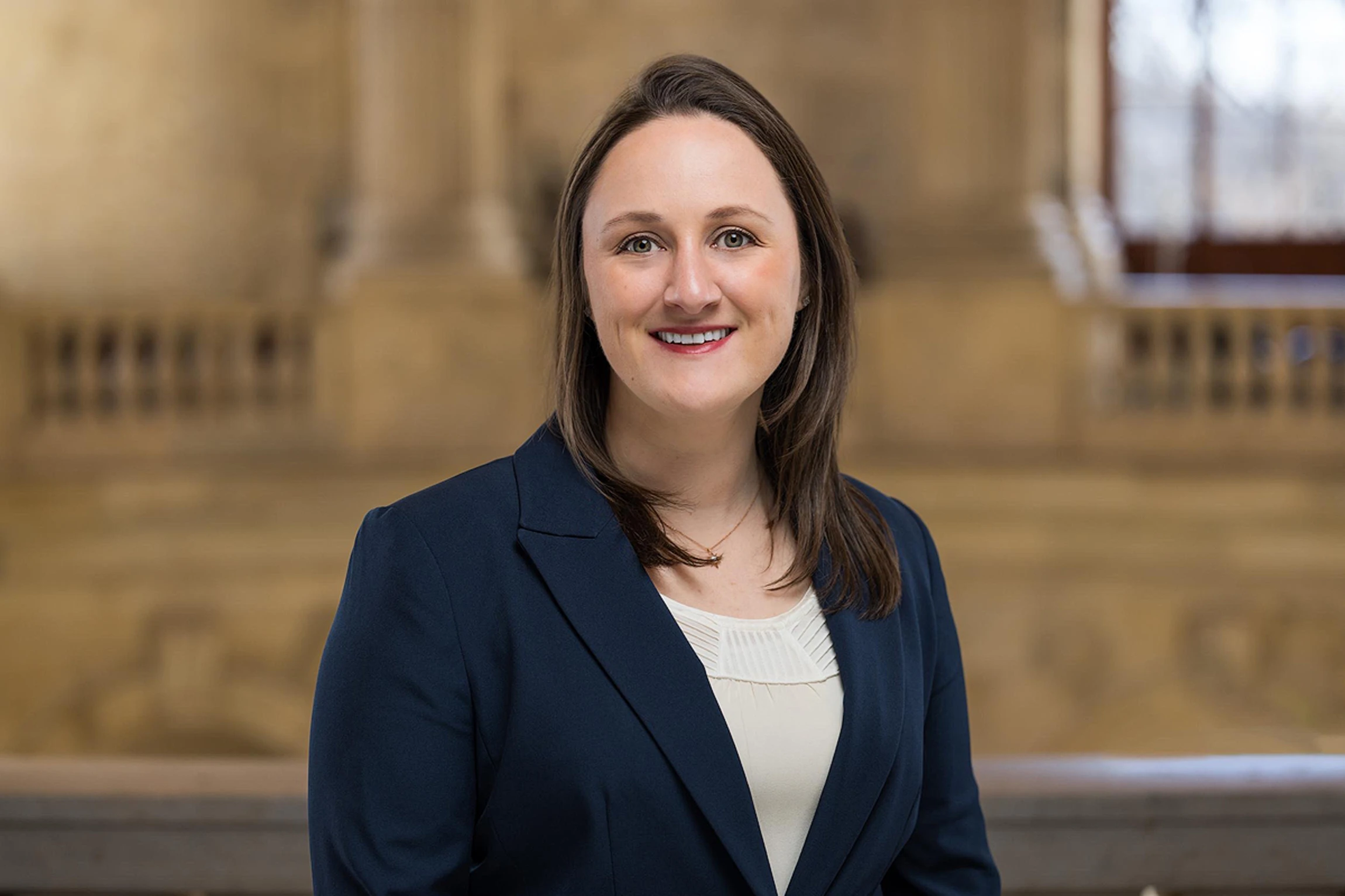
As AI systems become more capable, Nickelson said, technical advances must be evaluated alongside human values.
“Most of the hard decisions that we make day to day are hard because there’s no single right answer,” Nickelson said. “There’s always going to be a trade-off. Something has to give to get a benefit in another way.”
That challenge became the focus of her dissertation research involving AI-CARING. Rather than optimizing a single outcome, she explored how AI systems might weigh multiple competing goals, similar to how people balance independence, safety, privacy, convenience, and quality of life in everyday decisions.
“A lot of my dissertation looked at how we use multi-objective decision-making instead of optimizing for a single goal,” Nickelson said. “Can we use that to give AI systems a better understanding of the day-to-day trade-offs and ethical choices we face?”
Those trade-offs become especially important when technologies begin influencing decisions about people’s lives.
“At what point does it become ethically problematic for that system to make decisions on your behalf?” Nickelson said. “No ethical decision is based on maximizing one number.”
Supporting, not replacing
Despite rapid advances in AI, Ruballos does not envision a future in which robots replace care networks. Instead, he sees technology as a tool that can strengthen the relationships and support systems already surrounding older adults.
“It shouldn’t replace human contact. The system is supposed to help support you, your parents and the doctor,” Ruballos said. “To me, that’s the future — we’re not there yet, but we’re taking the early steps. AI-CARING is helping lead us toward a space where we can collaborate around the common goal of supporting aging in place.”
That emphasis on putting people first also resonates with Shah.
“If you want to help people, start by talking with them,” she said. “They know their own needs better than anyone else.”