


What is Robotics Engineering?
If you want to work in robotics, we have good news for you: Robotics engineering is a growing, multidisciplinary field with broad practical applications. Below, we’ll explain what kinds of projects robotics engineers work on, career prospects, and what to study in college to get started.
Overview of robotics engineering
Robotics engineering deals with designing, fabricating, building, powering, and programming robots to be used for a vast array of applications. A robotics engineer may be an expert in one of several fields, like electrical and computer engineering, mechanical engineering, computer science, or industrial engineering.
They could be involved in any phase of the robotic lifecycle: From the first concepts and designs to integrating fully-realized robots into a larger system. With advances in technology and artificial intelligence, robotics has become common in manufacturing, aerospace, automotive, agriculture, and health settings. It’s a great time to get into the field.
Examples of robotics engineering projects
You can see robotics at work everywhere nowadays: In restaurants, on highways, flying over your head. And even more robots have likely helped make or deliver items you use, from food to utilities and household products.
Research engineers are busy working on the next phase of smarter, more nimble, more engaging and safe robotics to support everyday life from the depths of the ocean to the reaches of space. We’ll share some projects below, and because this article is from Oregon State, you bet we’re going to use OSU examples.
Robotics Projects Under Water
Oregon State has one of the largest wave research laboratories in the world, so it makes sense that we’re really active in marine robotic research. One such project is creating autonomous underwater robots that can inspect and repair marine energy systems, like the PacWave wave energy site off the Oregon coast. These robots can grasp objects, dock on their own, and handle tough jobs humans can’t easily reach.
Robotics Projects in Space
Oregon State faculty have been working on equipping dog-like robots with the tools and programming needed to explore uncertain terrain while performing scientific tasks like experiments and data collection on the surface of the moon and Mars. Undergraduate industrial engineering student Mason Allen was part of the team conducting field tests on Mount Hood, Oregon, a landscape that simulated that of the moon.
The Oregon State Mars Rover Team designs, develops and implements every component of a small-scale Mars rover: custom PCBs, a six-axis arm, autonomous navigation, and more. The Mars Rover Team has repeatedly placed first in the Canadian International Rover Challenge, one of the biggest collegiate competitions of its kind.
Robotics Projects for Work
Repetitive warehouse work is hard on human bodies. Thanks to Oregon State spinout company Agility Robotics, now warehouses have Digit: A humanoid robot that can walk, balance, and carry boxes for jobs that are hard on humans.
In a recent study, Digit learned to mimic whole-body motions through reinforcement learning, which could speed up the process of teaching the robot complex actions when on the job. Now Digit is at work in real warehouses around the U.S. We’ll talk about Digit below to show how the different engineering disciplines work together to bring robots online.
Robotics Projects for Health
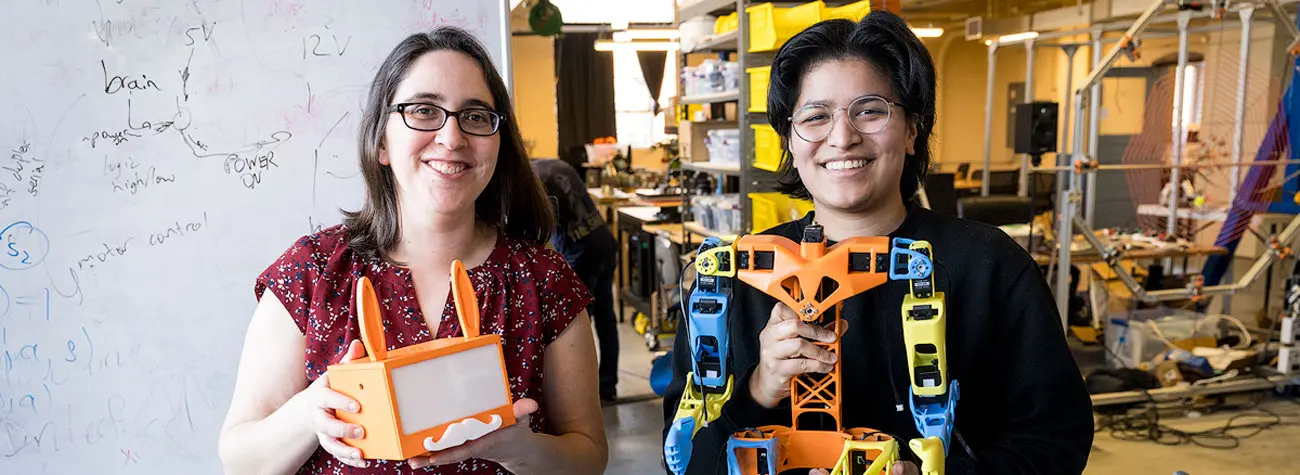
Robots are becoming incredibly useful in healthcare settings such as hospitals and nursing homes. Oregon State faculty study human-robot interactions with the aim to keep kids engaged during physical therapy and assist in nursing homes. Dr. Naomi Fitter’s work looks at something called “robotic nudging.” Nudges are cues and reminders that can influence behavior in people, like speed bumps signaling to cars that it’s time to slow down. For example, robots can nudge by bringing someone a glass of water (which might prompt them to drink some) or reminding them it’s bedtime.
Robotics Projects on the Land
Oregon State is part of the AgAID Institute, a national center using AI to create solutions for global agricultural challenges like water scarcity, severe weather events, and labor shortages. The projects include developing fruit-picking and pruning robots for apples and blueberries. Mechanical engineering undergrad Lily Oliphant joined AgAID as a summer intern, helping design innovative robotics tools to support orchard workers.
associate professor and expert in field robotics
Blue Primary, Yellow Secondary
Robotics Projects in the Air
Another growing application of robotics is through UAV’s, or drones. Oregon State teams are figuring out how one person can control swarms of 100+ drones at once. They took off-the-shelf robots and built the autonomy needed for them to be deployed by a single human, which they called the swarm commander.
During field trials, the team measured the swarm commanders’ workload levels using data from sensors on their body. Swarm commanders completed missions with control of more than 100 vehicles at a time. It’s just one of many projects looking at human-drone behavior and safety.
Careers you could have in robotics engineering
Because of how multidisciplinary the field of robotics is, jobs that work with or create robots are just as varied. From designing, installing, testing and repairing, here are some of the jobs and sectors where you could work.
Common Job Titles in Robotics Engineering
Robotics Engineer: Designs and tests robots and automated systems.
Robotics Software Engineer: Develops software for robot operation, develops and employs artificial intelligence, machine learning and computer vision.
Controls Engineer: Creates and maintains the control systems and automation of robotic machinery.
Mechanical Engineer: Designs the physical structure, components, and tools of robotic systems.
Automation Engineer: Integrates robotic systems into production lines to improve efficiency.
Electrical/Electronics Engineer: Designs the power, wiring, and sensor systems for robots.
Robotics Technician: Focuses on the practical, hands-on repair and maintenance of robots.
Key Robotics Industries and Applications
Manufacturing: Designing automated production line robots.
Aerospace & Defense: Creating drones, satellites, and autonomous systems.
Healthcare: Developing medical robotics for surgery and rehabilitation, and robots to engage with patients in a care setting.
Automotive: Producing autonomous vehicles and robotic assembly.
Logistics & Warehouse: Developing warehouse automation and drones.
Average salary for engineers in robotics
Salary for engineers in robotics might vary by sector and job type, but according to the career website Indeed’s job posting data, the average salary for a robotics engineer is about $121,000 per year. An entry-level engineer working in robotics might expect to make about $71,000, and a highly experienced professional might earn upwards of $205,000.
Degree pathways for robotics engineering
Mechanical Engineering
Mechanical engineers design and build the physical parts of robots—like the frame, gears, motors, and joints. They focus on how things move, how strong they are, and how energy is transferred. If you like creating the structure and mechanics part of robotics, this might be the path for you.
Explore Mechanical Engineering
Electrical and Computer Engineering
Electrical and computer engineering is all about the circuits, sensors, and power systems that make robots function. From wiring up control boards to designing how your robot “feels” the world through sensors, electrical and computer engineers make sure the robot has the intelligence to move and respond.
Explore Electrical and Computer Engineering
Computer Science
Computer scientists write the code that brings robots to life—whether that’s autonomous navigation, machine learning, or just making sure the robot follows your commands. They turn algorithms into action and help robots “think” and make decisions. There’s an artificial intelligence focus in our computer science program in addition to robotic intelligence, simulation and game programming, and more.
Industrial Engineering
Industrial engineers focus on efficiency, systems, and people. In robotics, they look at how robots can be used in factories, hospitals, or supply chains to solve big, real-world problems. They also design workflows that bring robots and humans together in the smartest way possible. If you like thinking about the big picture, you might like industrial engineering.
Explore Industrial Engineering
Robotics: A multidisciplinary field
When bringing a robot like Digit to life, it takes all types of engineering expertise to be successful.
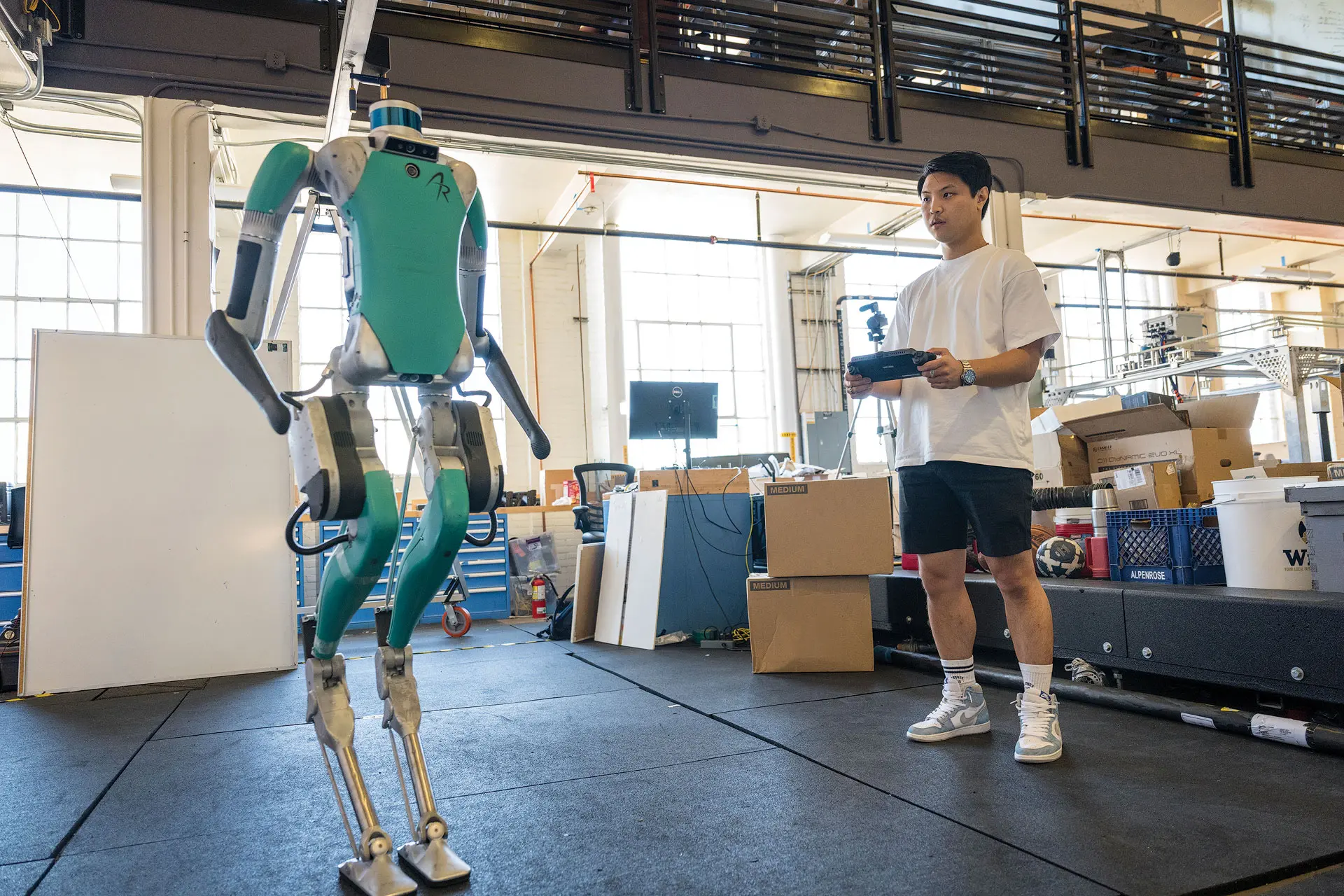
- Mechanical engineers design and build the frame, create the joints and movement.
- Electrical and computer engineers build the power source, charging capability, battery, cameras, put the sensors in feet, hands, chest, and work on Digit’s spatial awareness.
- Computer Scientists program Digit’s behavior, navigation, commands and any machine learning and AI capabilities.
- Industrial engineers determine how Digit can fit into a warehouse setting and how to make the work efficient and safe. They also design systems for the humans working alongside Digit.
So really, it takes all kinds of engineers to work in robotics.