

Introduction
Beneath the Earth’s surface, water moves a host of substances through soil and rock. Long thought to be a process driven by physical forces, Lazaro J. Perez, assistant professor of water resources engineering at Oregon State University, has found that another force may be just as important: bacteria.
Perez is the recipient of a U.S. Army Early Career Award for research that investigates how bacteria can actively influence the mixing of fluids in subsurface environments. The dynamics Perez explores can have a significant impact on remediation processes.
“Traditionally, mixing has been described only by physical processes like diffusion and fluid flow,” Perez said. “But the aspect of bacteria enhancing mixing has not been studied before.”
doctoral student
Blue Primary, Yellow Secondary
Stir it up
At the center of the research is chemotaxis‑driven fluid mixing.
“Chemotaxis is a property by which bacteria swim toward an attractant, such as nutrients,” Perez said. “By swimming toward that attractant, they are modifying the interface and enhancing the mixing between two fluids.”
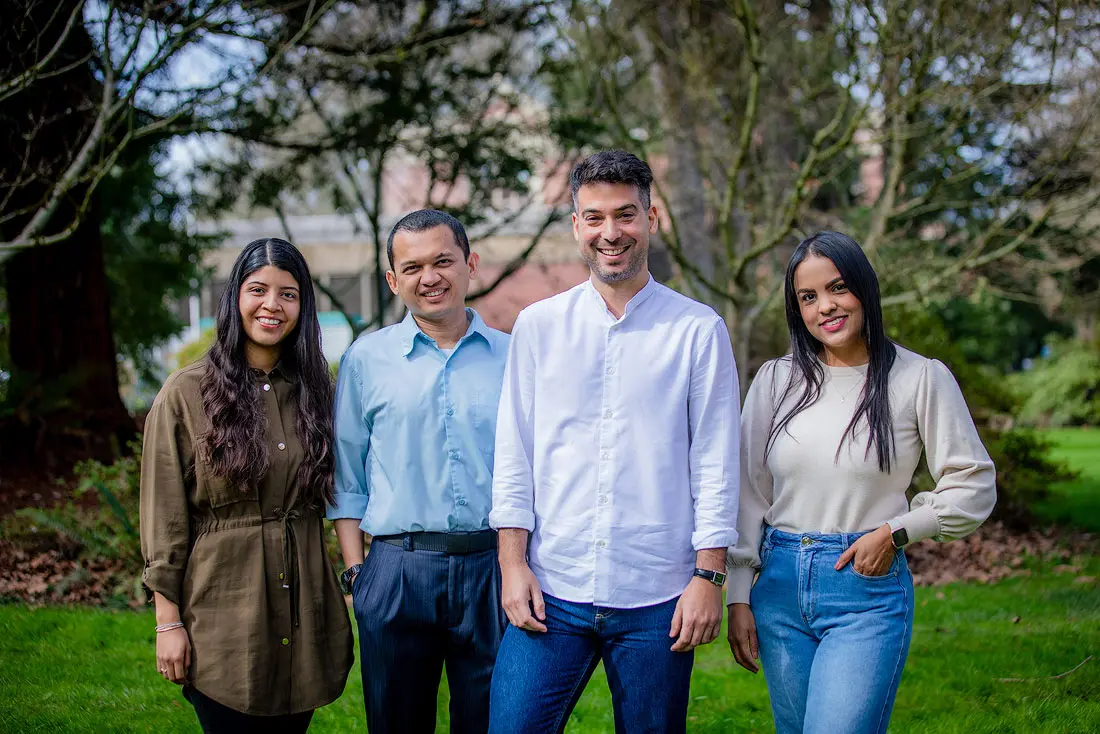
To explain the process, Perez often asks people to imagine a riverbed where surface water and groundwater flow side by side. If a contaminant is present in one of those water streams, it may remain isolated if the two flows do not mix. But if bacteria detect a chemical attractant across that boundary, they may swim toward it and enhance mixing between the two flows, accelerating processes that can dilute or break down contaminants. For doctoral student Janeth Gonzalez, who is part of the Subsurface Biogeochemical Lab (SBLab), led by Perez, watching those interactions unfold at the microscale is one of the most compelling parts of the work.
“These microorganisms live everywhere, and we cannot see them with our own eyes,” she said. “But their dynamics can affect mixing interfaces and influence environmental processes.”
Perez says that despite being abundant in subsurface environments, few have considered bacteria as being drivers of mixing. His findings surprised many researchers when he first presented them at a conference shortly after arriving at Oregon State in 2024.
“Seeing how others were reacting to the novelty of the work made me realize how different this perspective was,” he said.
Clean water
The implications of this work extend well beyond theory.
“If mixing is inefficient, contaminants can persist longer and remediation processes slow down,” Perez said. “By trying to understand how microbial activity affects mixing, we can improve predictions of groundwater behavior or develop better strategies for restoring polluted environments.”
The same principles apply in coastal environments, where freshwater and seawater mix. Bacterial movement between these waters can increase mixing, influencing chemical reactions that affect water quality.
Inside the lab
In his lab, Perez uses advanced tools to make these microscopic processes visible.
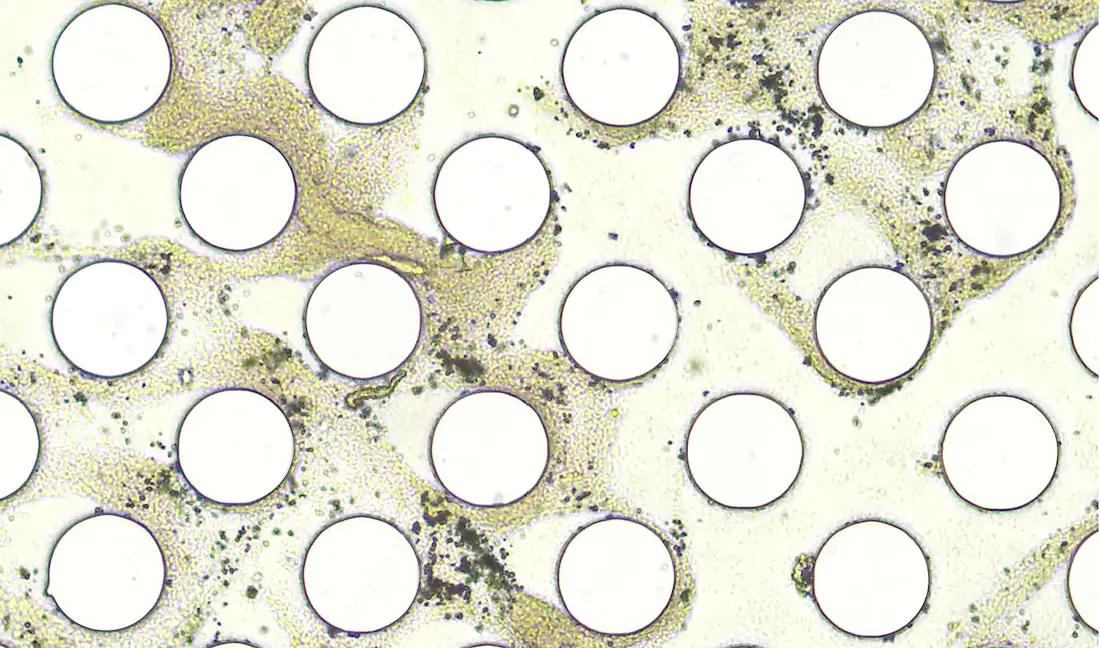
“Microfluidics are small, transparent systems that mimic porous environments like soil or sediments,” Perez said. “They allow us to directly observe bacteria, fluid interfaces, and how mixing is occurring.”
Combined with high‑resolution microscopy, these experimental microscale platforms enable Perez and his team to directly observe bacteria, fluid flow, and mixing at very small scales. The team’s research also incorporates X‑ray tomography imaging to understand how these mixing processes unfold in three dimensions at larger scales.
The U.S. Army’s interest in this work stems from its relevance to monitoring and mitigating the spread of contaminants, particularly at sites that require remediation.
“The Army is interested in research that helps improve our ability to monitor, predict, or mitigate the spread of contaminants in soil and groundwater,” Perez said.
The future
As a new faculty member at OSU, Perez is drawn to the university’s strengths in water resources engineering and interdisciplinary collaboration.
“I’m excited to build a program that focuses on subsurface flow and the transport of contaminants and nutrients,” Perez said. “All of our work addresses critical challenges related to water quality, groundwater remediation, and environmental protection.”
Together, Perez and the SBLab are uncovering the macroscopic power of microscopic life to protect water and ecosystems.