
Introduction
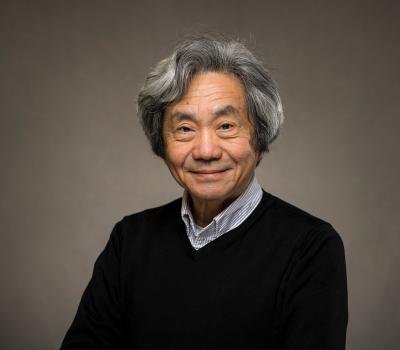
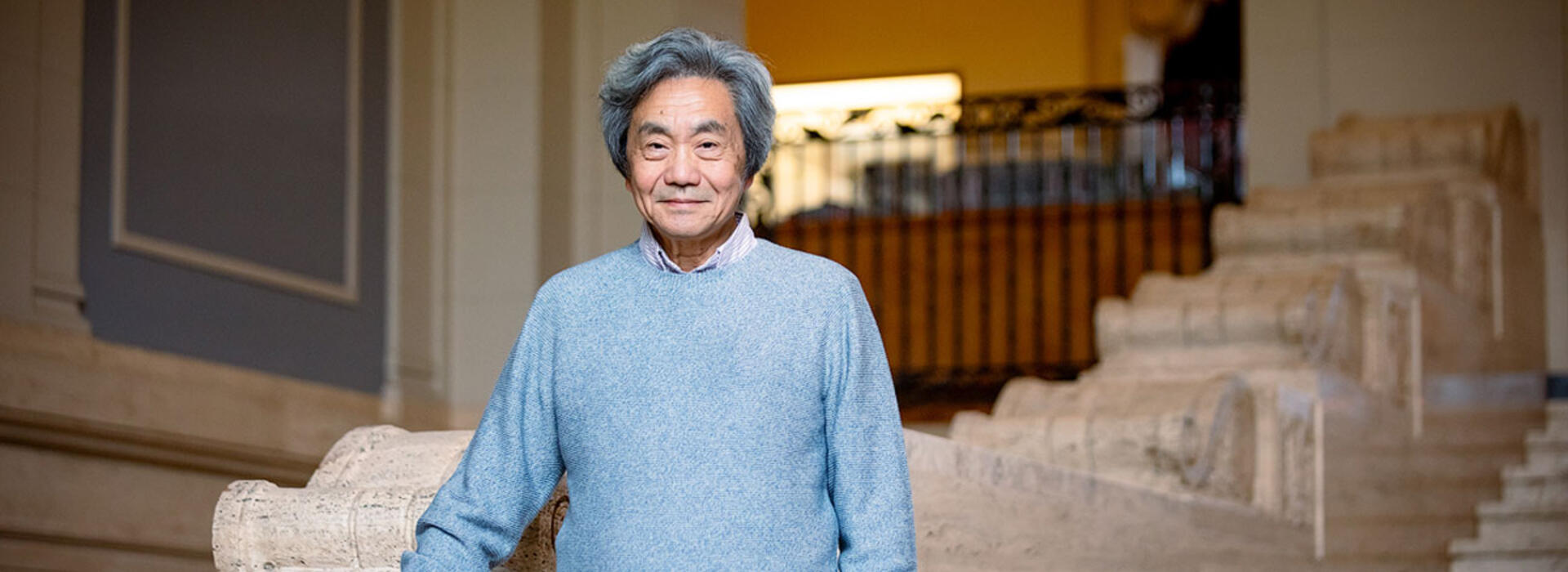
In 2026, the American Society of Civil Engineers recognized Oregon State University emeritus professor Harry H. Yeh with the International Coastal Engineering Award, honoring a career defined by scientific rigor, global collaboration, and an unwavering focus on public safety. The award cites Yeh’s outstanding leadership and development in coastal engineering, particularly his foundational work on tsunami hydrodynamics and coastal hazard mitigation.
For Yeh, the recognition was unexpected. “I was totally surprised,” he said. “To be recognized by peers in this field is very meaningful.”
Yeh’s career spans more than four decades, blending theory, laboratory experimentation, and field investigations in some of the world’s most tsunami‑impacted regions. His research has shaped how engineers understand long waves and how coastal communities prepare for rare but catastrophic events.
Building a community
Philip Liu, professor emeritus at Cornell University and one of Yeh’s long‑time collaborators, emphasized the breadth of his impact. “Harry achieved his reputation through excellence in theory, field campaigns, and laboratory studies,” Liu said. “The laboratory data sets he developed in the 1990s are still used globally to validate tsunami models. Some of those models became the backbone of tsunami early warning systems.”
emeritus professor of coastal engineering
Blue Primary, Yellow Secondary
Liu also credited Yeh with helping build a collaborative research culture in a field that was once small and fragmented. “He brought people together,” Liu said. “The workshops we organized changed how the community worked and improved practice worldwide.”
Robert Dalrymple, distinguished professor at Northwestern University, echoed that assessment, describing Yeh as a world leader in understanding tsunami effects on coastlines. “Harry has gone to tsunami‑impacted coastlines around the world,” Dalrymple said. “He combined those observations with theory and laboratory experiments to give us better tools to predict inundation and structural damage.”
Safety first
At Oregon State, Yeh played a pivotal role in elevating coastal engineering research, including helping anchor the university’s tsunami research infrastructure, particularly the O.H. Hinsdale Wave Research Laboratory. His work has also been adopted by FEMA to inform evacuation planning, structural design, and decision‑support tools — an outcome Yeh considers central to his career.
“The most fun part of my work has been discovery — putting theory, experiments, and real disasters together,” Yeh said. “But when something fundamental in mechanics also connects to applications that might save lives, that’s very satisfying.”
Dan Cox, professor of civil engineering at OSU, points to Yeh’s insistence that life safety remain the central concern. “Harry always said the number one thing is life safety,” Cox said. “Buildings can be rebuilt. Infrastructure can be repaired. People can’t be replaced. He pushed that message early, especially with vertical evacuation structures.”
Drawing on lessons learned in his homeland of Japan, Yeh is credited with introducing and advocating for vertical evacuation concepts in the United States. That work has fed directly into FEMA guidance and later incorporated into engineering codes now used by practitioners designing tsunami‑resilient structures along vulnerable coastlines, including Gladys Valley Marine Studies Building at the Hatfield Marine Science Center in Newport.
Teaching the next generation of tsunami scientists
Beyond his technical contributions, Yeh is widely known as a teacher and mentor. Jeff Knowles, a former student and collaborator, described Yeh’s rare ability to see clarity in complexity. “He can identify the dominant physics in an incredibly complex system,” said Knowles, who earned his B.S., M.Eng., and Ph.D. degrees in civil engineering at OSU where he now serves as an assistant professor of teaching. “It’s almost like a sixth sense. But just as important, he’s generous — with his time, his knowledge, and his respect for others.”
That generosity extended to the classroom. Over 41 years as a professor at the University of Washington and Oregon State University, Yeh taught generations of engineers, many of whom now lead research programs or work in professional practice around the world. “Education matters deeply to him,” Cox said. “He cares about creating excellent engineers, not just publishing papers.”
The International Coastal Engineering Award joins a distinguished list of honors recognizing Yeh’s contributions, including Japan’s Hamaguchi Award in 2018 for enhancing coastal resilience and the John G. Moffatt–Frank E. Nichol Harbor and Coastal Engineering Award from ASCE in 2021. Together, the awards demonstrate his commitment to closing the gap between theory and real‑world impact.
“You can’t prevent disasters,” Yeh said. “You can’t save everyone. But we can be clever. We can be smart. And we can give people a better chance.”