
Introduction
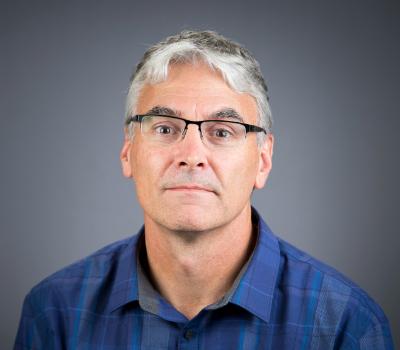
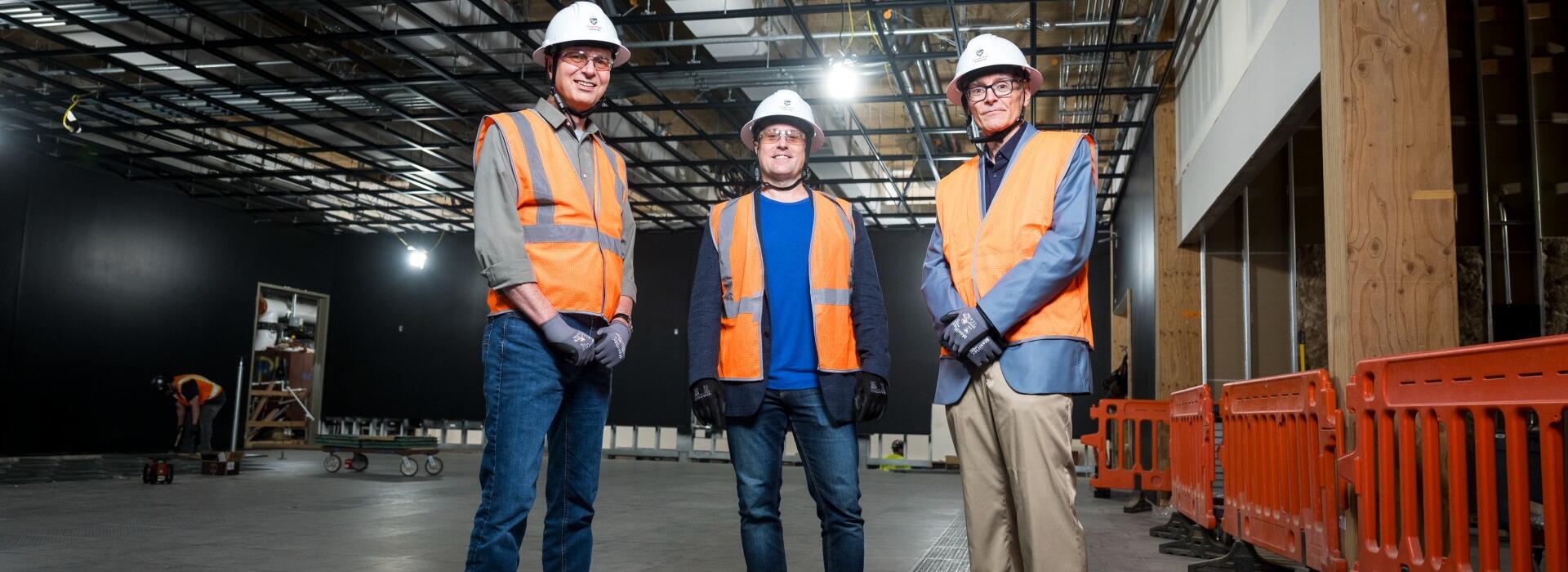
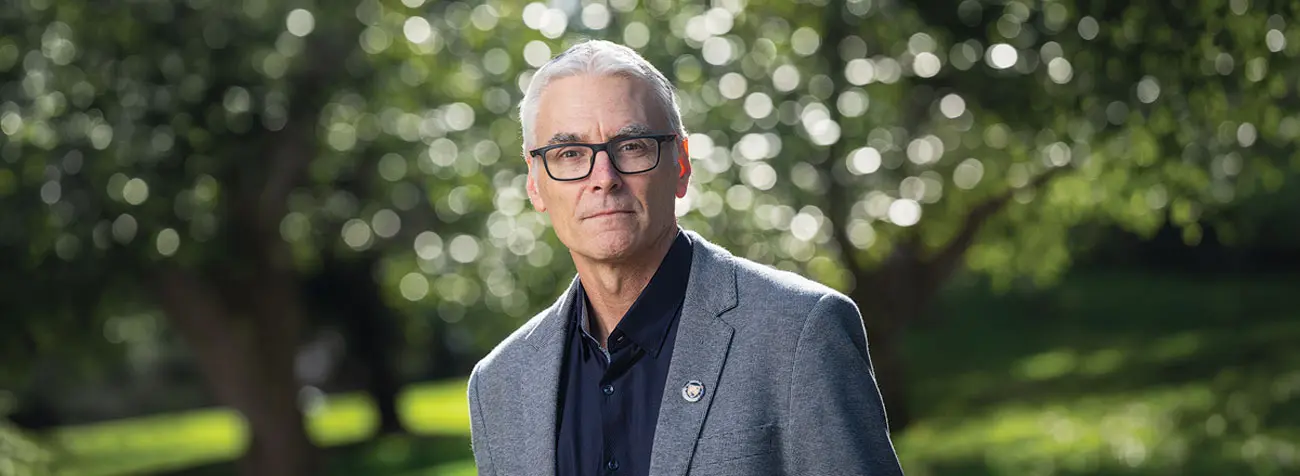
Oregon State University has appointed Todd Palmer, an OSU Distinguished Professor of Nuclear Science and Engineering, as Senior Advisor to the Vice President for Research and Innovation and the Provost and Chief Scientist for Research Computing, a new leadership role created to guide the university through a pivotal moment in advanced computing and artificial intelligence. Palmer’s appointment, effective March 1, 2026, coincides with the formation of Oregon State’s Research Computing Office (RCO) and the impending arrival of a next‑generation supercomputer at the Jen-Hsun Huang and Lori Mills Huang Collaborative Innovation Complex.
Together, the new role, the RCO, and the Huang Complex supercomputer represent a coordinated effort to ensure Oregon State is ready to fully leverage one of the most significant research computing investments in the university’s history.
“This role is really going to be researcher‑focused,” Palmer said. “A big part of the job is asking: how do we create a growing set of researchers who see themselves as successful users of high‑performance computing and AI technologies?”
A role created for a defining moment
Palmer’s position was created in direct response to the scale and complexity of the university’s expanding research computing ecosystem. The RCO, housed within the Division of Research and Innovation (DRI) and co-sponsored by University Information Technology (UIT), is designed to provide centrally coordinated research computing services and strategy in close collaboration with the college and units across the university — something OSU did not previously have at this level.
The catalyst for that shift is the Huang Complex supercomputer, made possible by a transformational investment from NVIDIA founder and CEO Jensen Huang, an Oregon State alumnus. The system will be installed beginning in January 2027, with hardware arriving in stages over the following months. The university expects the system to go live in spring 2027.
University Distinguished Professor and Senior Advisor to the Vice President for Research and Innovation and the Provost and Chief Scientist for Research Computing
Blue Primary, Yellow Secondary
“If you think about what’s needed to excel in guiding Oregon State’s outstanding PIs in this exciting new era of advanced research computing, Dr. Palmer embodies the key traits,” said Irem Tumer, the university’s Vice President for Research and Innovation. “He has incredible expertise in secure computation and data storage, he’s worked with some of the country’s top supercomputers, and he knows how to help our PIs leverage OSU’s computing systems to make their research even more impactful to the communities we serve. I have no doubt in Dr. Palmer’s ability to envision the new heights we can aspire to and to propel us toward those summits.”
Making the most of Jensen Huang’s investment
For Palmer, the supercomputer is not just a technical upgrade — it is a responsibility.
“We have a relationship with one of the potentially largest philanthropists in the world,” he said. “He’s already made a major investment in Oregon State. What we should really be trying to do now is show that we can actually transform the way we do things because of that gift.”
Palmer added that demonstrating impact will matter long after the system goes live. “If we can show how different we are five years from now than we were when this first investment was made — how our research culture has changed, how our collaborations have grown — that opens the door to continued, dramatic change at the university.”
How will the supercomputer be used?
Palmer emphasized that the Huang Complex supercomputer enables large‑scale, computationally intensive projects that combine high‑performance computing with artificial intelligence, particularly problems that cannot be solved on individual workstations or small departmental clusters. But it can also be flexibly partitioned to allow users across the computing spectrum access to resource allocations that make sense for their applications. The system is designed to excel at AI‑centered and GPU‑accelerated workflows, including machine learning, deep learning, and hybrid approaches that pair AI with traditional simulation.
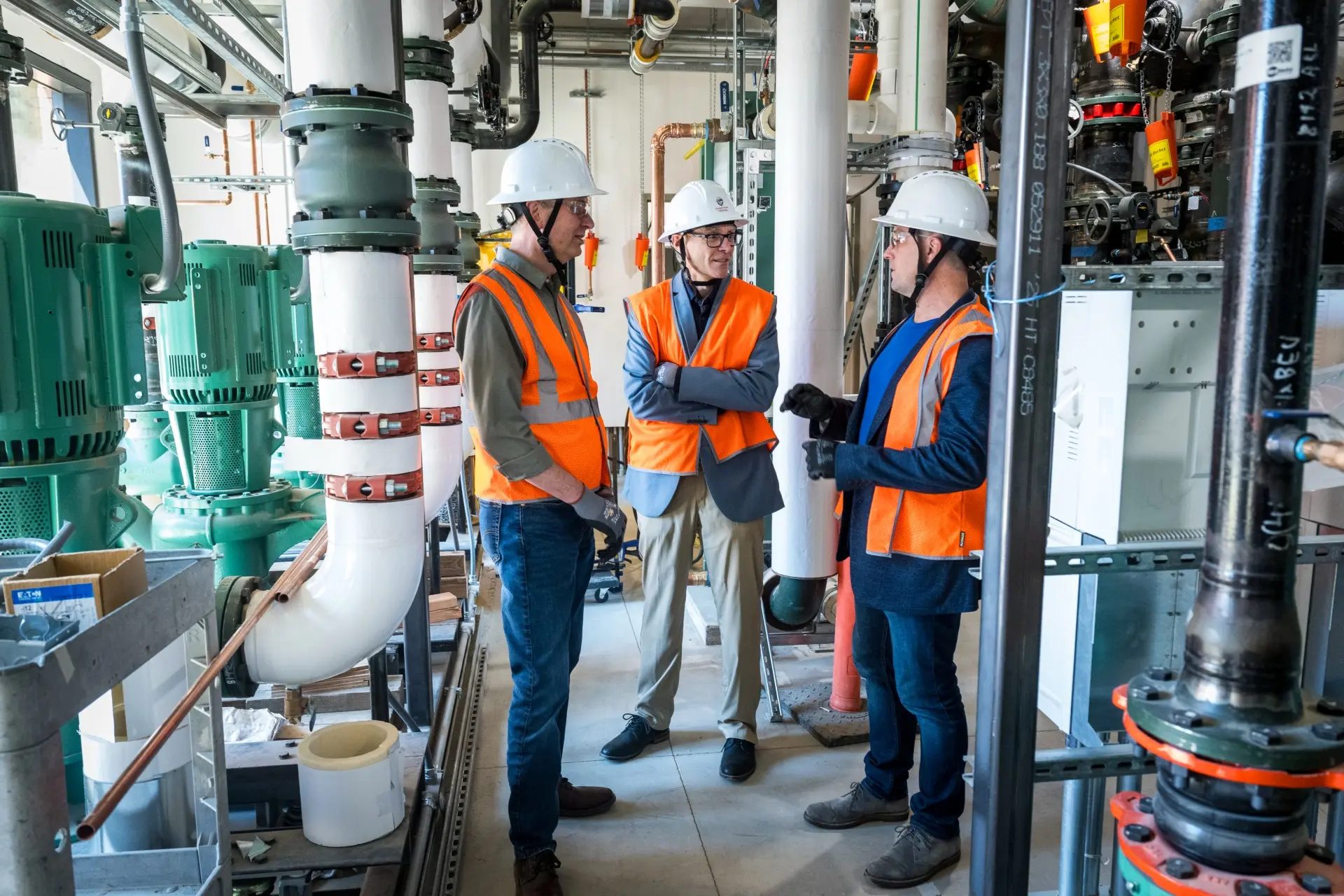
Palmer has already begun working with faculty to identify projects that could scale onto the new system. The recently announced inaugural Huang Complex Seed Funds, which drew more than 40 submissions from across the university, include fusion energy research, climate and Earth systems modeling, urban and infrastructure simulation, and other systems‑level research that involves massive datasets, long time horizons, and many interacting variables. These projects, each funded up to $75,000, will require both scale and speed, as well as the ability to iterate rapidly using AI‑assisted methods. A new call for seed proposals will be released July 1.
Palmer also stressed that the supercomputer is not limited to traditional high‑performance computing disciplines. He noted that OSU researchers in areas such as forestry, agriculture, and environmental science are “sitting on huge databases of information, in some cases built up over decades,” that could be transformed through modern AI techniques.
“These may not look like classic supercomputing projects at first,” he said, “but in the age of AI, they become incredibly powerful candidates.”
Ultimately, Palmer framed the system as a resource for researchers ready to think bigger, scale up, and tackle problems that extend beyond a single lab or discipline.
Preparing OSU for the Genesis Mission
One major national effort on the horizon that Palmer is preparing for is the U.S. Department of Energy’s Genesis Mission, an AI‑focused initiative aimed at accelerating research across the DOE enterprise, including national laboratories and university partners, in areas such as clean energy, nuclear science, critical minerals, water, and climate.
Palmer is helping position Oregon State and the Huang Complex supercomputer as enabling infrastructure for Genesis‑aligned projects, coordinating campus expertise and strengthening collaborations with national labs that require both advanced AI capabilities and rapid, large‑scale computing support.
“Everything we lead in that space has to have a national lab partner,” Palmer said. “This role lets me help line up our research computing, our AI capabilities, and our relationships with the labs so we’re ready to participate in efforts like Genesis at the scale and pace they expect.”
Who will use the supercomputer?
While the supercomputer is intended first and foremost to support Oregon State researchers, the university also envisions that it will serve as a regional and national resource.
Palmer said that initial thinking has been that approximately 20–30% of the system’s capacity would be allocated to external academic partners, 10–20% for industry collaborations and the remaining 50-70% reserved for internal OSU use. “This is a rapidly evolving situation, however, and the RCO expects that this distribution will need to adapt to respond to the many exciting opportunities on the horizon,” he added.
Palmer says the ability to engage with external researchers and industry partners is central to OSU’s broader research strategy and to maximize the return on the supercomputing investment.
Lowering Barriers, Building Community
A central focus of Palmer’s role is helping researchers who have never used high‑performance computing see how it could apply to their work.
“There are people who are already expert users, but not using our existing research computing machines,” he said. “And there are people who aren’t supercomputer users at all. I want them to see themselves in this.”
Palmer emphasized that the future of research computing is about accessibility as much as raw power. “The paradigm is changing incredibly fast,” he said. “By the time this system shows up, the interfaces will look dramatically different than people expect. It could be as easy as a ChatGPT‑like interface or a voice-activated agent.”
That shift, Palmer said, is what makes research computing a unifying force across campus. “There are not many things that naturally cut across colleges. Research computing is one of them. I want to build community around that.”