

Introduction
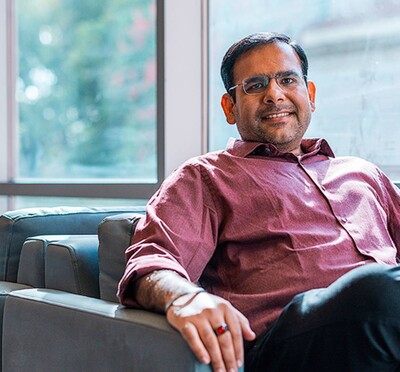
Computer vision is the technology that enables machines to interpret and act on visual information. This field is rapidly becoming foundational to industries ranging from robotics and manufacturing to logistics, agriculture, and digital content creation. Today’s most impactful systems go beyond recognizing objects in images; they build spatial understanding, predict physical behavior, and operate reliably in complex real-world environments. At Oregon State University, computer vision research is advancing along exactly these lines, combining deep AI expertise with applied, system-level thinking. A key member of the team driving this work is Associate Professor Fuxin Li, who recently served as the Program Chair of CVPR 2025, the field’s premier international conference.
Oregon State’s computer vision research is distinguished by its focus on embodied intelligence, which treats vision as the perceptual foundation for machines that interact with the physical world. Rather than viewing vision as a standalone analytics problem, OSU researchers integrate it tightly with robotics, learning, and decision-making. This approach supports real-world applications in areas such as robotic manipulation, forestry and agriculture automation, ocean and environmental sensing, and intelligent manufacturing. Within the School of Electrical Engineering and Computer Science, faculty collaborate closely across AI, robotics, and systems, creating a research environment that emphasizes both rigor and deployment.
Li was drawn to OSU by this collaborative culture and its strong students. “The faculty here are deeply knowledgeable and open with constructive feedback,” he said. “Students work hard, and that creates a research environment where ambitious ideas can actually turn into working systems.”
associate professor of computer science
Blue Primary, Yellow Secondary
From images to spatial intelligence
At the core of Li’s research are three interconnected themes: point cloud deep learning, AI explainability, and uncertainty estimation with Bayesian deep learning. Together, these areas address a critical industry challenge: how to deploy AI systems that not only perform well, but can also be trusted, understood, and scaled in physical-world applications.
A central focus is point cloud deep learning. This research field is developing learning methods that operate directly on sparse 3D data rather than dense images. Point clouds generated by LiDAR and depth sensors are increasingly used in robotics, autonomous systems, and industrial inspection because they are efficient and sensor-agnostic. However, extracting meaning from them is technically challenging given the irregular placement of the points in the 2D/3D space.
Li is recognized as one of the world’s leading experts in point cloud deep learning. His group has developed foundational tools that allow AI models to complete missing geometry, reason about object structure, and infer spatial relationships from partial data. In collaboration with Apple, Li’s team developed a point-based approach, AutofocusFormer, that learns how to downsample large visual inputs into compact, information-rich, point-based representations. This work demonstrated how point cloud methods can significantly improve both efficiency and robustness—key requirements for real-world deployment.
Building world models from limited data
The broader ambition of Li’s work is enabling machines to build complete spatial world models from limited viewpoints—much like humans do intuitively. This capability is essential for robots and automated systems operating in cluttered, dynamic environments.
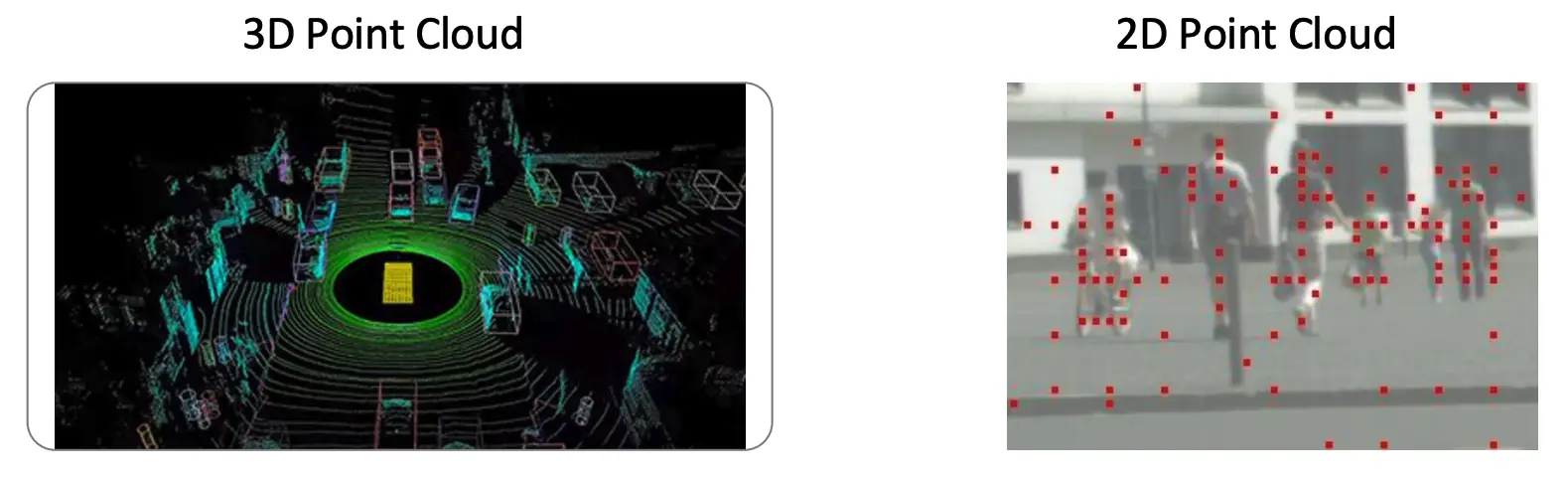
Li’s team has made advances in point cloud completion, allowing models to infer full object geometry from partial observations. More recently, they have extended this work to predicting future physics directly from 3D data, enabling systems to anticipate how objects will move or interact without relying on hand-coded physical rules. In parallel, the group is exploring Gaussian splatting techniques that can reconstruct full 3D scenes from a small number of images, offering scalable solutions for robotics, simulation, and digital twins.
From lab to deployment
These capabilities are being actively tested in real systems. In collaboration with Professor Alan Fern, Li’s group is developing vision-driven robotic manipulation systems that can pick up, move, and place objects using learned 3D understanding. This work is supported by an NSF LARGE robotics award, one of only four awarded nationwide, highlighting OSU’s national leadership in applied AI and robotics.
Industry engagement is a growing priority. Beyond Apple, Li has collaborated with Adobe on advanced 3D rendering techniques, and several of his former students now work in industry, translating this research into products. Looking ahead, Li is exploring partnerships with companies in material handling, robotics, automation, and spatial computing, and is evaluating opportunities to spin out technology into a startup.
Leadership and opportunity
As Program Chair of CVPR 2025, Li also brings a unique global perspective. With over 13,000 paper submissions to this conference this year, the field is expanding rapidly, particularly toward foundation models grounded in physical understanding. OSU’s emphasis on point-based representations, explainable models, and real-world deployment aligns directly with where industry and research are converging.
For industry partners seeking to apply AI to physical systems—whether in robotics, manufacturing, logistics, or 3D perception—OSU offers both cutting-edge research and a collaborative pathway to impact. Companies interested in joint research, pilot deployments, or talent engagement are encouraged to connect with OSU EECS directly or through our contact (AI@OregonState.edu) to explore how these technologies can move from the lab into the real world.