

The Materials Synthesis and Characterization Facility (MaSC)
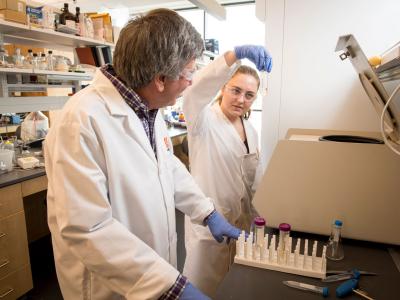
The Materials Synthesis and Characterization Facility (MaSC) is a comprehensive resource that serves as both an open user facility and an innovation center. MaSC faculty and staff provide deep experience in thin-film deposition, device fabrication, and materials analysis, serving as a hub for materials and device development on the Oregon State University campus.
Innovation
Oregon State's inorganic materials research has recently elicited worldwide interest in areas including transparent transistors, inorganic photoresists, and blue pigments. These developments and recent hiring of numerous top-flight researchers have positioned MaSC for growth in industrial research engagement. The collaboratory is transforming research and education at Oregon State, while creating an engine for economic impact through job creation, new ventures, and company partnerships. Strategic partners, including other university researchers, industry, and national laboratories, co-locate and collaborate with MaSC researchers.
What we do
For external users, MaSC is the gateway to materials and device synthesis and characterization on the Oregon State campus. MaSC intensively partners with industry to foster novel technologies, transforming new concepts to reality.
Partner Links
General Equipment

This Oxygen plasma tool is commonly referred to as an asher or descummer. It is used to remove organic and inorganic contamination, and to increase wettability and bond strength. The process shelf is a single 6.75” x 6.75” electrode driven by a 100W RF power source. A programmable logic controller provides automated system control.
Plasma Etch, Inc. PE50XL Plasma treatment system Owen cleanroom manuals (must be logged in)

This tool is used for surface modification, surface treatment, and cleaning of substrates by exposure to an Oxygen plasma. Plasma generator is 300 Watts at 13.56 MHz. Three 13” x 16” processing electrodes accommodate large substrates, or batches of smaller samples.
Plasma Etch, Inc. PE-200 Plasma treatment system Owen cleanroom manuals (must be logged in) Dr. John Wager

The Alpha Step 500 is a scanning, contact profilometer used to measure step height (film thickness), waviness and surface roughness. The system measures thickness down to 500Å, with a maximum scan width of 10mm, and accommodates samples up to 150mm wide and 15mm thick. The profilometer has the ability to repeat a scan up to ten times automatically, as well as fit and level data.
Tencor Instruments
Alpha Step 500
Surface Profiler
Owen cleanroom
manuals (must be logged in)

Kelvin probe analysis is a surface analysis technique employed to evaluate the surface potential of a conducting sample. The surface potential is related to the work function of the sample. The KP Technology SKP5050 is operated in ambient conditions. The surface potential of a conducting sample is measured by KP analysis through the modulation of the electric field formed between the surface under analysis and a reference electrode.
KP Technology Ltd
SKP5050
Kelvin Probe
Owen cleanroom

The Nanospec AFT 4000 uses reflectometry to measure film thickness based on interference effects. The system can measure the thickness of dielectric thin films (i.e. oxides, nitrides, polysilicon, photoresist) on Silicon, down to 50nm.
Nanometrics
Nanospec AFT 4000
Automated film thickness and reflectivity measurement system
Owen cleanroom
manuals (must be logged in)
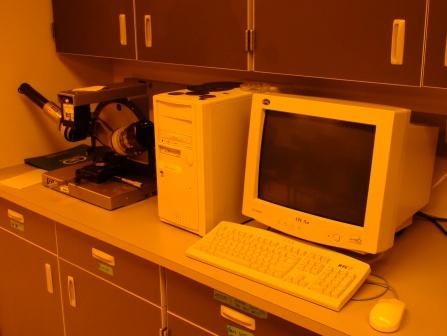
Geartner
Ellipsometer
Thickness Measurement System
Owen cleanroom

The Jandel Multi Height Probe is used to measure the resistivity of samples by the four point technique. The large base and adjustable height will accommodate a variety of sample shapes and sizes (Note: dummy probe should be installed to adjust height). The probehead pins are Tungsten Carbide with 1.00mm spacing, 100 micron radius tip, and 60+ grams spring loading. The current source maximum is 10mA, and the voltmeter discriminates to 10 microvolts.
Jandel Engineering LimitedJandel
Multi Height Probe with RM2 Resistivity Test Unit
Four point probe
Owen cleanroom

Axiotron
Optical microscope
Owen cleanroom

Optical Microscope
Leica
INM 200
Optical microscope
Owen 333

The dielectric testing station in the Owen characterization lab is used to characterize dielectric films.
Dielectric testing station
Owen Characterization lab

The micromanipulator testing station in the Owen characterization lab is used to characterize devices fabricated in the ECE 418 course.
Micromanipulator testing station
Probe Station
Owen Characterization lab

The REL 4800 station in the Owen characterization lab is used to characterize device.
Alessi
REL 4800
Probe station
Owen Characterization lab
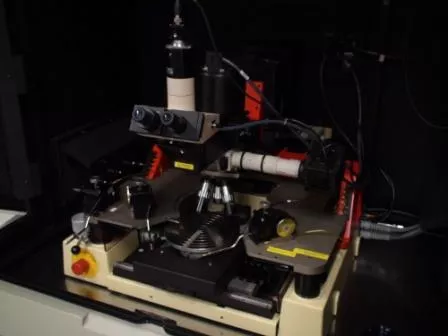
This semiautomatic probe station has three Cascade Microtech DCM210 micropositioners with triaxial probe holders for use with an Agilent B1500A Semiconductor Device Analyzer, and two Alessi MH series micropositioners with coaxial probe holders for use with an Agilent 4284A Precision LCR Meter. The probe station accommodates up to 8” wafers. It is equipped with a dark box and vibration isolation table.
Karl Suss
PA200 Semiautomatic Probe System with Agilent B1500A SDA and Agilent 4284APrecision LCR meter
Semiautomatic probe station with dark box, semiconductor device analyzer and LCR meter
Owen Characterization lab

This manual probe station is used to measure IV characteristics of thin film devices. Four positioners, two Micromanipulator Model 110 and two Model 210, are available to make contact to features on the order of 50um square. The long working distance Model 6400 microscope includes lenses with magnification of 2.25x, 8x and 25x. Measurements are taken with the Agilent 4156C Precision Semiconductor Parameter Analyzer.
The Micromanipulator Company, Inc.
6000 Series Test Station with Agilent 4156CPrecision Semiconductor Parameter Analyzer
Manual probe station with dark box and semiconductor parameter analyzer
Owen Characterization lab

The Batchtop system VII is a reactive ion plasma etcher used primarily for etching silicon dioxide. Other common processes include, oxygen ash and silicon nitride etch.
Plasma-Therm, Inc.
Batchtop System VII
Reactive Ion Etch
Owen Cleanroom
Dr. John Wager

Fume hood and personal protection equipment used for performing wet etch.
Wet Chemical Hood
Owen Cleanroom
Dr. John Wager
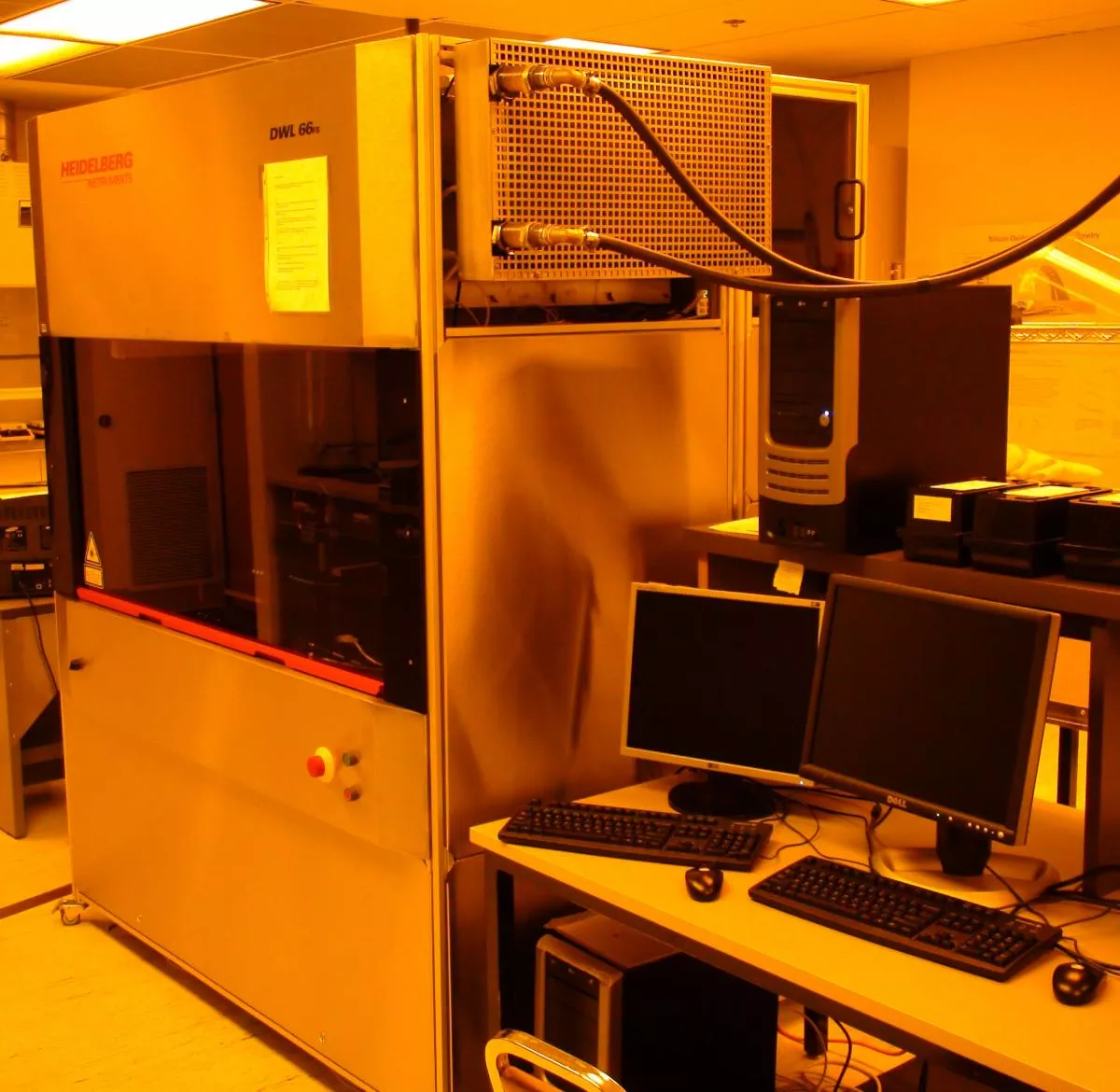
The DWL66fs is primarily used to generate chrome on quartz lithography masks with a minimum structure size of 1 micron. Additionally the system can be used for direct write lithography
Heildelberg Instruments
DWL66fs
Direct Write Pattern Generator
Owen Cleanroom
Dr. Pallavi Dhagat

MaSC currently has two MJB3 contact aligners. These tools are used for photolithography with critical dimension to approximately 5 um.
Karl Suss
MJB3
Contact aligner
Owen Cleanroom
Dr. John Wager

The SF-100 maskless lithography system allows for...
Intelligent Micro Patterning LLC
SF-100
Maskless Lithography System

O2 partial pressure furnace.
Dearborn 300
Dr. Brady Gibbons

This furnace employs IR heating through a quartz chamber for implant annealing, oxidation/nitriding, silicide formation, and other rapid thermal processes. It is capable of temperatures up to 1200C for a maximum of three minutes. Regulation extends from room temperature. Lifetime of the thermocouple degrades rapidly above 1000C. Processes are carried out at atmospheric pressure in an ambient of Nitrogen, Argon, or Hydrogen:Argon forming gas.
AET Thermal
Rapid Thermal Processor RX4
Thermal processor
Owen Cleanroom
Dr. John Wager
The Owen cleanroom has several Thermolyne furnaces. These units are used to anneal samples in air ambient up to 1100 C.
Thermolyne
47900, 62700
Furnace
Owen Cleanroom
Dr. John Wager

This lab houses four furnaces capable of 1150 C processing, and one furnace capable of 1700 C.
Protherm
Furnace
Ceramics Synthesis and Measurement Lab
Dr.Caan

This programmable logic controller (PLC) glove box is used for work that must be carried out in dry, inert Nitrogen ambient. The oxygen content is typically below 20 parts per million. The system is equipped with an antechamber for transfer of smaller items, and a large 600C vacuum oven for dehydration/baking, and to serve as a pass through for large items. The glove box is also equipped with a vacuum thermal evaporator for deposition of materials that cannot be exposed to Oxygen or moisture.
MBraun
Labmaster 130, VOH-600Oven
Glove box with oven and thermal evaporator
Owen Cleanroom
Dr. John Wager
Thin-Film Deposition Equipment

Picosun

The GEMSTAR is a benchtop atomic layer deposition system that accommodates up to 150mm diameter substrates, and 3D objects 25mm tall. The system has five source lines and chamber heating to 300C. Along with typical continuous flow processes, the GEMSTAR allows the pumping valve to be closed and opened during deposition to enhance conformal coating of high aspect ratio structures.
Arradiance, Inc.
GEMSTAR
ALD Benchtop System
Owen cleanroom
Dr. John Conley

CVD tube furnace

The PECVD system in the Owen cleanroom is dedicated to growing silicon dioxide using a dilute silane precursor.
Semigroup
Plasma Enhanced Chemical Vapor Deposition System
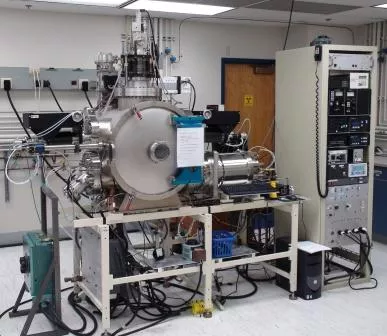
This system incorporates electron beam, sputter and thermal deposition in one chamber. An 8kW, six pocket rotary egun is used primarily for deposition of refractory metals. Two 2” magnetrons are available for sputter deposition of chalcogenide materials. In addition, the system is equipped with one thermal evaporation source. The six inch substrate stage has heating to 850C, rotation, RF biasing and in situ adjustment of the source to substrate distance. The system is load locked, and the chamber base pressure is <5e-8 Torr. Process gas is Argon.
OSU Constructed
CDS
Multi technique physical vapor deposition system
Owen Cleanroom
Dr. John Wager
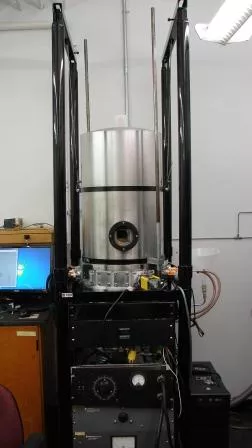
OSU constructed electron beam evaporator.
Electron beam evaporator
Dr. Ethan Minot

A joint OSU and Thermionics designed and built system. Turbo-pumped to a base pressure of 2 x 10⁻⁹ Torr, the vacuum system is load-locked and has target and substrate rotation(6-target carousel). Substrate heating via quartz lamps to 700 C, and target-substrate distance is variable. Inert gases and oxygen are introduced by an MKS mass flow controller with flow rate to 20 sccm during deposition to a level of 1 mTorr. Pressures higher than 1 mTorr can be achieved by throttling the high vacuum gate valve. The laser is a Compex 205 248 pulsed excimer laser (20 ns pulses, 1 - 10 Hz rep rate.)
Pulsed Laser Deposition
Weniger 475
Dr. Janet Tate

Neocera system. Turbo-pumped to a base pressure of 2 x 10⁻⁷ Torr, the vacuum system has target (6-target capability). Substrate heating via resistive element to 900 C, and target-substrate distance is variable. Inert gases and oxygen are introduced by an MKS mass flow controller with flow rate to 20 sccm during deposition to a level of 1 mTorr. Pressures higher than 1 mTorr can be achieved by throttling the high vacuum gate valve. The laser, shared with the Thermionics system, is a Compex 205 248 pulsed excimer laser (20 ns pulses, 1 - 10 Hz rep rate.)
Neocera Pulsed Laser Deposition
Weniger 475
Dr. Janet Tate
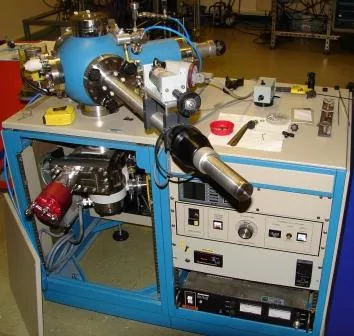
OSU constructed PLD system.
Pulsed Laser Deposition
Dearborn 300
Dr. Brady Gibbons

This system includes a 6000 rpm spin module with edge bead removal, a high temperature bake module, and an active cooling module along a linear track. Four inch wafers are loaded automatically from a standard cassette. Conversion for wafers up to six inch is possible. Special carrier wafers are used to accommodate small substrates. A touch screen GUI provides flexible recipe control. Three separate cartridges dispense fluids onto the substrate. The system is used for deposition of prompt inorganic condensation materials.
Site Services Inc.
Tractix
Track coating system
Owen Cleanroom
Dr. Doug Keszler

The Sonoplotter is a micro pipet printer used to print and pattern devices.
Sonoplotter
Owen cleanroom
Dr. John Wager

OSU constructed magnetron sputter deposition system.
OSU Constructed
TANG
Magnetron Sputter Deposition System
Owen cleanroom
Dr. John Wager

CPA radio frequency sputter deposition system.
CPA
Radio Frequency Sputter Deposition
Owen Cleanroom
Dr. John Wager

This system incorporates electron beam, sputter and thermal deposition in one chamber. An 8kW, six pocket rotary egun is used primarily for deposition of refractory metals. Two 2” magnetrons are available for sputter deposition of chalcogenide materials. In addition, the system is equipped with one thermal evaporation source. The six inch substrate stage has heating to 850C, rotation, RF biasing and in situ adjustment of the source to substrate distance. The system is load locked, and the chamber base pressure is <5e-8 Torr. Process gas is Argon.
AJA International, Inc.
Orion 5
Sputter Deposition System
Owen Cleanroom
manuals(must be logged in)
Dr. John Wager

OSU constructed radio frequency sputter deposition system.
Radio Frequency Sputter Deposition
Dearborn 300
Sputter Deposition System
Dr. Brady Gibbons

OSU constructed radio frequency sputter system.
Radio frequency sputter deposition
Dearborn 300
Dr. Brady Gibbons

Sputter coater.
Sputter coater
Dr. Dave Cann

The Polaron Thermal Evaporator uses a standard resistive filament evaporation source, and a quartz bell jar deposition chamber. The tool incorporates a diffusion pump as the high vacuum pump and reaches a base pressure of < 5 E-5mbar. The tool is used for depositing aluminum.
Polaron thermal evaporator
Owen cleanroom
Dr. John Wager

The Veeco 7700 is a manually controlled thermal evaporator, equipped with water cooled feedthroughs, and capable current drive in the 220 Amp range. A high current switch enables sequential deposition of two materials, and a second power source allows a third material to be deposited, without breaking vacuum. Chamber base pressure is < 5 E-6 Torr range, and the system is equipped with a quartz crystal monitor for manual thickness control. This evaporator is used for metal deposition.
VEECO
7700 Series
Thermal evaporator
Owen cleanroom
Dr. John Wager

This system incorporates electron beam, sputter and thermal deposition in one chamber. An 8kW, six pocket rotary egun is used primarily for deposition of refractory metals. Two 2” magnetrons are available for sputter deposition of chalcogenide materials. In addition, the system is equipped with one thermal evaporation source. The six inch substrate stage has heating to 850C, rotation, RF biasing and in situ adjustment of the source to substrate distance. The system is load locked, and the chamber base pressure is <5e-8 Torr. Process gas is Argon.
OSU Constructed
CDS
Multi technique physical vapor deposition system
Owen Cleanroom
Dr. John Wager

The Cooke thermal evaporator uses a standard resistive filament evaporation source, and a stainless steel bell jar deposition chamber. The tool incorporates a turbomolecular pump as the high vacuum pump and reaches a base pressure of ?????. The tool is used for depositing aluminum.
Cooke thermal evaporator
Owen cleanroom
Dr. John Wager
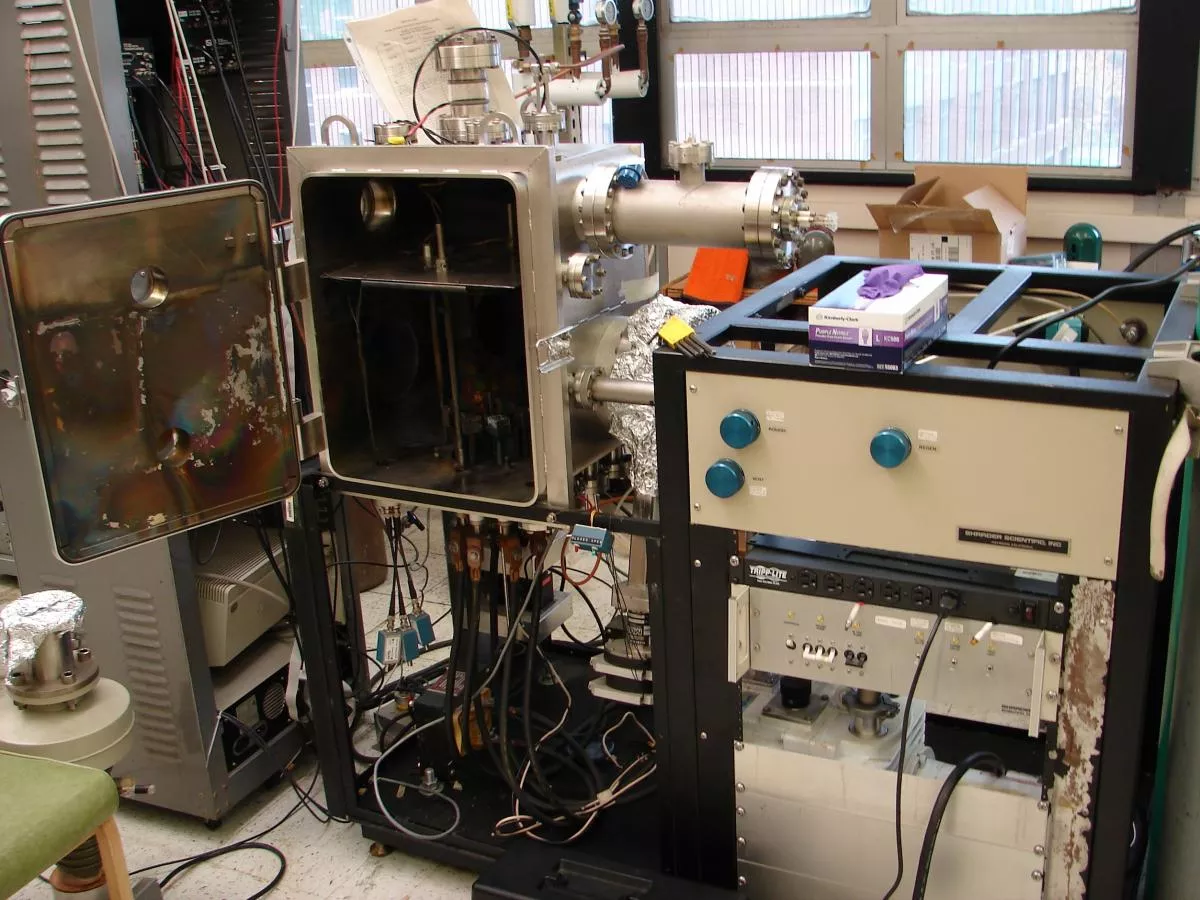
Schrader thermal evaporator.
Schrader thermal evaporator
Weniger 4??
Dr. Janet Tate

VEECO thermal evaporator.
VEECO thermal evaporator
Weniger 4??
Dr. Janet Tate

The CV-164D Thermal Evaporator uses a standard resistive filament evaporation source, and a quartz bell jar deposition chamber. The tool incorporates a diffusion pump as the high vacuum pump and reaches a base pressure of < 2 E-6. The tool is used for depositing ????.
CV-164D Thermal Evaporator
Dearborn 300
Dr. Brady Gibon

OSU constructed electron beam deposition system.
OSU constructed Ebeam
Dr. Ethan Minot

This programmable logic controller (PLC) glove box is used for work that must be carried out in dry, inert Nitrogen ambient. The oxygen content is typically below 20 parts per million. The system is equipped with an antechamber for transfer of smaller items, and a large 600C vacuum oven for dehydration/baking, and to serve as a pass through for large items. The glove box is also equipped with a vacuum thermal evaporator for deposition of materials that cannot be exposed to Oxygen or moisture.
MBraun
Labmaster 130, VOH-600Oven
Glove box with oven and thermal evaporator
Owen Cleanroom
Dr. John Wager
Contact Us
To explore opportunities for collaboration, contact:
John F. Conley, Jr.
School of Electrical Engineering & Computer Science
Oregon State University
1148 Kelley Engineering Center
Corvallis, OR 97331-5501
Phone: 541-737-9874
Fax: 541-737-1300
jconley@eecs.oregonstate.edu
For information on user facilities, contact:
Chris Tasker
School of Electrical Engineering & Computer Science
Oregon State University
315 Owen Hall
Corvallis, OR 97331-5501
Phone: 541-737-2976
Fax: 541-737-1300
chris@eecs.oregonstate.edu