

Award Year
Graduation Year
Department
Award Category
Biography
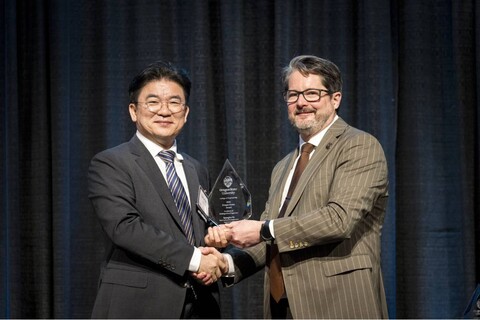
Seungho Yu has spent his career finding new ways to put radiation technology to work protecting the environment — a path that traces back to his doctoral research at Oregon State.
“At OSU, I learned that science begins with asking ‘why’ and finds its purpose in serving society — improving lives and protecting our environment,” Yu said.
Yu earned his Ph.D. in civil, construction, and environmental engineering at Oregon State in 2004 under Professor Lewis Semprini, studying the kinetics and modeling of anaerobic reductive dechlorination of chlorinated solvents. He stayed on as a faculty research associate before joining the Korea Atomic Energy Research Institute (KAERI) in 2005, where he spent nearly two decades rising to principal researcher and, later, director of the Research Division of Industry and Environment. There, he built an international reputation studying the use of radiation and advanced treatment processes to strip persistent pollutants, pharmaceuticals, antibiotics, and other toxic contaminants from water and waste streams — work reflected in dozens of highly cited publications, several patents, and a citation from Korea’s Ministry of Environment.
In 2025, Yu joined the International Atomic Energy Agency in Vienna as an Electron Beam Processing Officer in the Radiochemistry and Radiation Technology Section, where he organizes and coordinates international technical activities, training events, and collaborative research projects that help member states safely adopt electron beam technology for water and wastewater treatment, soil and groundwater remediation, air pollution control, and sludge treatment.
He’s currently focused on the IAEA’s Transportable Electron Beam System, which delivers hands-on training and technology demonstrations to member states. “This work brings together many parts of my career — environmental engineering, radiation technology, research, training, and international cooperation — and translates them into a platform that can benefit countries around the world,” Yu said.
Yu credits Oregon State with more than his technical grounding. “OSU gave me the confidence to work across cultures and disciplines,” he said, “and those experiences eventually helped me move from academic research in the United States and Korea to international work at the IAEA.”