


What Do Ecological Engineers Do?
If you care about climate change, clean water, and protecting natural ecosystems—but also love problem-solving, design, and engineering—ecological engineering might be the perfect fit.
Ecological engineering sits at the intersection of environmental science and engineering, where your work directly impacts the health of ecosystems and communities.
Read on to explore more about the ecological engineering degree path and to see examples of careers you could have in this engineering field.
What is ecological engineering?
Ecological engineering is the design of sustainable systems that work with nature—not against it. Instead of forcing the environment to adapt to human needs, ecological engineers design solutions that integrate human activities into natural systems for the benefit of both.
In practice, this means using engineering principles alongside ecology, biology, and environmental science to solve real-world problems like water pollution, habitat loss, and climate resilience.
At Oregon State University, one of the first programs of its kind in the nation, ecological engineering is inherently multidisciplinary. Students learn how natural systems function and how to design systems that are resilient, sustainable, and efficient across scales—from microscopic processes to entire watersheds.
What you’ll study as an ecological engineering student
As an ecological engineering major, your coursework blends traditional engineering fundamentals with environmental science topics:
- Engineering fundamentals: calculus, physics, thermodynamics, fluid mechanics.
- Ecology and biology: understanding ecosystems, soil science, microbial processes.
- Water systems: ecohydrology and ecohydraulics.
- Data and modeling: biosystems analysis and modeling, computation, GIS.
- Environmental policy & economics: how engineering decisions affect society.
You’ll also spend time outside the classroom—collecting field data, working on real research projects, and applying what you learn in hands-on environments.
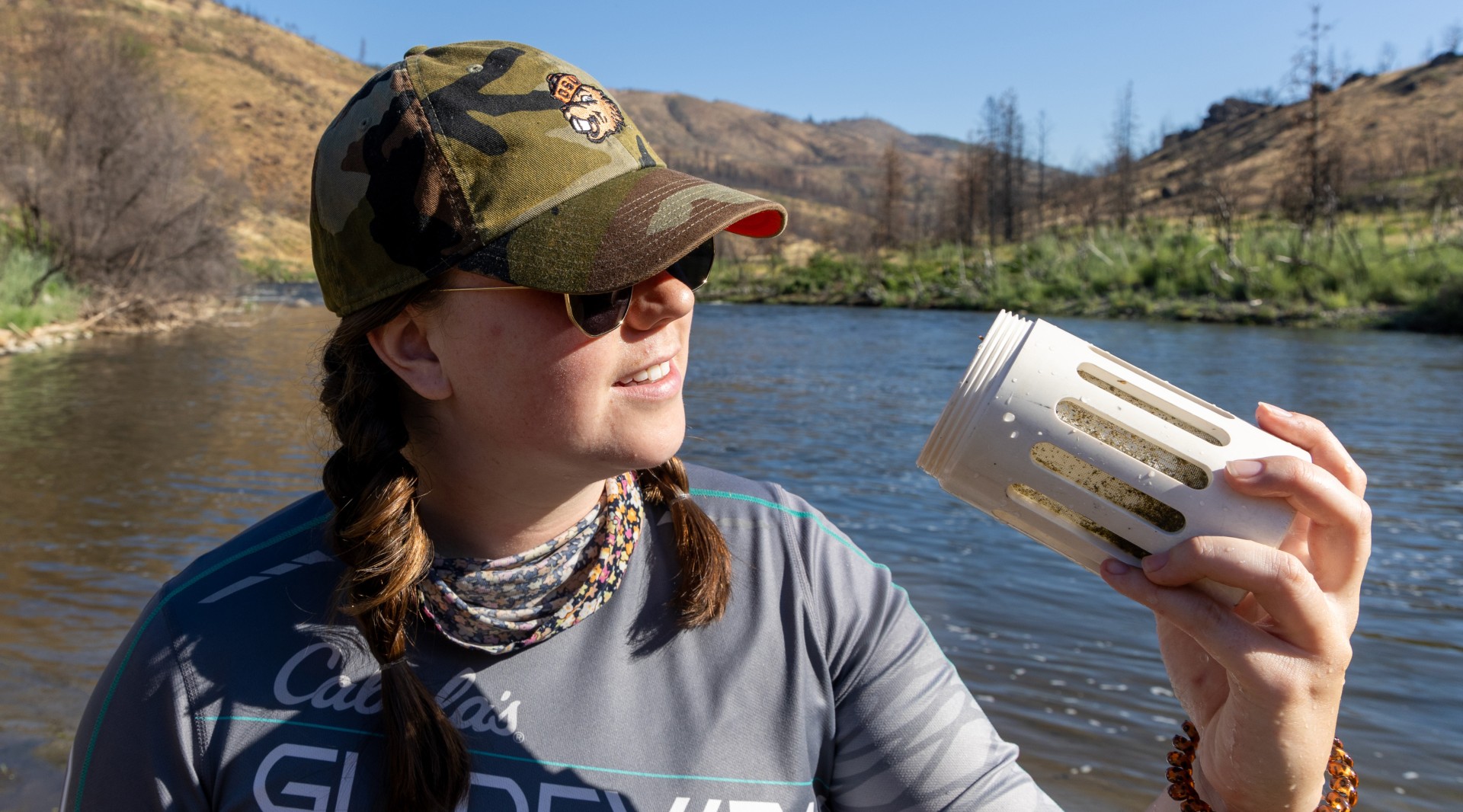
Whitney Packard, an undergraduate studying ecological engineering, had the opportunity to work with faculty member Desiree Tullos, professor of water resources engineering, to study how oxygen in the river changes in the aftermath of the Klamath River dam removal, and what factors underpin algae and aquatic plant growth and fish health.
Students wore wetsuits and snorkel gear to collect samples and take measurements. They also learned how to process samples in the lab and manage data.
What jobs do ecological engineers have?
One of the biggest advantages of the ecological engineering degree is its flexibility. Graduates work across public, private, and nonprofit sectors in roles that blend engineering, science, and environmental problem-solving.
Common career paths include:
- Water resources engineer: designing systems that manage water supply, flooding, and water quality.
- Ecological restoration engineer: restoring rivers, wetlands, and habitats.
- Environmental consultant: helping organizations reduce environmental impact.
- River or coastal engineer: designing infrastructure that works with natural water systems.
- Sustainability engineer: developing green infrastructure like permeable pavement or urban forests.
You could work for engineering firms, government agencies, nonprofits, or environmental consulting companies—often splitting your time between fieldwork (outdoors) and design/modeling work (office or lab).
What your day-to-day work might look like
- Collecting water samples in streams or rivers.
- Running computer models to predict flood or pollution impacts.
- Designing wetland restoration plans or stormwater systems.
- Collaborating with communities, agencies, and stakeholders.
- Writing reports and presenting environmental impact recommendations.
Natalie Krempel, an undergraduate student in ecological engineering, spent the summer interning with the Midcoast Watersheds Counsel as a Marine and Coastal Opportunities Intern. She spent her summer in Newport, OR, surveying streams for beaver activity in order to understand what characterizes suitable beaver habitats in the Pacific Northwest.
Examples of Real Life Ecological Engineering
Ecological engineering is a hands-on field, and the projects are often large-scale, visible, and impactful. Real projects you could work on include:
- Restoring wetlands and rivers: engineers design systems to bring back natural habitats, improve water quality, and reduce flooding.
- Fish passage and dam removal projects: removing barriers or building fish-friendly structures helps reconnect ecosystems and restore biodiversity.
- Green infrastructure design: projects like green roofs, urban forests, and permeable pavement reduce stormwater runoff and improve urban environments.
- Agricultural water management: improving how water flows through farms to reduce pollution and increase efficiency.
At Oregon State, ecological engineering students don’t just learn from textbooks. One student, M. Kelso, participated in a river engineering course that involved traveling the Klamath River after a major dam removal project. They witnessed how ecosystems recover in real time—and how engineers guide that process.

Another graduate, Emily Ammeraal, gained hands-on experience through internships and fieldwork—then went on to work as a water resources project engineer focusing on river design, erosion control, and infrastructure protection.
She emphasized that field-based learning—like rafting the Klamath River during coursework—helped her connect what she learned in class to real-world environmental challenges.
How much do ecological engineers make?
Salaries for ecological engineers vary depending on experience, location, and industry, but the field offers strong earning potential.
Median salaries hover around $88,750 and can elevate to $120,000+ for highly experienced roles.
Is ecological engineering in demand?
Short answer: yes—and growing.
The demand for professionals who can solve environmental challenges is expected to increase due to:
- Climate change and extreme weather.
- Water scarcity and infrastructure needs.
- Environmental regulations and sustainability goals.
- Habitat restoration and conservation priorities.
According to the Bureau of Labor Statistics, employment for ecological and related engineers is projected to grow about 8% from 2023 to 2033, which is faster than average for many fields.
Wrapping it all up
If you want a career where you can work outdoors and in the field, solve real environmental challenges, and design systems that improve ecosystems and communities, then ecological engineering might be a great fit for you.