

Over the last decade, the rapid growth of learning algorithms has dramatically changed the landscape of robotics and more broadly, intelligent systems. From deep learning for robot sensing to chess/go champions to self-driving taxis to the current crop of large language models, learning systems are everywhere.
Throughout, our field focused on improving learning algorithms. But what does it mean for a robot to “learn”?
In this talk, I’ll argue that for robots to become better at general purpose, everyday tasks, we need a good answer to a different question: what exactly is the robot learning?
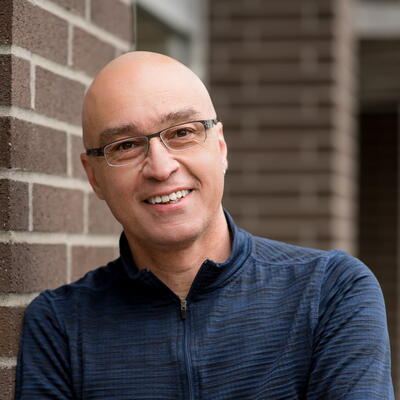
Dr. Tumer has been at Oregon State since 2006, and previously served as a Senior Research Scientist at NASA Ames Research Center 1997–2006. Dr. Tumer's research focuses on learning, optimization and control in large complex systems; learning and coordination in multiagent systems; distributed reinforcement learning; and evolutionary algorithms for control and optimization. Applications of this work include multi-robot coordination, mobile robot navigation, distributed sensor coordination, air traffic management, wave energy converter optimization, transportation systems, and intelligent energy management.