

Introduction
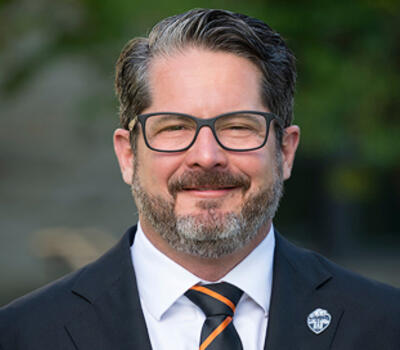
Oregon State University has welcomed Forrest J. Masters, Ph.D., P.E. (FL), as the new Kearney Dean of Engineering, following his distinguished tenure at the University of Florida, where he served as interim dean and led major research initiatives. Masters, a renowned expert in civil and coastal engineering and natural hazards, brings a wealth of leadership experience and a passion for innovation to OSU. His appointment comes at a time of growth and opportunity for the College of Engineering, which recently has seen record research funding, enrollment, and private giving. Masters steps into his new role with a vision to advance discovery, foster collaboration, and shape the future of engineering to help Oregon remain economically vibrant and the US remain technologically competitive.
We sat down with Masters to discuss the drivers behind his career and his vision for the future of engineering education.
Q: What inspired you to pursue a career in higher education and leadership?
A: As far back as I can remember, science and technology has intrigued me. I grew up about 60 miles north of Cape Canaveral, close enough that you could see the space shuttle launch. I also immersed myself in books about marvels of engineering. I read The Leading Edge by Walter Boyney cover to cover more times than I could count. And I was a captive audience to all things science fiction, especially stories centered on human ingenuity.
Those affinities steered me toward the university, and specifically to engineering. The interest in leadership I attribute to the 4-H program, which taught me citizenship, public-speaking, and other skills that shaped my approach to teamwork and problem-solving.
Q: What drew you to your particular field of study?
A: I am trained as a civil and structural engineer, but I belong to an interdisciplinary field called wind engineering, which focuses on extreme weather effects on the built and natural environments. Growing up in Florida, the most hurricane-prone state in the U.S., the threat of extreme weather is ever-present. Witnessing the devastation of storms like Hurricane Andrew revealed many unanswered questions about how storms behave, how communities respond, and how we design civil infrastructure to withstand extreme storms. I was hooked from the very beginning.
Q: What is your vision for the College of Engineering over the next five to ten years?
A: A clear and consistent message has emerged from the many hours I have spent engaging thought leaders within the university and from alumni and students as well as industry, nonprofits, and government, to understand how our work can most directly improve the lives and livelihoods of Oregonians in every corner of the state. The clear and urgent call to action is to roll up our sleeves and get to work on strengthening Oregon’s economy. Families are struggling with the rising costs of housing, energy, food, and healthcare. At the same time, industries face barriers to growth, higher operating expenses, and workforce shortages. A complex and often uncertain national backdrop amplifies these sentiments, foremost around uncertainties in public investment to make the U.S. more technologically competitive.
I would argue that public, land-grant institutions like ours exist for such moments. The communities we serve and the generations that will follow us have never needed us more. That will be our guiding mindset as we shape our plans for the next decade.
Our strategic planning process has just begun, so it’s too early to share a fully formed vision. However, for the reasons given, you can expect a strong emphasis on economic development and supporting the growth of Oregon’s industry ecosystems. Central to this effort will be harnessing the innovations of the fourth industrial revolution — AI, automation, and other transformative technologies. We will also stay laser-focused on developing the next generations of leaders, recognizing that our students are the true driving force behind Oregon’s long-term prosperity.
Q: How do you plan to foster collaboration with industry?
A: Partnerships are a college imperative. The university plays a critical role in helping students learn and find employment, but technology translation happens in companies. Industry research investment now far exceeds federal investment, so working with industry helps us understand real-world problems and bridge the gap from research to production. How will we do this, in short? By aiming to cultivate enduring, trusted partnerships, not fleeting, short-term interactions. This means serving companies beyond their point of immediate need, becoming an integral extension in planning and pursuit of opportunities and help them better compete nationally and beyond, and in turn, foster high quality job creation.
Q: What role do you see alumni playing in the college’s future success?
A: In many ways, the success and health of any college can be measured by its relationship with its alumni. In particular, their philanthropy creates real life change for our students, many of whom who would struggle to attend college without their support. That support also enables us to place big bets on emerging opportunities and to be a first mover in the national higher education landscape.
Q: What is something fun or surprising people might not know about you?
A: I love bad weather. Over the past 25 years, I chased and conducted landfall field research in 40-plus named tropical cyclones. This work recently culminated with the development and successful testing of a monitoring station to measure extreme wind, storm surge, wave, and hazardous water quality conditions where the hurricane core transitions from ocean to land. I have also brought the “hurricane back to the lab” by developing novel shared-use infrastructure to physically model the effects of extreme wind events on civil infrastructure.
Q: When you’re not working or chasing storms, how do you like to spend your time?
A: My focus is my family. Moving to Oregon meant transplanting my wife and our three incredible teenagers, so helping them fall in love with the place and become part of the community has been my priority. I am especially appreciative to our community for being so welcoming. The Masters family is grateful!