
Introduction
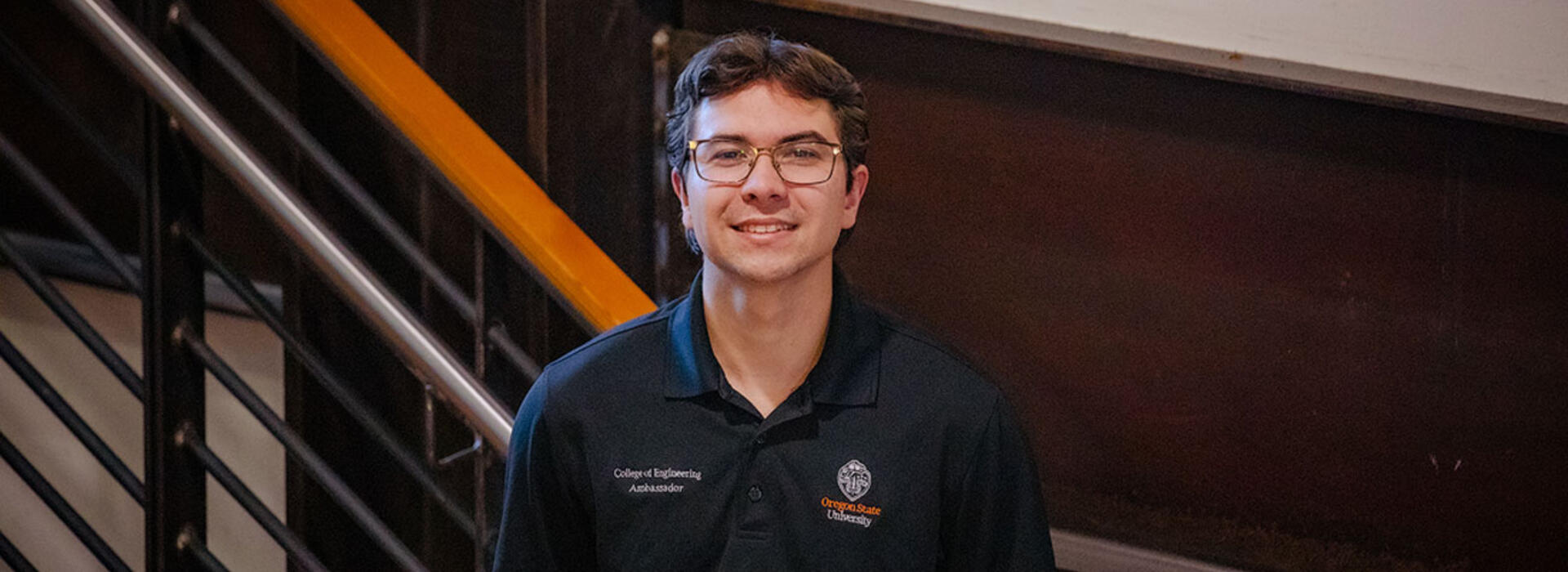
When Sean Olea arrived at Oregon State University, he knew he wanted to build something—but it took exploration, hands-on experience, and campus involvement to clarify exactly what that would look like. Now, a fourth-year architectural engineering student with a minor in mathematics, Olea is preparing to graduate this spring with a clear focus on mechanical building systems and a career path shaped by internships, student leadership, and a lifelong exposure to the built environment.
Discovering Oregon State and architectural engineering
Originally from Seaside, Oregon, Olea grew up surrounded by homes, renovations, and construction conversations. His father worked as a plumbing design drafter, while his mother was a real estate agent, and together they flipped houses—experiences that gave Olea an early, practical understanding of how buildings come together. Add to that a love of math and science, and engineering felt like a natural fit.
architectural engineering student
Blue Primary, Yellow Secondary
Olea began his college journey in civil engineering before discovering architectural engineering, a discipline that blends technical rigor with close collaboration among architects, contractors, and consultants.
“I realized I really liked building systems,” he said. “Architectural engineering let me focus on how buildings actually function—how people experience them and how systems work together.”
Oregon State caught Olea’s attention early. As a first-generation college-bound student, Olea participated in TRIO and Talent Search programs that brought him to campus as early as eighth grade. The university’s outreach, engineering tours, and in-state accessibility made a lasting impression. “It was one of the few colleges that really reached out,” he said. “It showed me what was possible.”
Student clubs, competitions, and internships
Once on campus, Olea committed to getting involved. He joined the American Society of Civil Engineers, eventually serving as treasurer and later president. Through ASCE, he helped launch the Sustainable Solutions competition team, guiding students through a design-focused challenge centered on environmentally responsible site development. The team placed second at regionals in its debut year, an achievement Olea credits to collaboration and mentorship. “Clubs gave me friends, study partners, and mentors,” he said. “They helped shape what I want to do—and what I don’t.”
The project that emerged from the Sustainable Solutions competition—The Grove, a proposed mixed-use development designed using Albany building codes and standards—gave Olea invaluable experience in HVAC design and cost estimating. This hands-on exposure proved essential during his internship search and ultimately influenced his decision to pursue mechanical systems as his specialization.
Internships further refined his goals. After his sophomore year, Olea interned with Foresite Group in Corvallis, gaining exposure to land development and professional office workflows. The following summer, he joined Southland Industries in Redmond, Oregon, working on a large-scale data center project. The experience immersed him in construction management and mechanical systems, reinforcing his interest in HVAC design while building empathy for contractors and tradespeople. “Seeing systems built in real life changes how you design,” he said.
Launching a career in sustainable building
These experiences crystallized Olea's career goals. He has accepted an offer from PAE Engineers in Portland, where he'll work on projects similar to the PDX airport's MEP services. The firm's emphasis on energy efficiency and sustainable building certifications aligns perfectly with his interests. His long-term vision includes obtaining his Professional Engineer license and eventually moving into commissioning—testing and verifying that building systems work as designed.
For Olea, architectural engineering at OSU has been defined by collaboration, curiosity, and connection. “It’s never felt like a solo experience,” he said. “Engineering here is about working together, understanding different perspectives, and designing buildings that actually work.”