


What Do Construction Engineering Managers Do?
Construction engineering managers are the professionals who turn complex construction plans into real-world results. They oversee projects from start to finish—planning schedules, managing budgets, coordinating teams, and ensuring everything is completed safely, efficiently, and on time.
In order for construction engineering managers to be successful, they need to have deep engineering knowledge, alongside strong communication and project management skills. Read on to learn how future demand for construction engineering management continues to grow, and what projects you could work on after graduating with this degree.
Construction Engineering Management vs. Civil Engineering
While construction engineering management (CEM) and civil engineering are closely related fields, they focus on different parts of the project lifecycle.
Construction Engineering Management
- Focuses on execution and delivery of projects.
- Emphasizes budgeting, scheduling, and coordination.
- Requires strong leadership, communication, and problem-solving skills.
- Works closely with contractors, engineers, and stakeholders throughout construction.
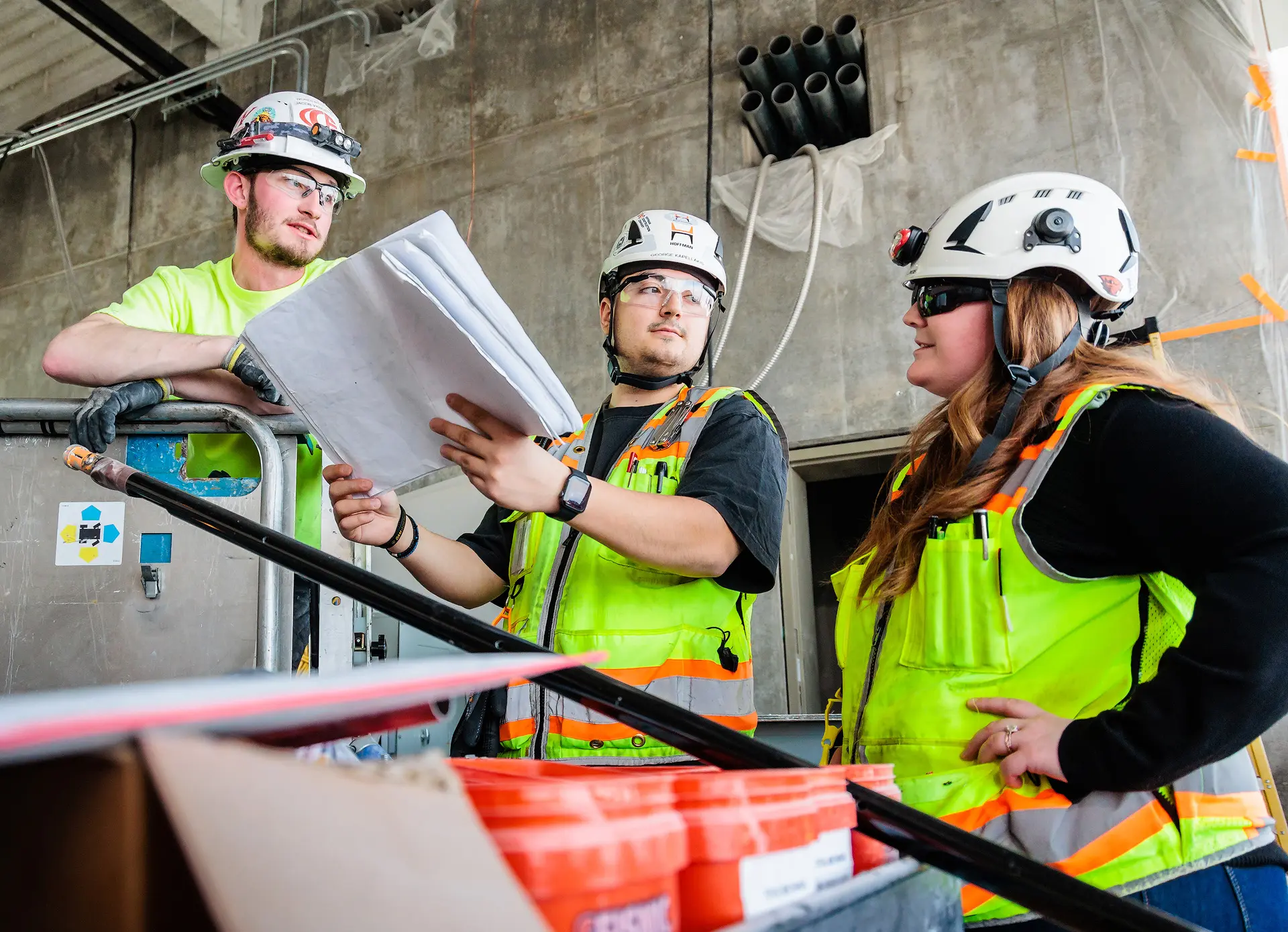
At Oregon State University, our CEM program blends engineering knowledge with business and management training—preparing students to lead projects across building, infrastructure, and specialty contracting sectors. Construction engineering managers lead teams of professionals with diverse backgrounds, expertise, and opinions — including architects and designers; civil, structural, and mechanical engineers; safety officers; tradespeople; and financial analysts.
That means if you pursue a degree in CEM, you’ll take courses like Accounting for Decision Making and Project Management for Construction.
Civil Engineering
- Focuses more on design and technical problem-solving.
- Involves analyzing structures, materials, and environmental factors.
- Prepares students to design infrastructure like roads, bridges, and water systems.
In short:
- Civil engineers design the system.
- Construction engineering managers lead diverse teams to bring it to life.
Many large infrastructure projects rely on both disciplines working together to ensure projects are safe, functional, and delivered successfully.
How Much Do Construction Engineering Managers Make?
Construction engineering managers benefit from strong earning potential and career growth opportunities.
The median annual salary for construction managers in the U.S. was $106,980 (May 2024)
Experienced professionals can earn significantly more, especially in leadership roles or specialized industries.
Projects You Could Work On
Construction engineering managers work on a wide range of impactful projects that shape how people live, travel, and interact with their environment.
Infrastructure Projects
- Highways, bridges, and transportation systems.
- Airports, rail systems, and utility networks.
Buildings and Facilities
- Residential and commercial developments.
- Stadiums, arenas, and campus buildings.
- Renovation projects focused on safety and energy efficiency.
Tyler Brown, B.S. Construction Engineering Management ’19, was a project engineer for the Reser Stadium renovation. He was responsible for overseeing subcontractors who installed roofing, interior framing, ceilings, handrails, guardrails, traffic coatings, seating, fences and gates, and more.
He ensured that materials were installed according to contract documents and helped solve issues as they arose—whether with the design team, the owner’s representative, or the on-site team.
B.S. construction engineering management ’19
Blue Primary, Yellow Secondary
Emerging Technology and Innovation
- AI-driven construction workflows.
- Sustainable building systems and energy-efficient infrastructure.
Often, experience in the field can lead to exciting entrepreneurial opportunities. That’s exactly what happened for Alex Park, B.S. Construction Engineering Management ’18.
As a project manager for major construction projects, he repeatedly encountered the same challenge: translating data from the field to the office. In response, he founded DAERO, based on the belief that construction works best when the people closest to the work are supported—not burdened—by technology.
Demand for Construction Engineering Management
Demand for construction engineering managers is strong and growing.
Employment is projected to grow 9% from 2024 to 2034, faster than the average for all occupations.
This demand is driven by several factors:
- Aging infrastructure requiring repair and replacement.
- Population growth and the need for housing and development.
- Investments in transportation, energy, and sustainable building systems.
Oregon State’s construction engineering management program specifically emphasizes skills that align with these industry trends, like sustainability, project efficiency, risk management, and emerging construction technologies.
Final Takeaway
Construction engineering managers are essential to building the world around us. By combining engineering knowledge with leadership and problem-solving, they ensure complex projects are delivered safely, efficiently, and on budget.
With strong salaries, growing demand, and opportunities to work on everything from transportation systems to renewable energy projects, it’s a career path that offers both impact and long-term potential.